
Pamono Workshop of Valerio Castello, Ecce Homo, 1650, Oil on Canvas, Framed
$120.89
The Ecce HomoGenoese School ‘600 – Workshop of Valerio Castello (Genoa, 1624 – Genoa, 1659)Oil on canvas (117 x 99 cm….
Genoese School ‘600 – Workshop of Valerio Castello (Genoa, 1624 – Genoa, 1659)
Oil on canvas (117 x 99 cm. – Framed 138 x 118 cm.)
COMPLETE DETAILS (click HERE)
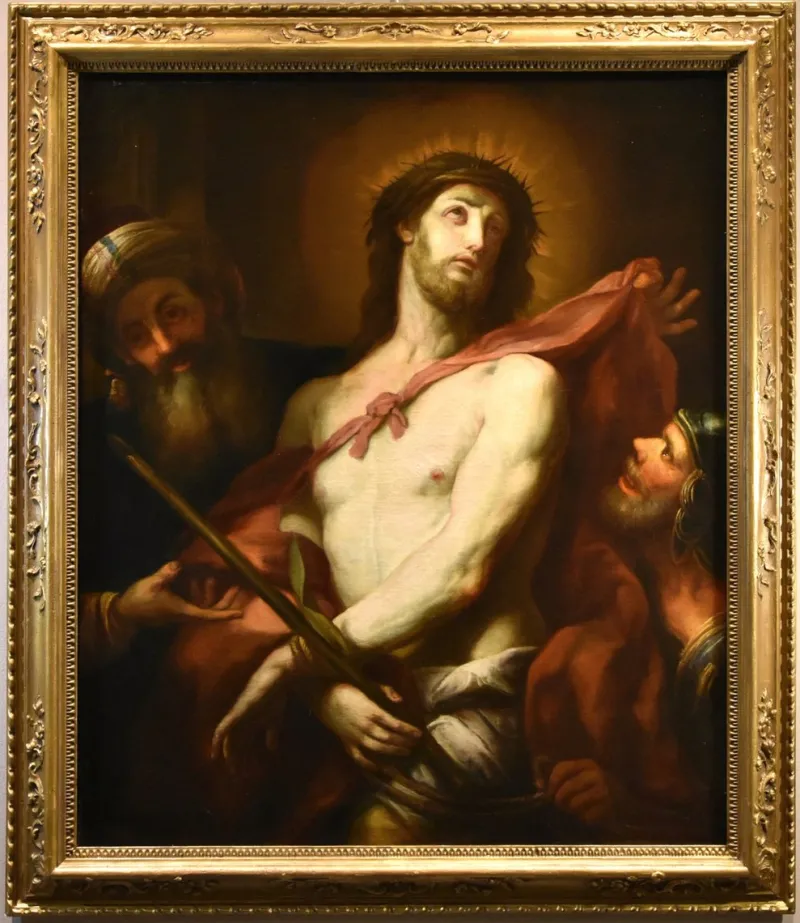
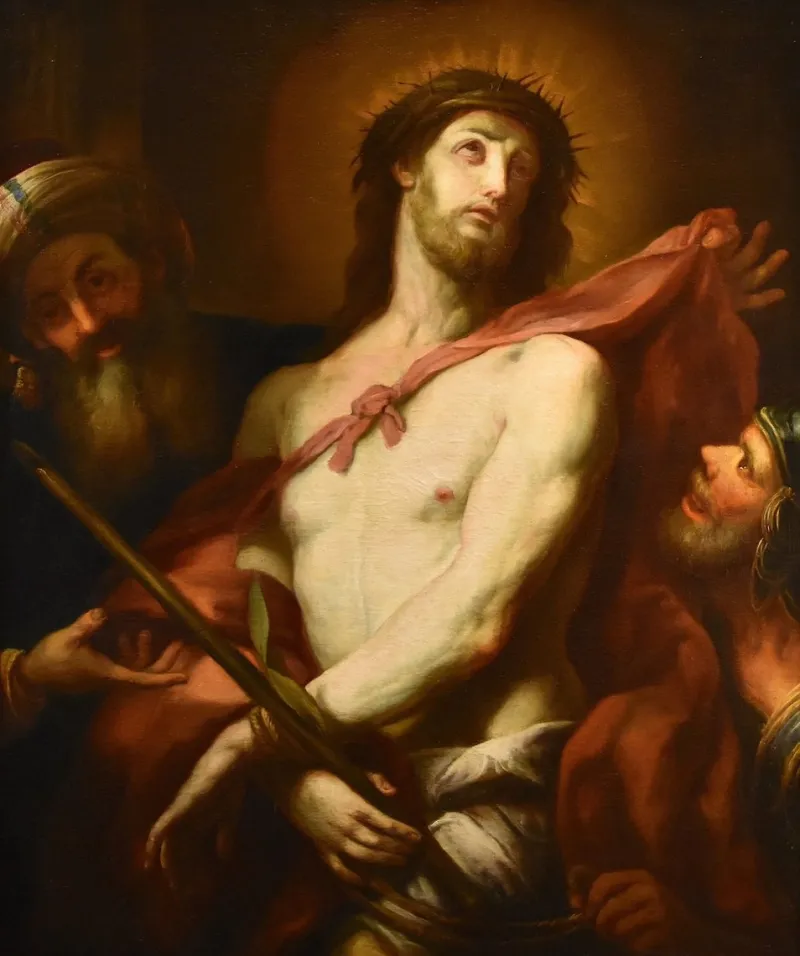
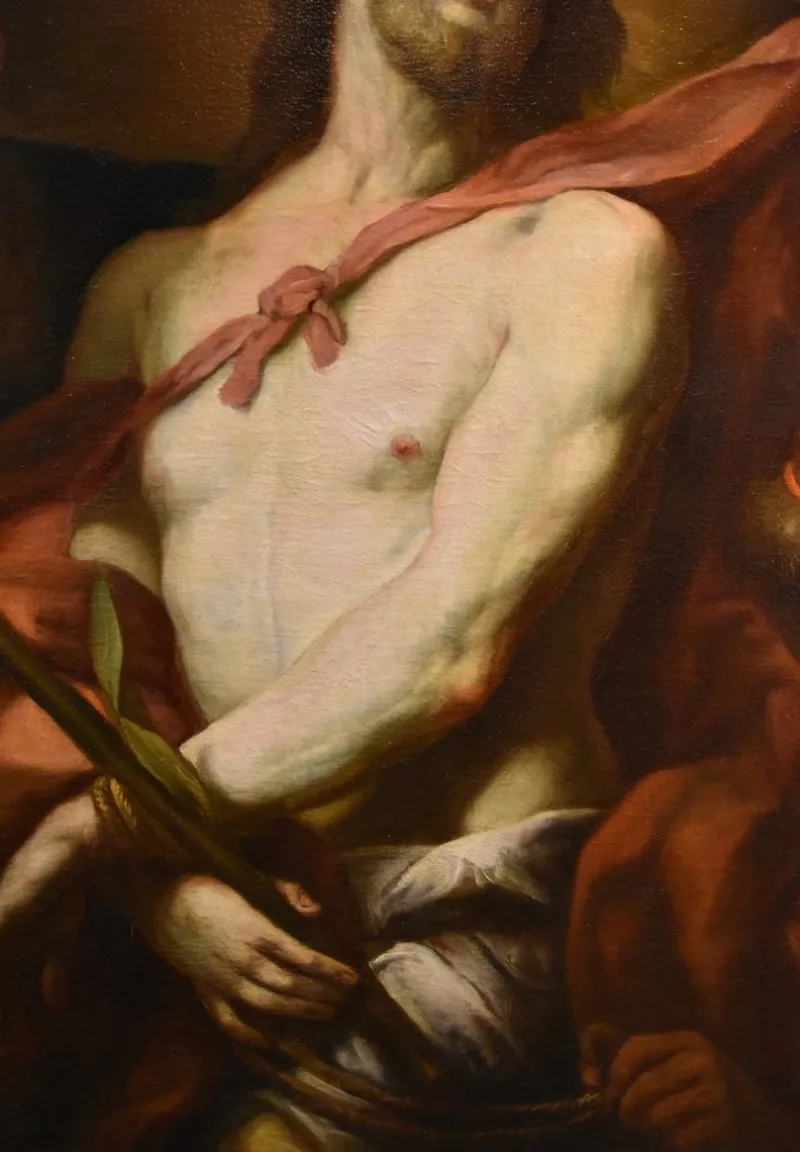
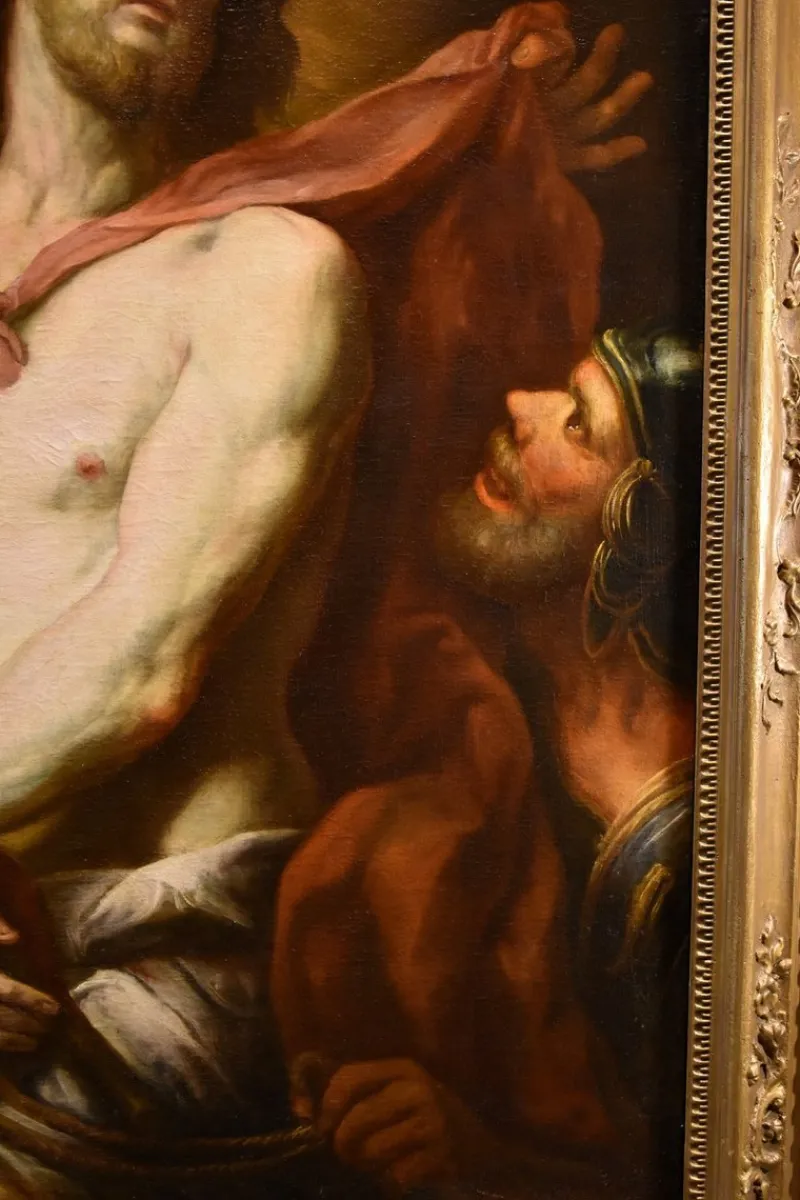
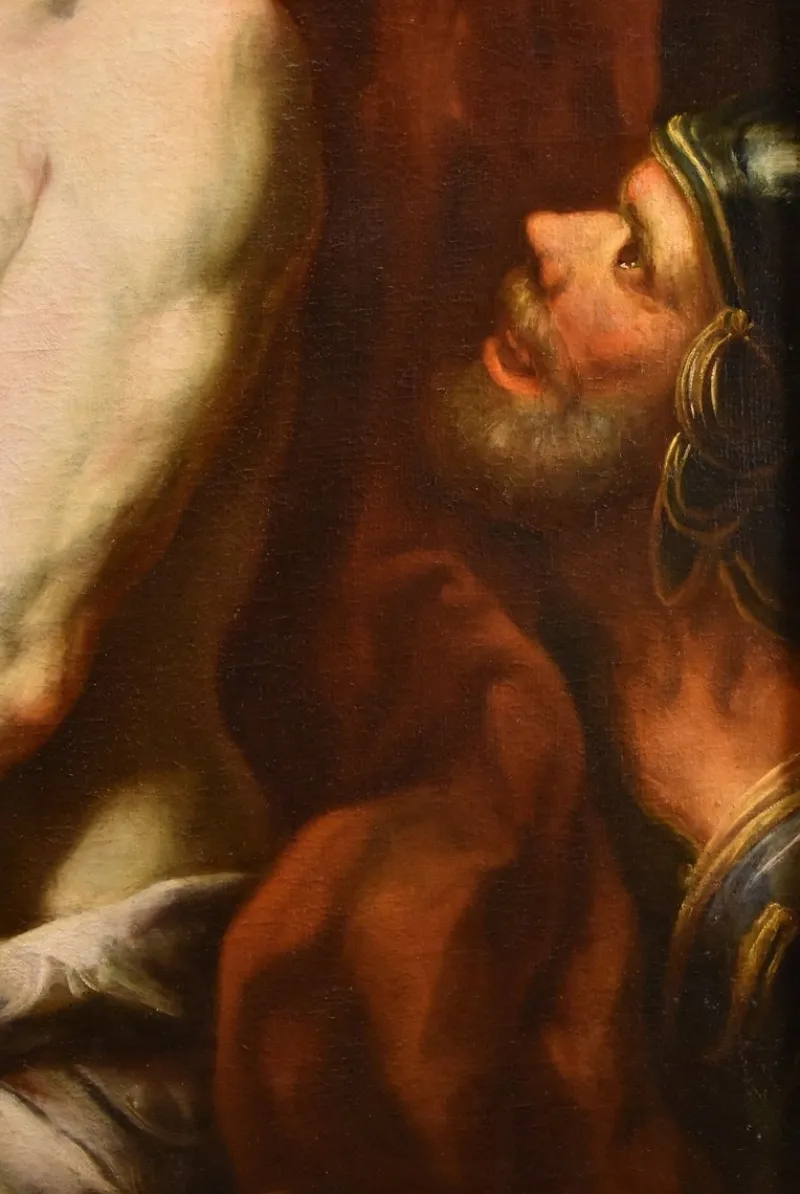
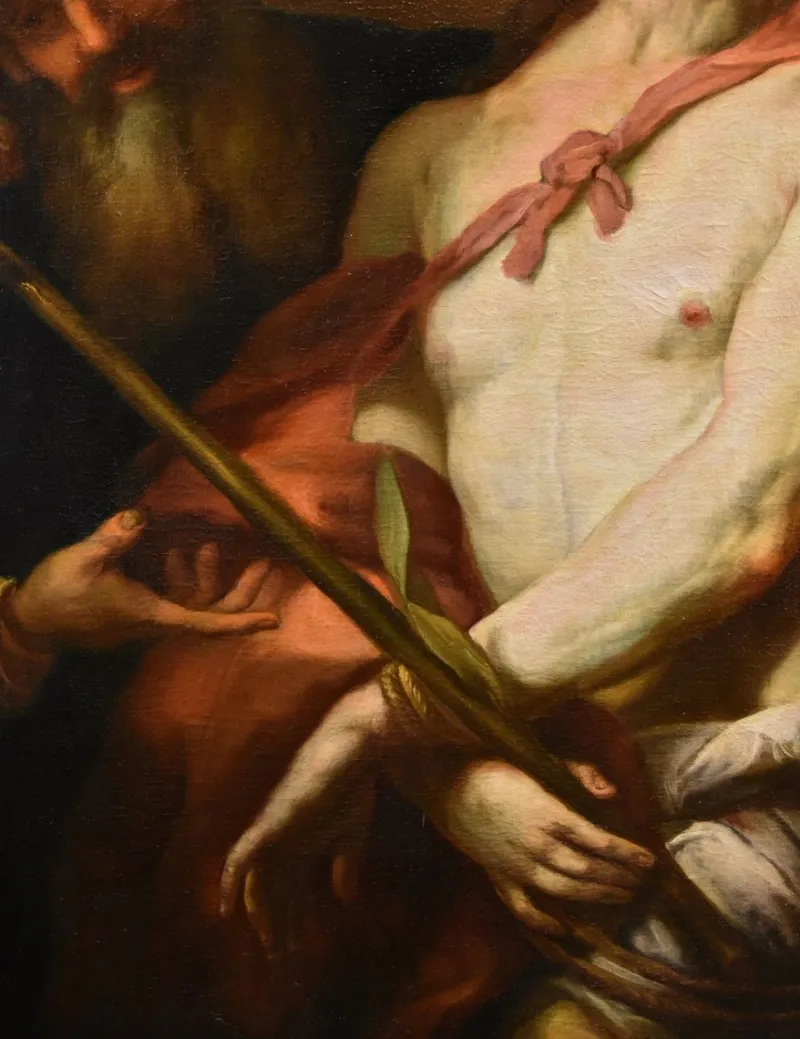
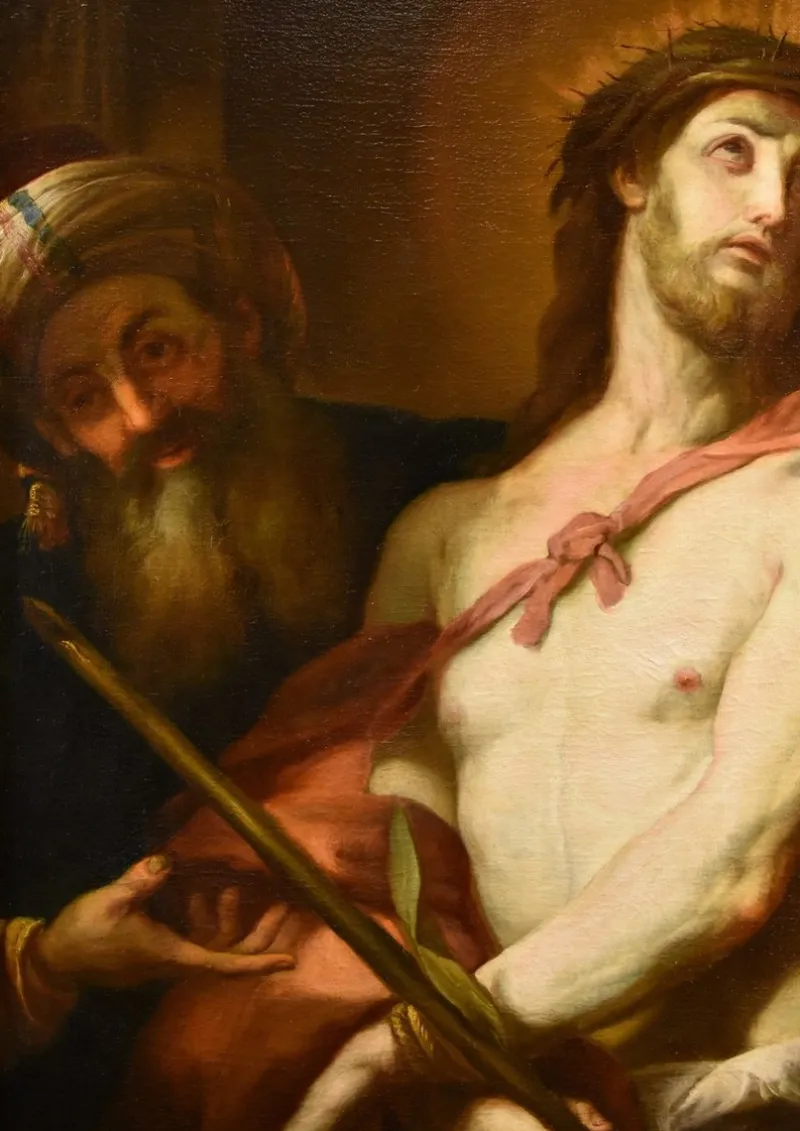
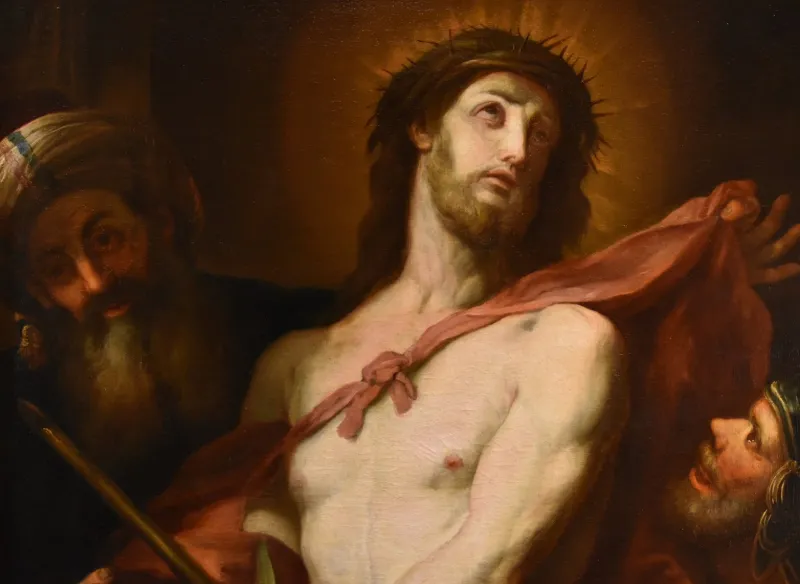
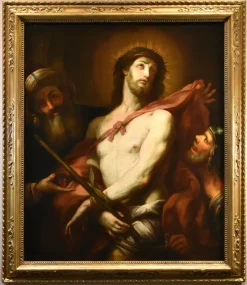
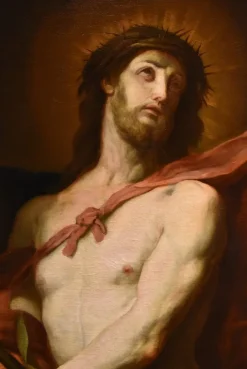
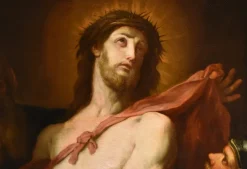
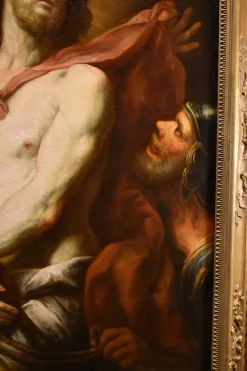
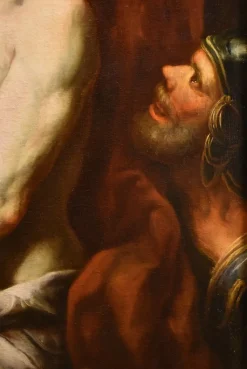
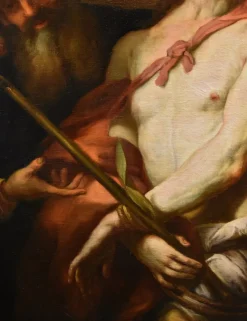
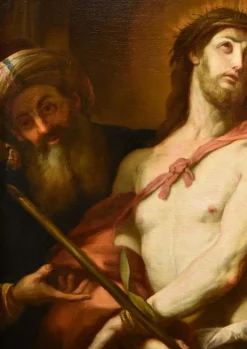
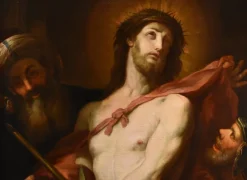
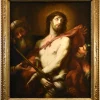
The Ecce Homo, the subject of our intense canvas, is the evangelical episode during which Jesus, awaiting his condemnation and after the flagellation, is presented to the people by Pilate, then Roman governor of Judea, who we see here portrayed at his side painted with a Middle Eastern-style turban. On his right, a henchman, with an amused look, holds the rope that binds Christ’s hands.
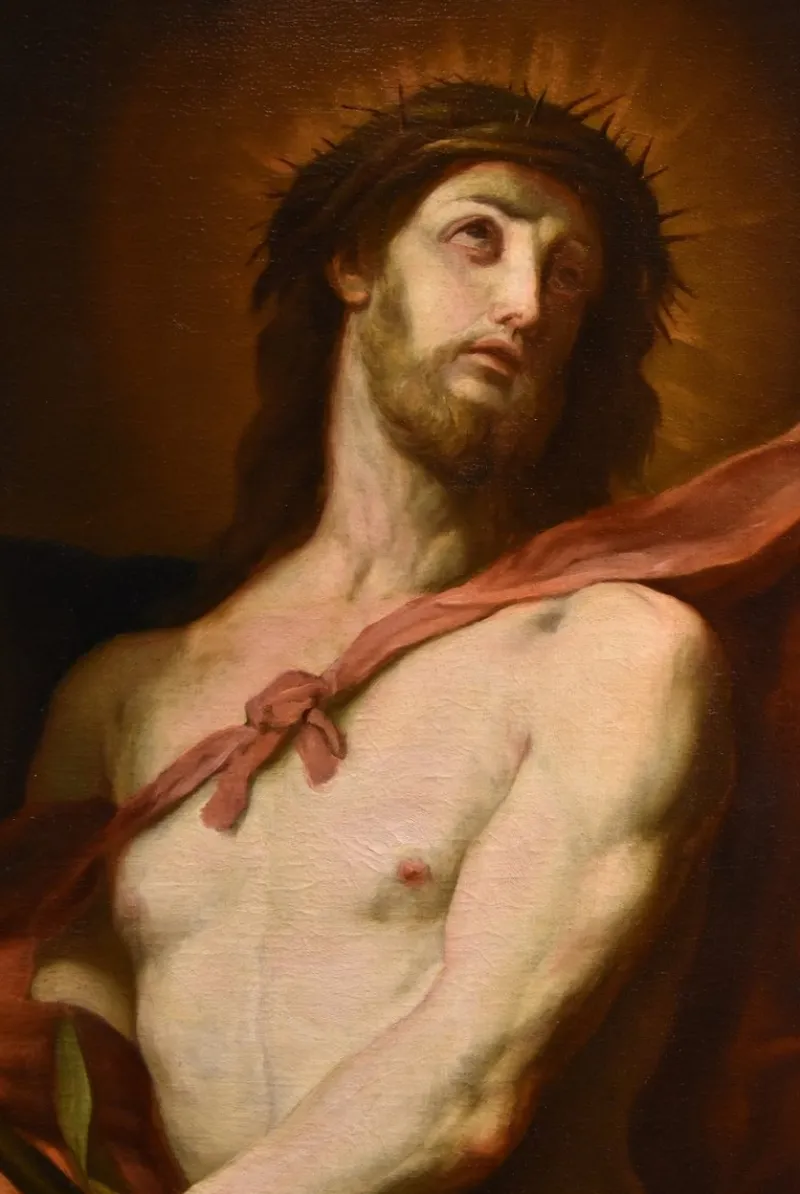
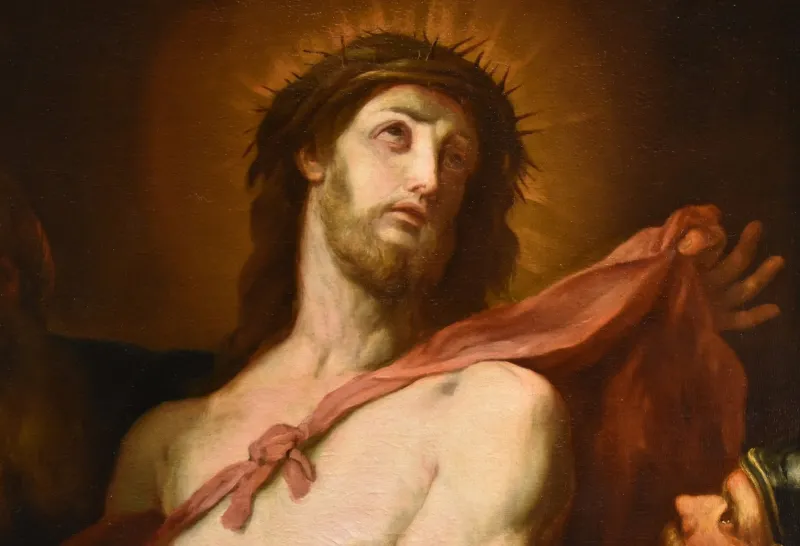
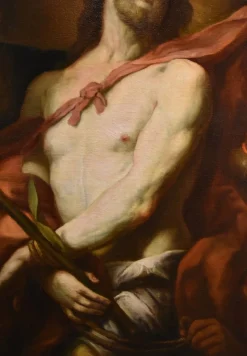
The canvas immortalizes the moment in which the Savior accepts his final destiny: in his face, not only humiliation but also a moment of deep introspection and emotion. He is then portrayed with a crown of thorns placed over his long hair and stripped of his clothes, with his hands tied and crossed, alluding to his immediate crucifixion on Golgotha.
‘’Ecce homo’’, which literally means “Here is the Man”, was the phrase uttered by Pilate himself to designate Jesus being scourged and to curry favor with the crowd, aware of having condemned an innocent man.
This type of representation of Christ was very widespread in the 16th century, giving rise to particularly intense creations, capable of moving even those who do not prefer subjects with such a strong emotional impact. Whipped and mocked while awaiting his martyrdom, it is striking that his face appears sad, resigned, but not suffering, evoking the compassion he granted to his executioners.
The composition, with its intense devotional character, fits easily into the Genoese environment of the mid-seventeenth century and precisely into the figurative repertoire of Valerio Castello (Genoa, 1624 – 1659); interpreter of a new compositional concept, breaking with the Genoese pictorial tradition, through a recovery of the masters of sixteenth-century Mannerism and a careful observation of the works of the Flemish, first of all Rubens, and of the Venetians present in abundance in the Genoese collections.
In the context of Genoese figurative culture, no one like Castello was able to interpret, through the liveliness of the compositional rhythm and the palette, the new feeling of an era that favored a strong theatricality, which is well suited to the staging of our subject.
ADDITIONAL INFORMATION:
The work sold is completed by a pleasant antique but not contemporary frame and is accompanied by a certificate of authenticity and guarantee.
We take care of and organize the transport of the purchased works, both for Italy and abroad, through professional and insured carriers. It is also possible to see the painting in the gallery of Riva del Garda, we will be happy to welcome you to show you our collection of works.
Contact us, without obligation, for any additional information.
Follow us also on:
INSTAGRAM https://www.instagram.com/galleriacastelbarco/?hl=it
FACEBOOK https://www.facebook.com/galleriacastelbarco/
The seller assumes all responsibility for this listing.
About This Piece
Genoese School ‘600 – Workshop of Valerio Castello (Genoa, 1624 – Genoa, 1659)
Oil on canvas (117 x 99 cm. – Framed 138 x 118 cm.)
COMPLETE DETAILS (click HERE)
The Ecce Homo, the subject of our intense canvas, is the evangelical episode during which Jesus, awaiting his condemnation and after the flagellation, is presented to the people by Pilate, then Roman governor of Judea, who we see here portrayed at his side painted with a Middle Eastern-style turban. On his right, a henchman, with an amused look, holds the rope that binds Christ’s hands.
The canvas immortalizes the moment in which the Savior accepts his final destiny: in his face, not only humiliation but also a moment of deep introspection and emotion. He is then portrayed with a crown of thorns placed over his long hair and stripped of his clothes, with his hands tied and crossed, alluding to his immediate crucifixion on Golgotha.
‘’Ecce homo’’, which literally means “Here is the Man”, was the phrase uttered by Pilate himself to designate Jesus being scourged and to curry favor with the crowd, aware of having condemned an innocent man.
This type of representation of Christ was very widespread in the 16th century, giving rise to particularly intense creations, capable of moving even those who do not prefer subjects with such a strong emotional impact. Whipped and mocked while awaiting his martyrdom, it is striking that his face appears sad, resigned, but not suffering, evoking the compassion he granted to his executioners.
The composition, with its intense devotional character, fits easily into the Genoese environment of the mid-seventeenth century and precisely into the figurative repertoire of Valerio Castello (Genoa, 1624 – 1659); interpreter of a new compositional concept, breaking with the Genoese pictorial tradition, through a recovery of the masters of sixteenth-century Mannerism and a careful observation of the works of the Flemish, first of all Rubens, and of the Venetians present in abundance in the Genoese collections.
In the context of Genoese figurative culture, no one like Castello was able to interpret, through the liveliness of the compositional rhythm and the palette, the new feeling of an era that favored a strong theatricality, which is well suited to the staging of our subject.
ADDITIONAL INFORMATION:
The work sold is completed by a pleasant antique but not contemporary frame and is accompanied by a certificate of authenticity and guarantee.
We take care of and organize the transport of the purchased works, both for Italy and abroad, through professional and insured carriers. It is also possible to see the painting in the gallery of Riva del Garda, we will be happy to welcome you to show you our collection of works.
Contact us, without obligation, for any additional information.
Follow us also on:
INSTAGRAM https://www.instagram.com/galleriacastelbarco/?hl=it
FACEBOOK https://www.facebook.com/galleriacastelbarco/
Click here for full descriptionClose description
| Period | Before 1890 |
|---|---|
| Year | 1650 |
| Production Period | Before 1890 |
| Country of Manufacture | Italy |
| Identifying Marks | This piece is attributed to the above-mentioned designer/maker. It has no attribution mark |
| Style | Classical, Figurative, Italian, Louis XIII, Old Masters, Portraiture, Religious, Baroque |
| Detailed Condition | Good — This vintage/antique item may have some wear such as scratches and other signs of ageing. |
| Restoration and Damage Details | Light wear consistent with age and use, Patina consistent with age and use, Reupholstered, Partially restored |
| Product Code | CYT-2245818 |
| Materials | Oil on Canvas |
| Color | Multicolored |
| Width | 118 cm 46.5 inch |
| Depth | 12 cm 4.7 inch |
| Height | 138 cm 54.3 inch |
Be the first to review “Pamono Workshop of Valerio Castello, Ecce Homo, 1650, Oil on Canvas, Framed”
Related products


Daybeds & Chaises Lounges




Children's Chairs

Cabinets & Wardrobes












Daybeds & Chaises Lounges
New Pamono Antique Victorian Oak Chaise Longue in Green Leather with Brass Castors
Beds & Bedroom Sets


Dining Tables & Sets
New Pamono Vintage Table in Glass and Black Lacquered Metal, 1960s


Login
Reviews
There are no reviews yet.