
Pamono Workshop of Giovanni Francesco Barbieri / Detto Il Guercino, Saint Mark the Evangelist, 1680, Oil on Canvas> Old Masters|Classical
$140.89
Workshop of Giovanni Francesco Barbieri, known as Il Guercino (Cento, 1591 – Bologna, 1666)Attributable to Bartolomeo Ge…
Attributable to Bartolomeo Gennari (Cento, 1594 – Bologna, 1661)
Saint Mark the Evangelist
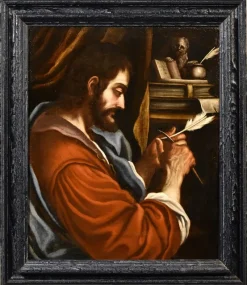
Oil on canvas – 85 x 71 cm, framed 100 x 86 cm.
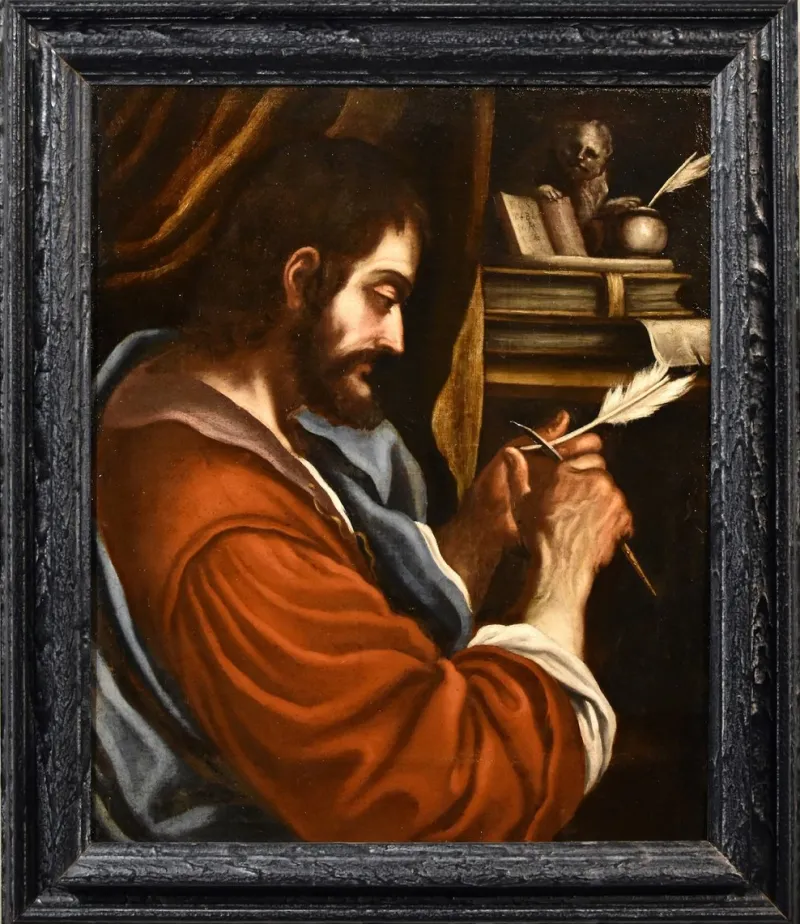
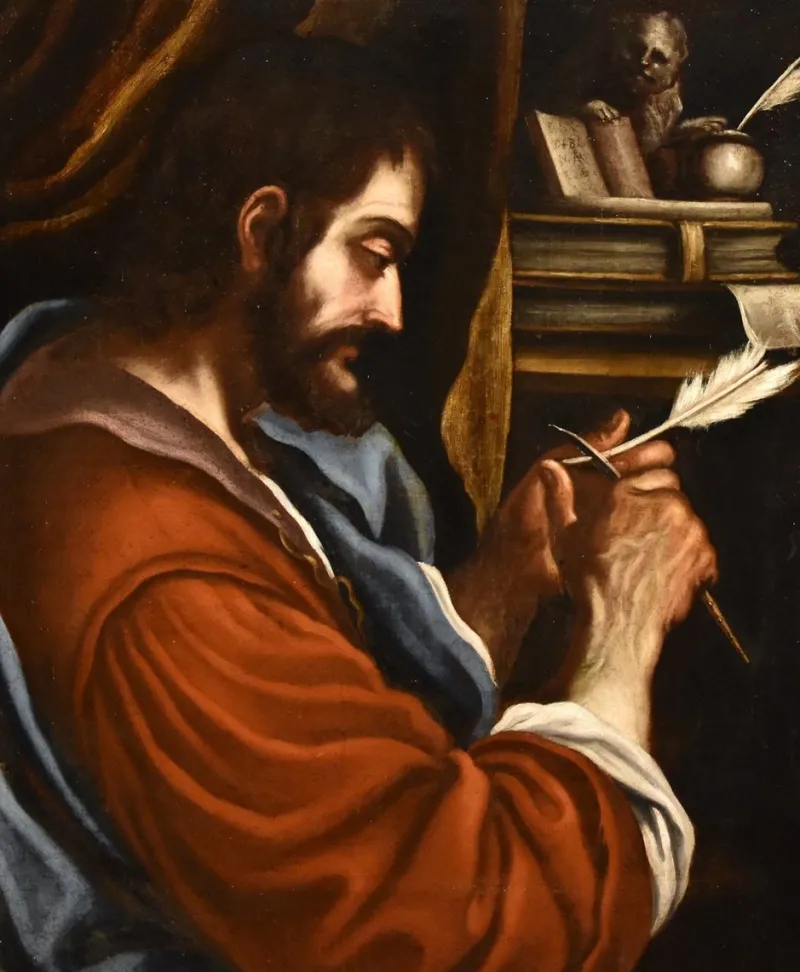
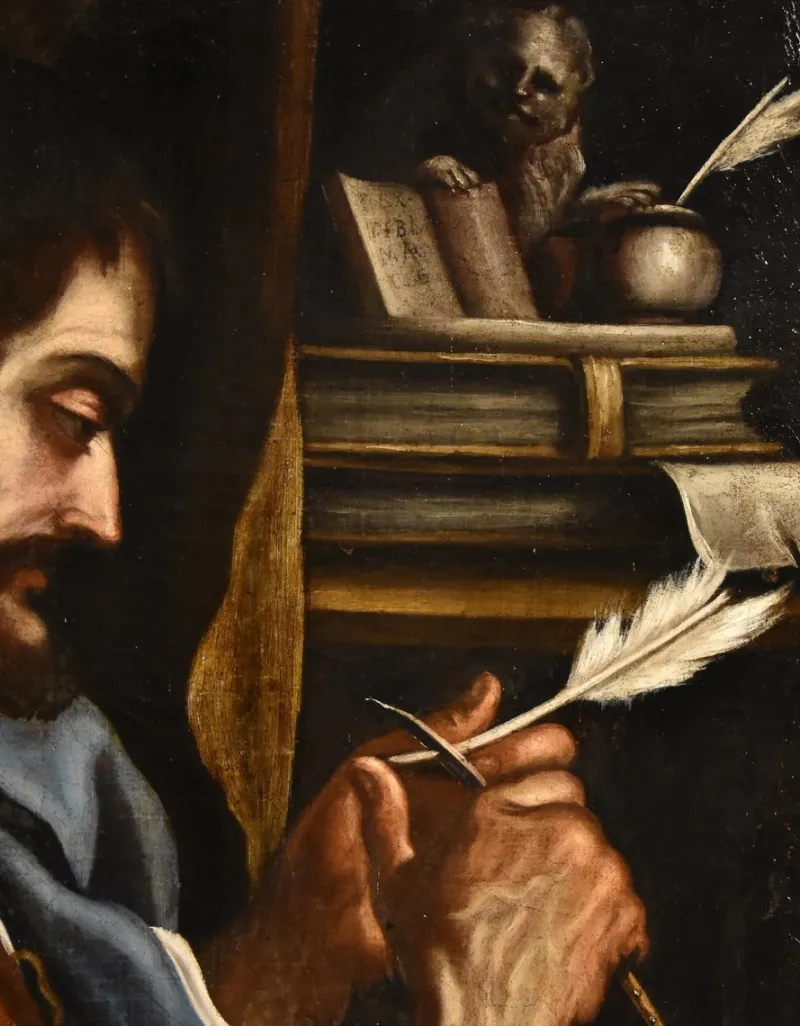
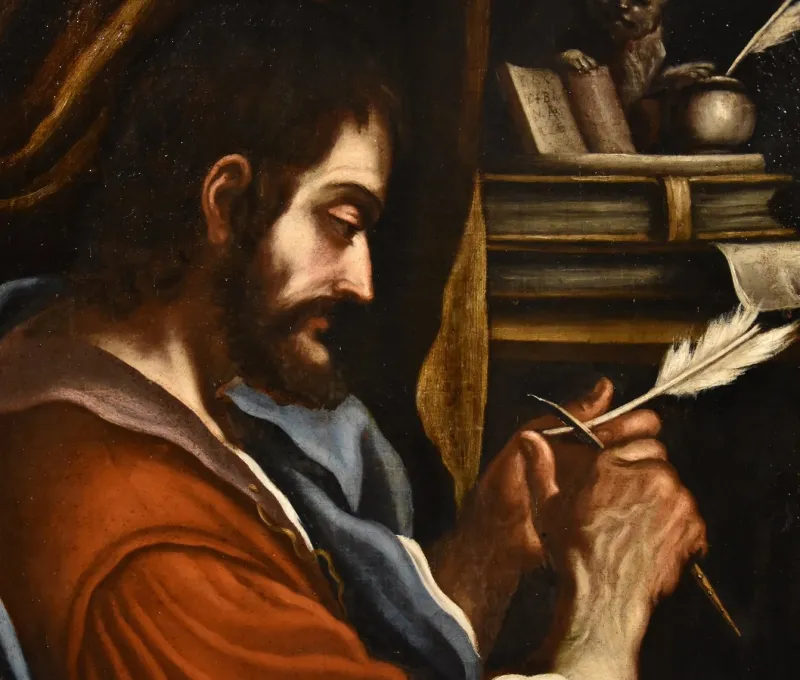
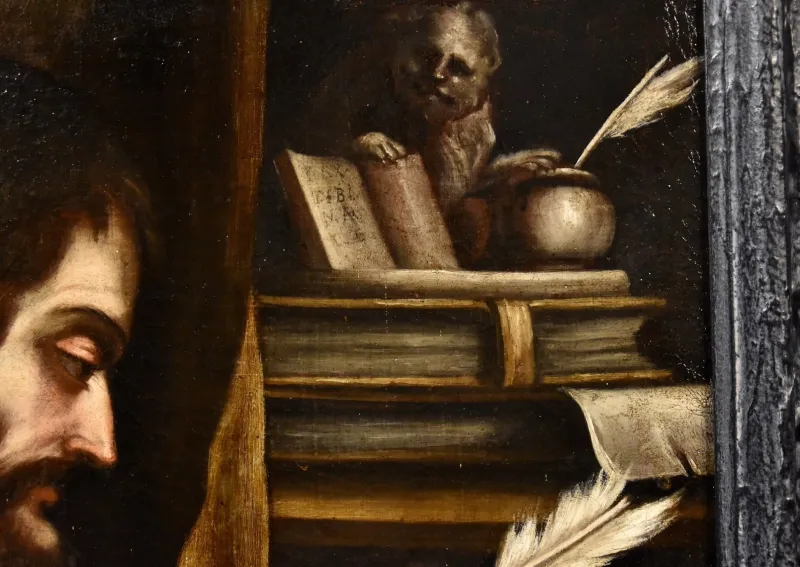
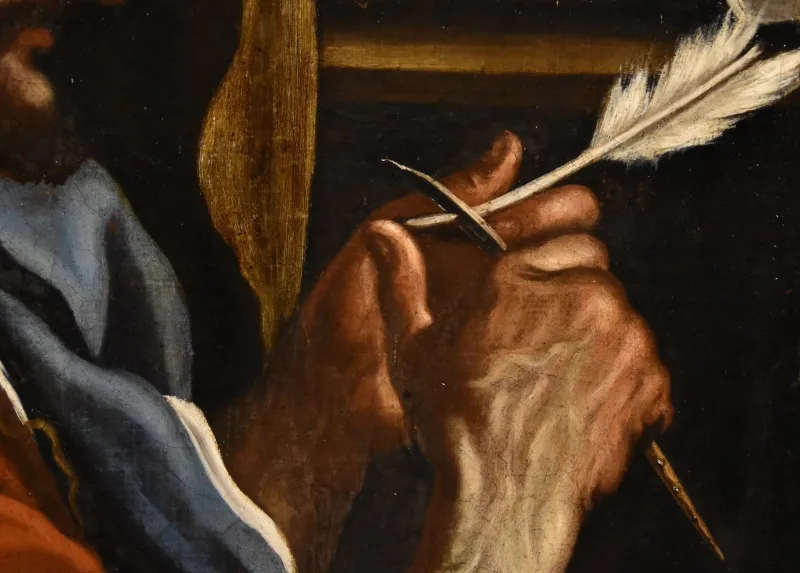
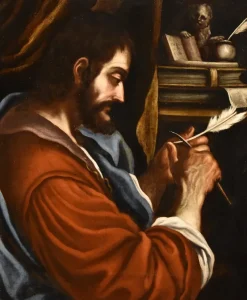
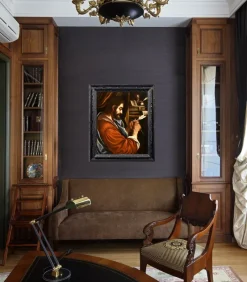
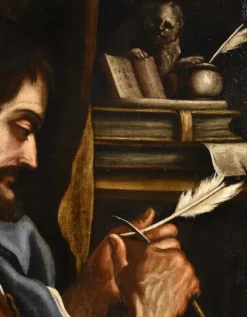
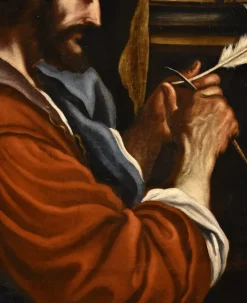
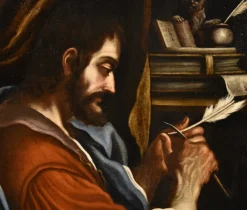
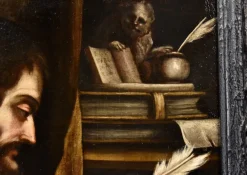
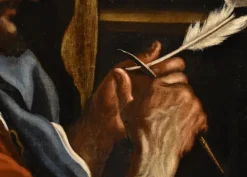
This precious 17th-century painting, of great character and excellent quality, depicts Saint Mark the Evangelist, half-length, in profile to the right, sharpening his quill pen. Against the dark background, on the right, one can glimpse a bookcase with several volumes, an inkwell, and a scroll—elements that allude to his role—and the lion with the open Gospel, attributes of the saint.
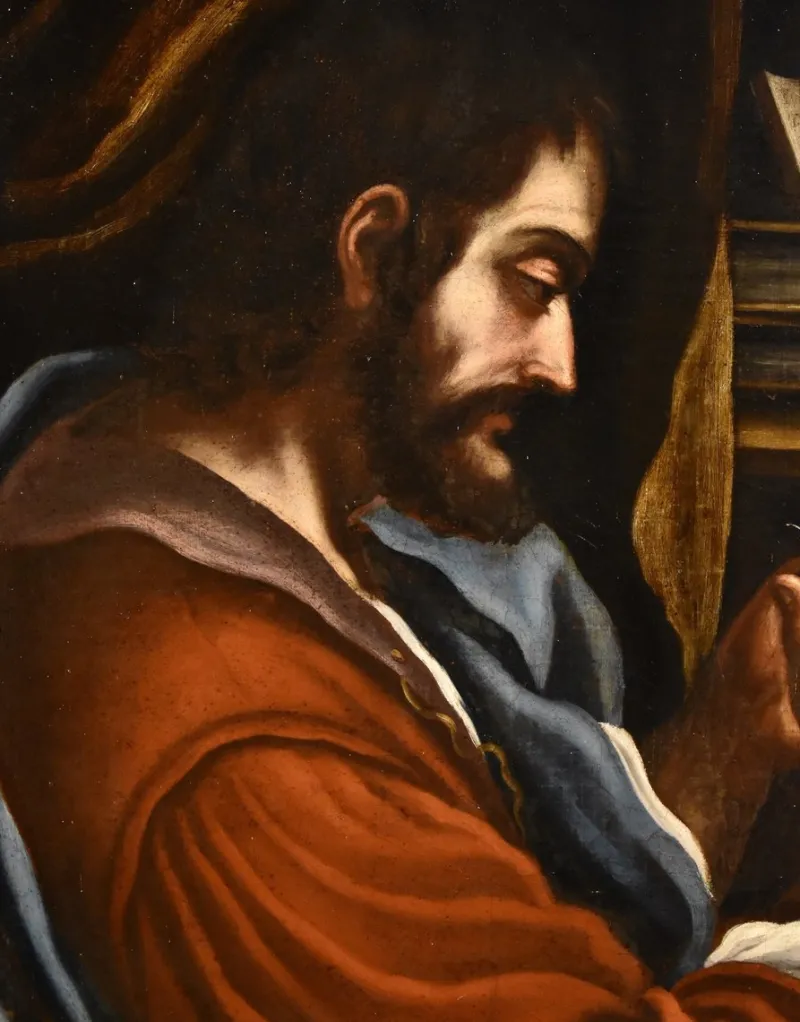
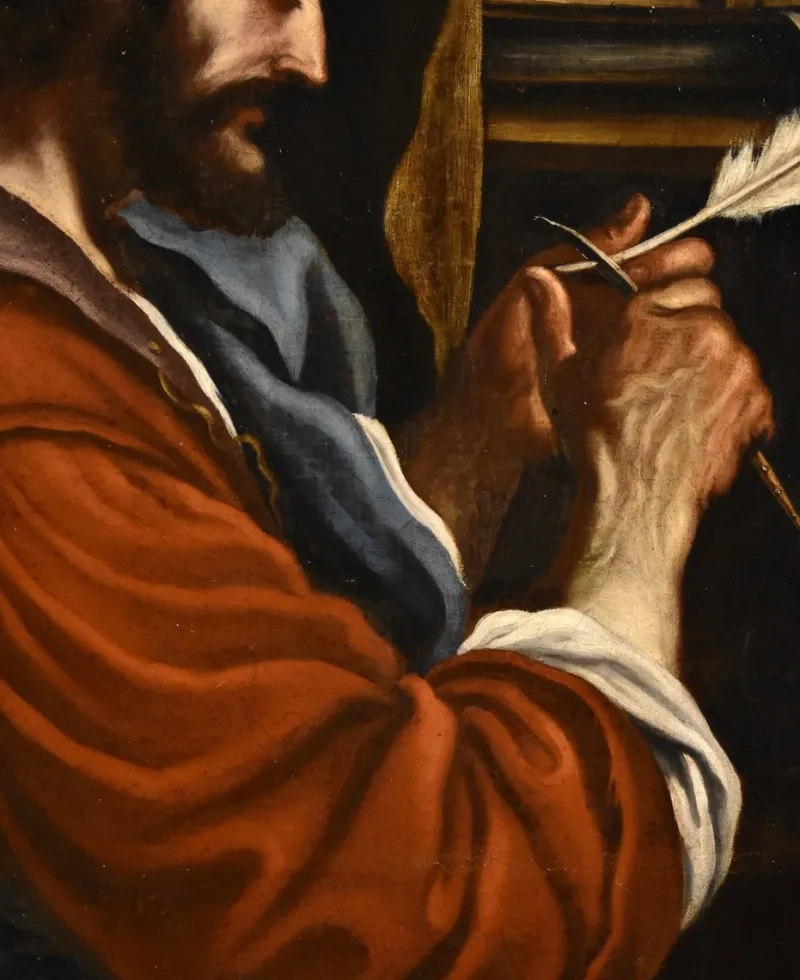
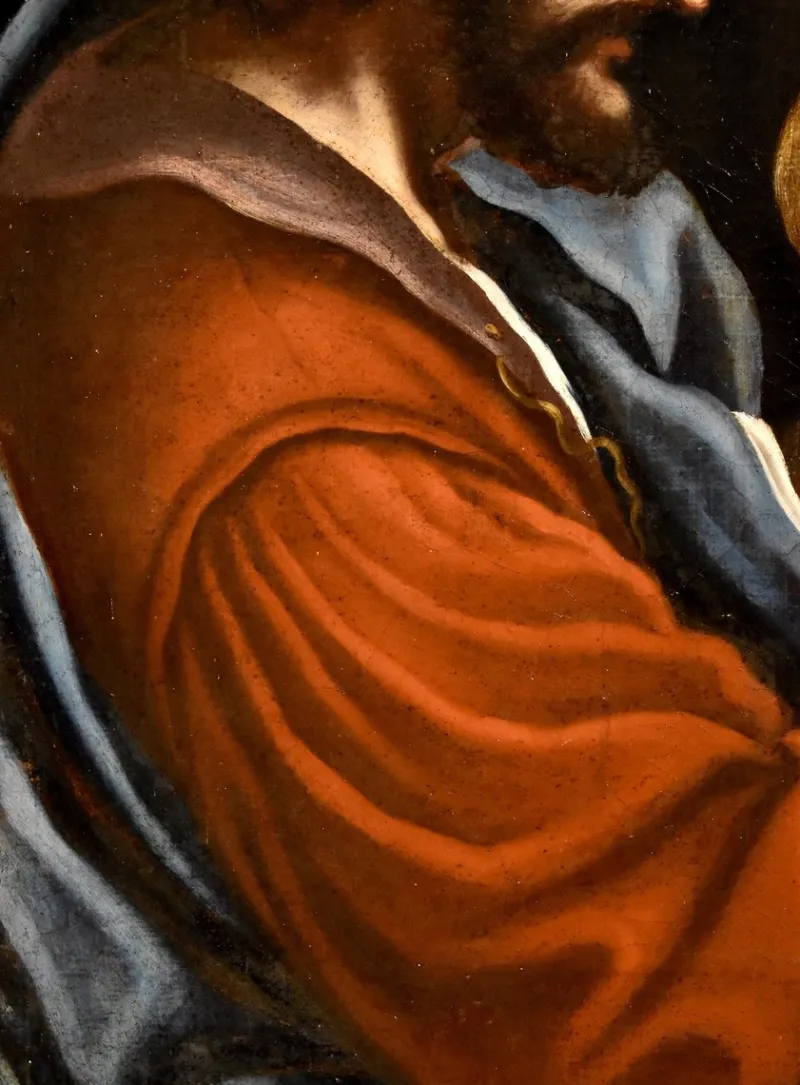
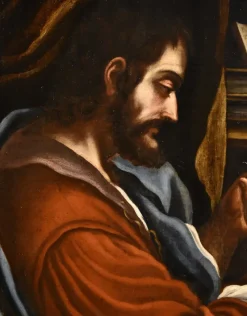
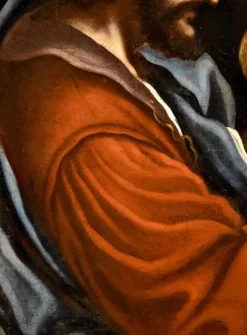
The Evangelist, with the features of a young man with thick hair and beard, possesses a powerful expressiveness. He wears a tunic highlighted by a deep red, covered over the shoulders by a blue cloak.
The iconography originates from the series of the Four Evangelists painted between 1615 and 1623 by Guercino, commissioned by Cardinal Alessandro d’Este, brother of Duke Cesare d’Este. These works were later sold in 1746 to Augustus III of Saxony and are now in the Gemäldegalerie in Dresden.
Our canvas therefore clearly demonstrates its close association with the 17th-century Emilian master: the execution technique and stylistic elements are consistent with those of a work dating back to the first half of the 17th century, which displays the characteristics of an artist closely associated with Guercino, well-informed on the painterly innovations conceived by the master, and therefore presumably active within his prestigious workshop.
In our specific case, the independent typological characteristics correspond to those of the painting of Bartolomeo Gennari (Conto, 1594 – Bologna, 1661), a painter who worked consistently alongside Barbieri.
Over the years of his long career, Bartolomeo devoted himself steadily to the creation of works and derivatives of Guercino’s compositions. For this reason, he is regarded as one of the master’s best official copyists, who routinely assigned him replicas of his finest inventions, sometimes personally intervening to perfect them and make them indistinguishable from Guercino’s original works.
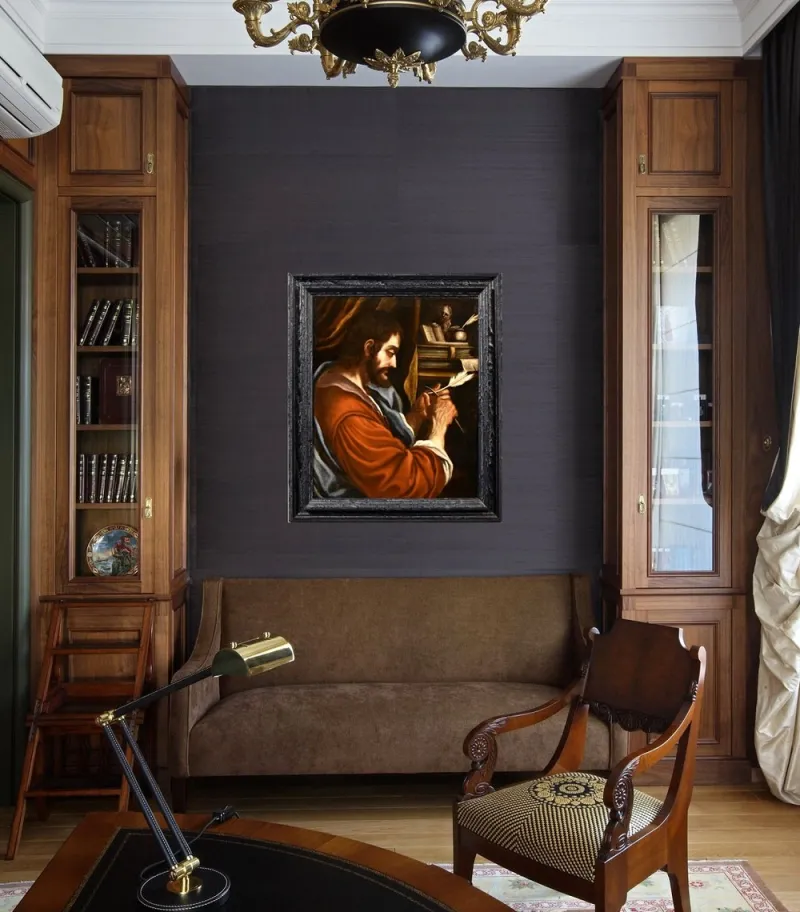
The painting is completed by a beautiful wooden frame.
ADDITIONAL INFORMATION:
The painting is sold with a certificate of authenticity and a descriptive iconographic sheet.
The seller assumes all responsibility for this listing.
About This Piece
Attributable to Bartolomeo Gennari (Cento, 1594 – Bologna, 1661)
Saint Mark the Evangelist
Oil on canvas – 85 x 71 cm, framed 100 x 86 cm.
This precious 17th-century painting, of great character and excellent quality, depicts Saint Mark the Evangelist, half-length, in profile to the right, sharpening his quill pen. Against the dark background, on the right, one can glimpse a bookcase with several volumes, an inkwell, and a scroll—elements that allude to his role—and the lion with the open Gospel, attributes of the saint.
The Evangelist, with the features of a young man with thick hair and beard, possesses a powerful expressiveness. He wears a tunic highlighted by a deep red, covered over the shoulders by a blue cloak.
The iconography originates from the series of the Four Evangelists painted between 1615 and 1623 by Guercino, commissioned by Cardinal Alessandro d’Este, brother of Duke Cesare d’Este. These works were later sold in 1746 to Augustus III of Saxony and are now in the Gemäldegalerie in Dresden.
Our canvas therefore clearly demonstrates its close association with the 17th-century Emilian master: the execution technique and stylistic elements are consistent with those of a work dating back to the first half of the 17th century, which displays the characteristics of an artist closely associated with Guercino, well-informed on the painterly innovations conceived by the master, and therefore presumably active within his prestigious workshop.
In our specific case, the independent typological characteristics correspond to those of the painting of Bartolomeo Gennari (Conto, 1594 – Bologna, 1661), a painter who worked consistently alongside Barbieri.
Over the years of his long career, Bartolomeo devoted himself steadily to the creation of works and derivatives of Guercino’s compositions. For this reason, he is regarded as one of the master’s best official copyists, who routinely assigned him replicas of his finest inventions, sometimes personally intervening to perfect them and make them indistinguishable from Guercino’s original works.
The painting is completed by a beautiful wooden frame.
ADDITIONAL INFORMATION:
The painting is sold with a certificate of authenticity and a descriptive iconographic sheet.
Click here for full descriptionClose description
| Period | Before 1890 |
|---|---|
| Year | 1680 |
| Production Period | Before 1890 |
| Country of Manufacture | Italy |
| Identifying Marks | This piece is attributed to the above-mentioned designer/maker. It has no attribution mark |
| Style | Classical, Figurative, Italian, Louis XIII, Mediterranean, Old Masters, Portraiture, Religious, Baroque, Rococo |
| Detailed Condition | Good — This vintage/antique item may have some wear such as scratches and other signs of ageing. |
| Restoration and Damage Details | Light wear consistent with age and use, Patina consistent with age and use, Reupholstered, Partially restored |
| Product Code | CYT-2336411 |
| Materials | Oil on Canvas |
| Color | Multicolored |
| Width | 86 cm 33.9 inch |
| Depth | 12 cm 4.7 inch |
| Height | 100 cm 39.4 inch |
Be the first to review “Pamono Workshop of Giovanni Francesco Barbieri / Detto Il Guercino, Saint Mark the Evangelist, 1680, Oil on Canvas> Old Masters|Classical”
Related products
Children's Chairs
Coffee & Side Tables
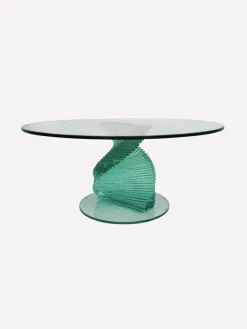
Sale Pamono Helix Spiral Sculptural Glass Coffee Table in the style of Danny Lane, 1980s
Daybeds & Chaises Lounges
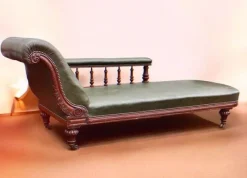
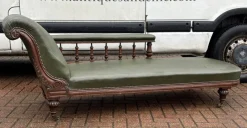
New Pamono Antique Victorian Oak Chaise Longue in Green Leather with Brass Castors


Children's Chairs




Cabinets & Wardrobes
Dressers, Commodes & Chests
Login

Reviews
There are no reviews yet.