
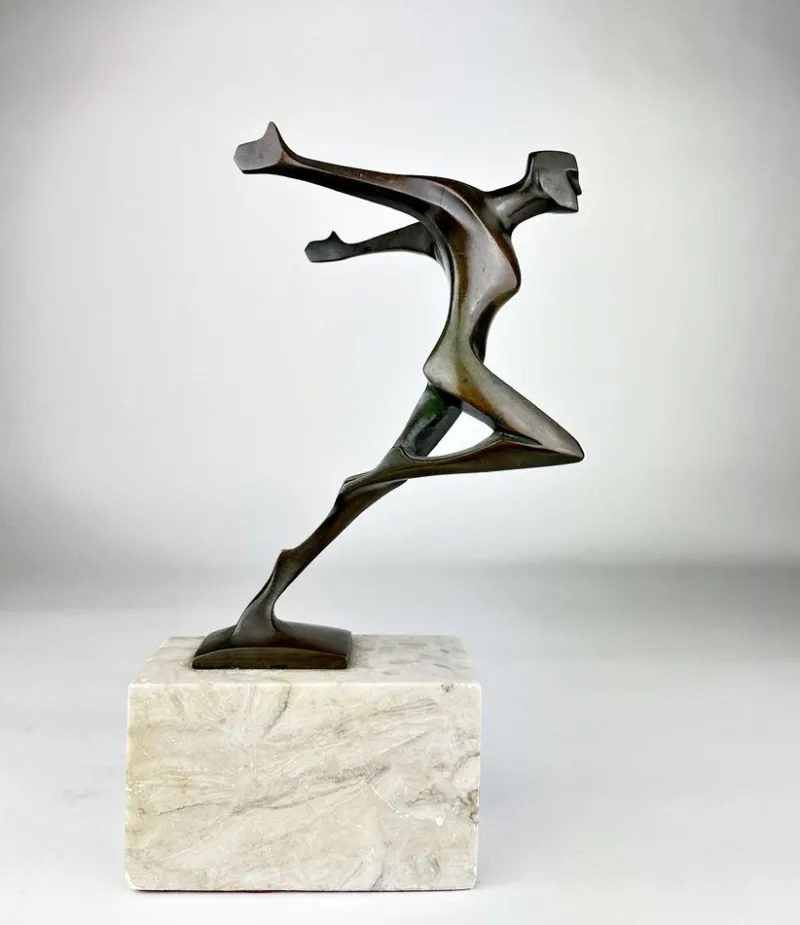
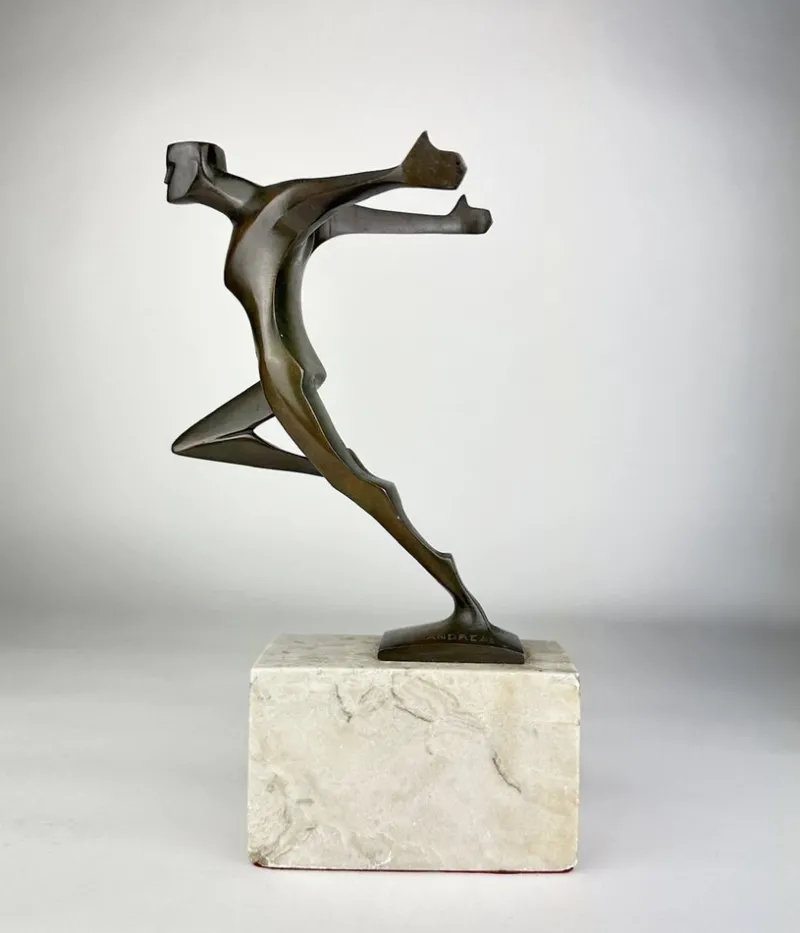
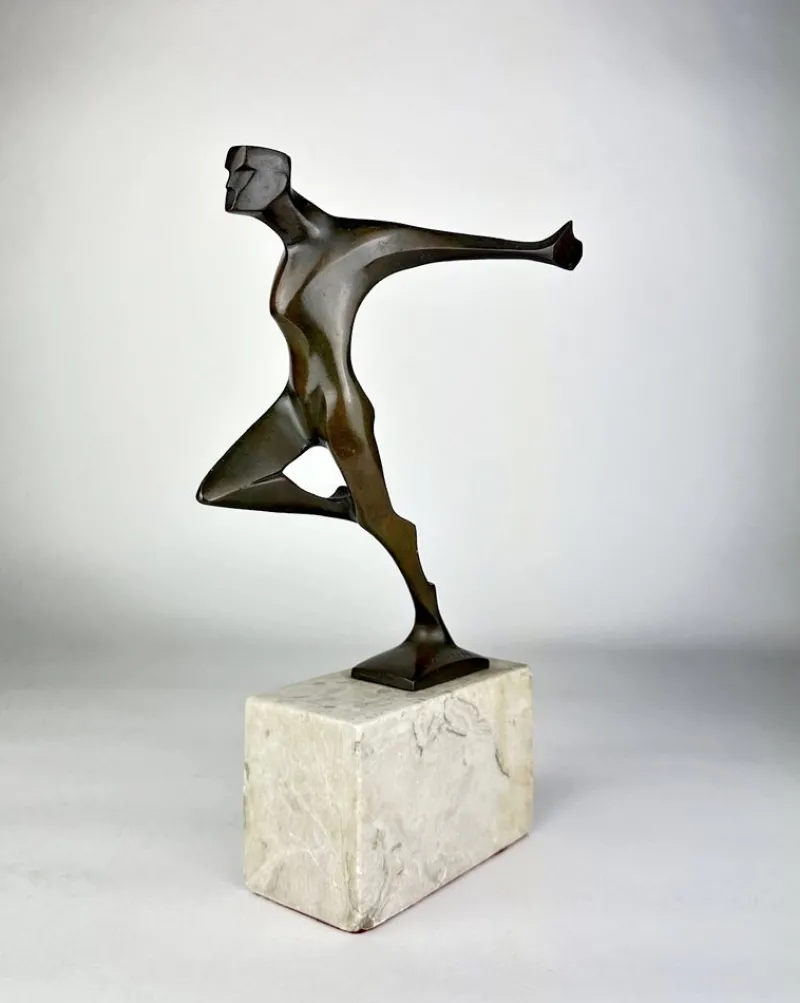
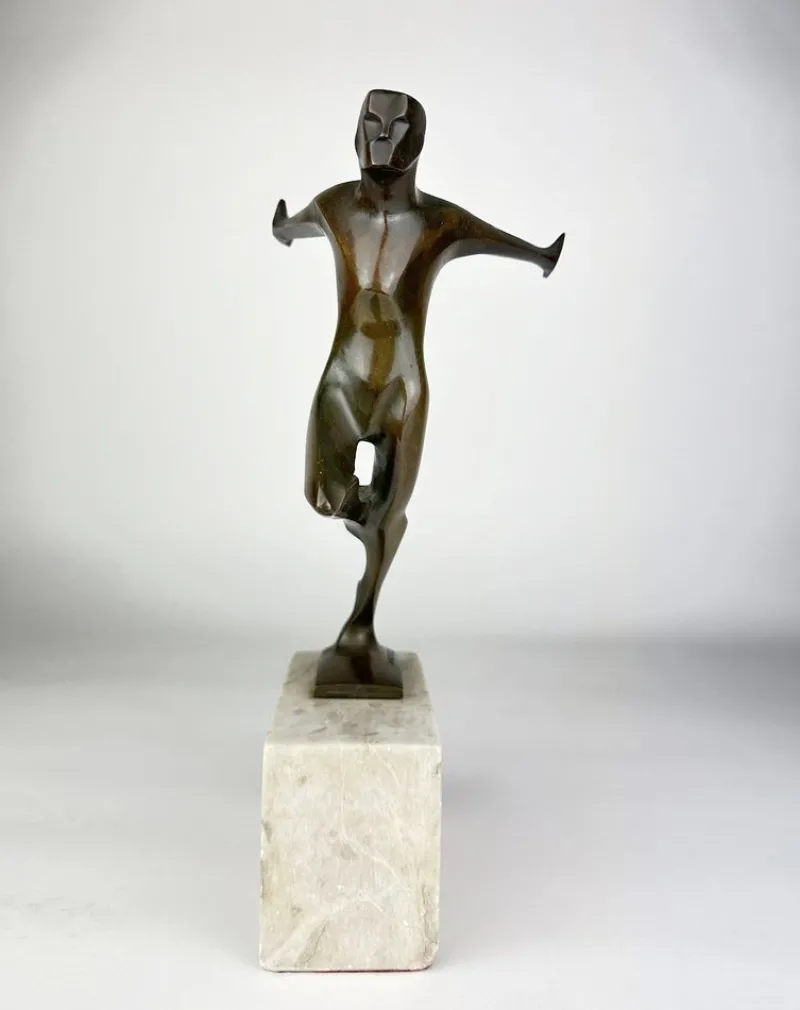
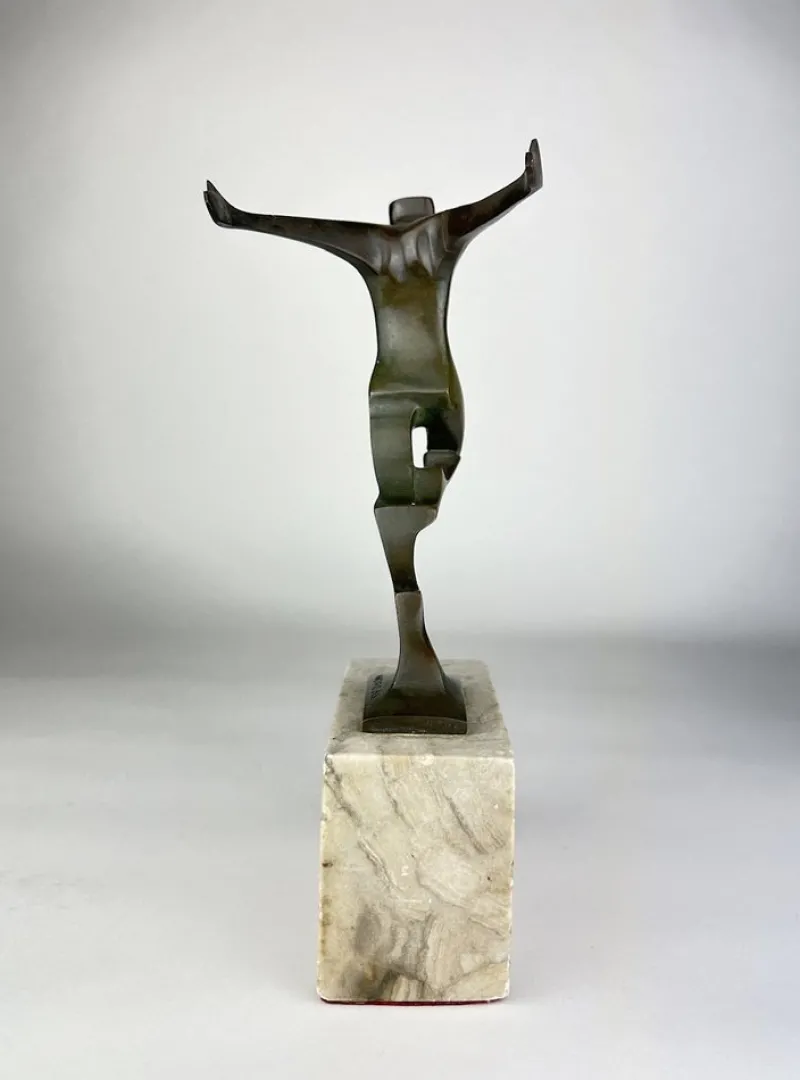
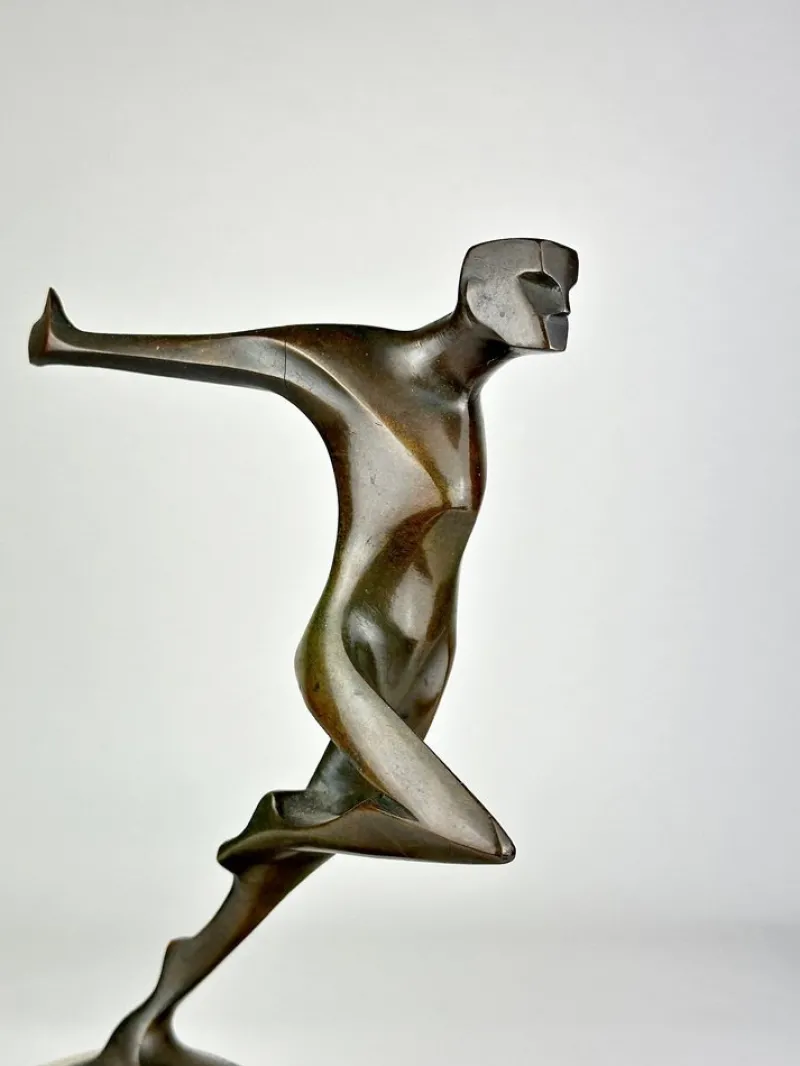
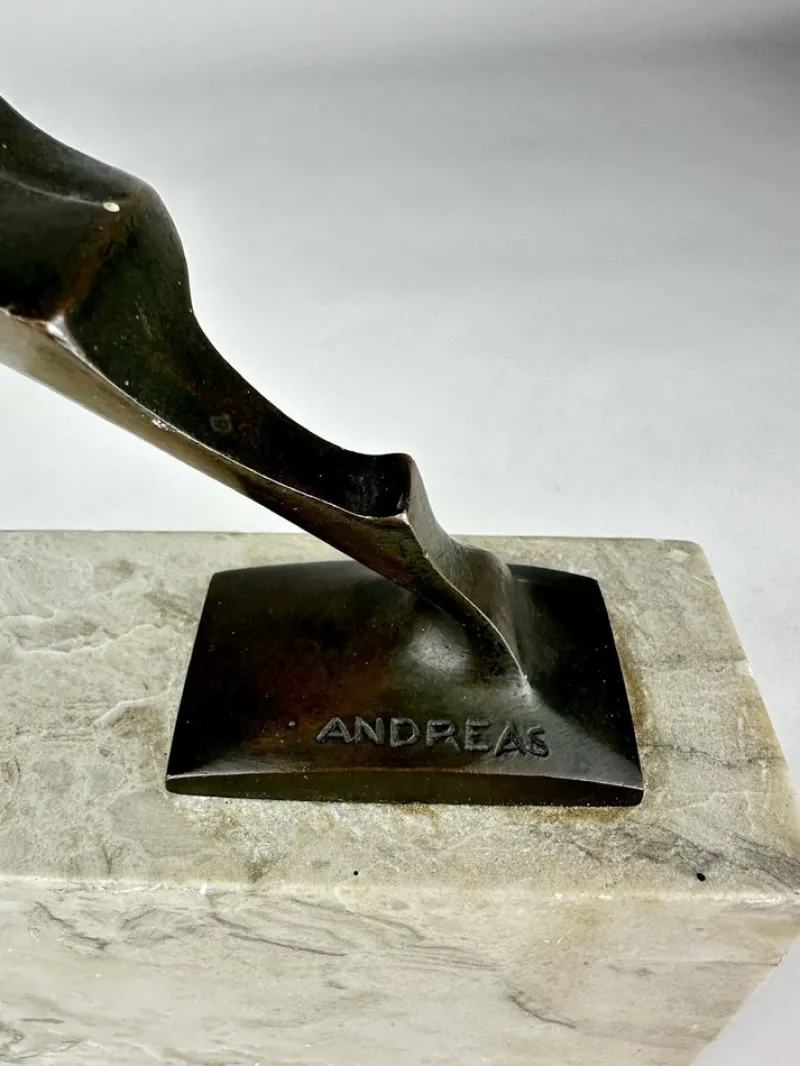
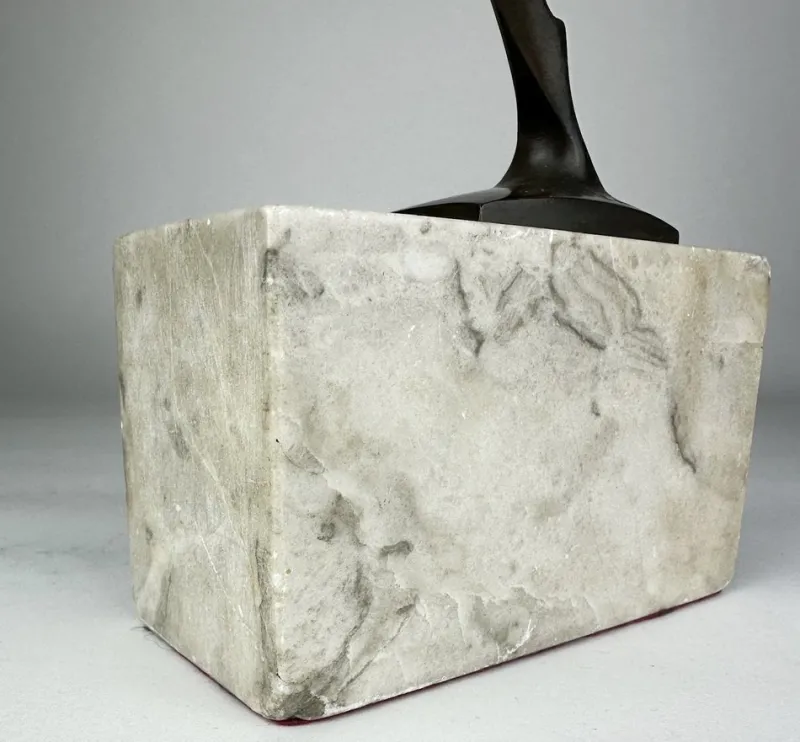
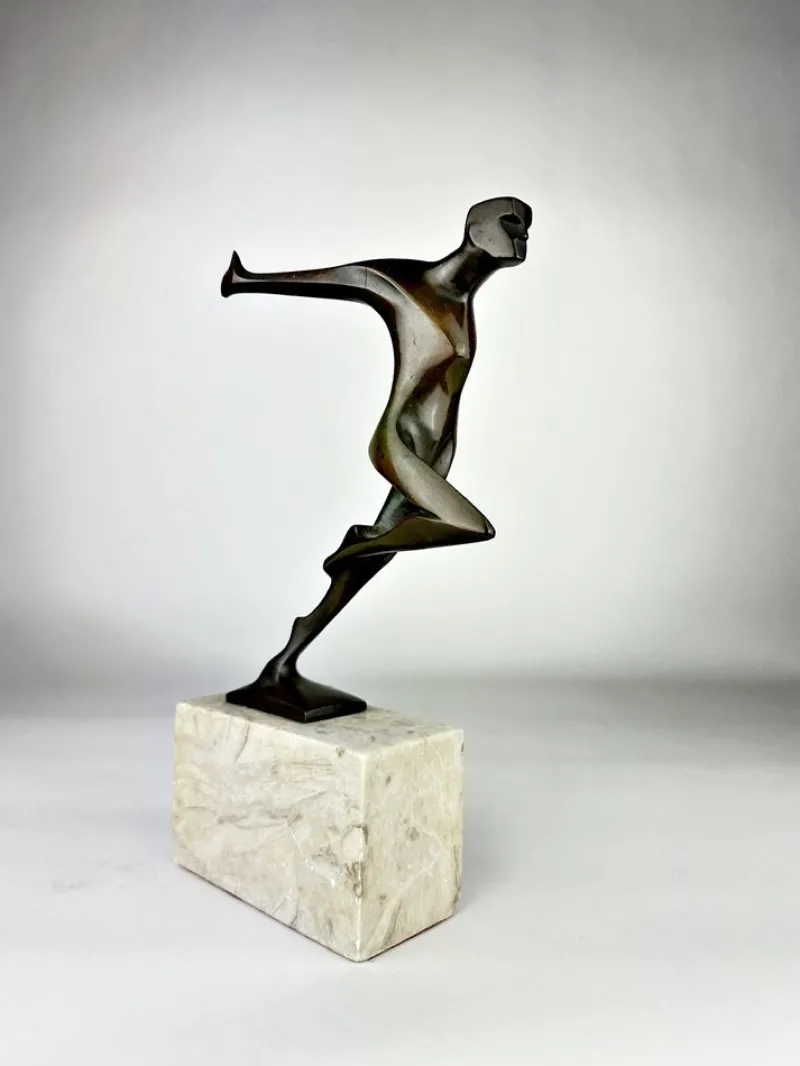
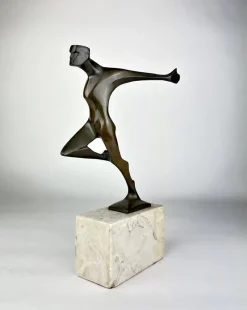
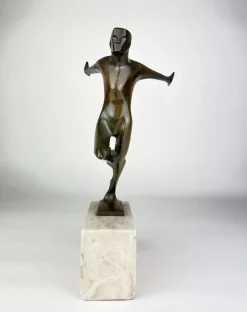
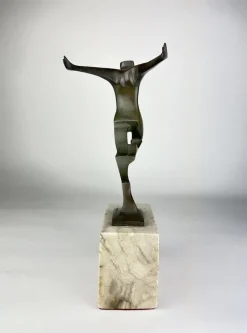
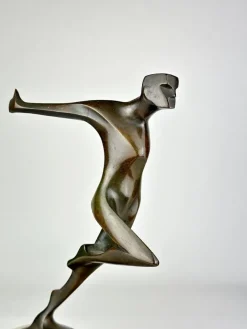
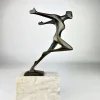
Pamono Wilhelm Andreas, Signed Art Deco Bronze, The Will, Germany, 1930s> Art Deco
$140.89
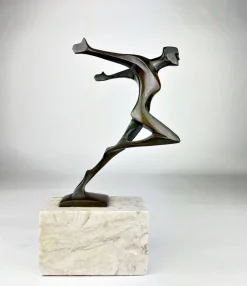
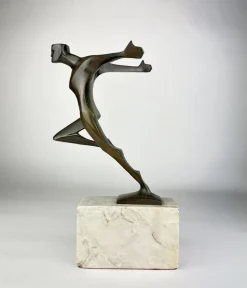
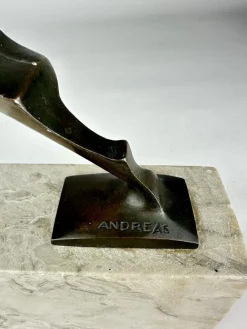
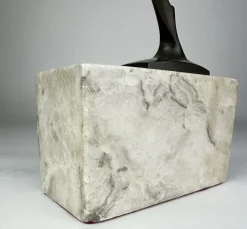
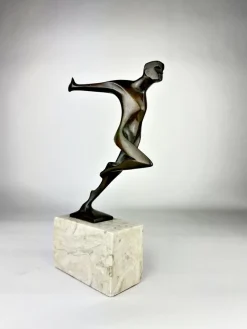
Wilhelm AndreasLeipzig 1882 – 1951The WillleBronze, signedHeight including base 26.7 cmgood conditionAuthenticity will b…
Leipzig 1882 – 1951
The Willle
Bronze, signed
Height including base 26.7 cm
good condition
Authenticity will be confirmed in writing
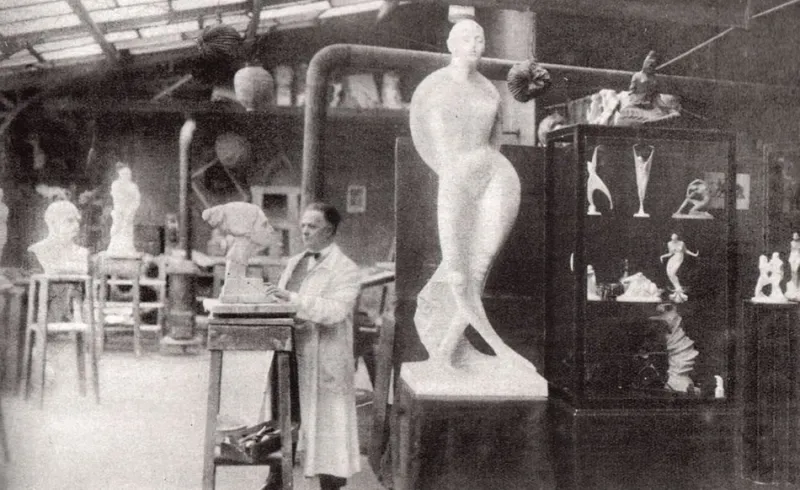
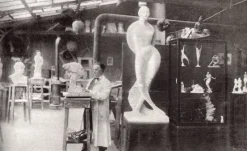
Wilhelm Andreas studied from Easter 1899 to Easter 1903 as a full-time student at the Leipzig Art Academy and was again a student of Adolf Lehnert from 1919 to 1920. In the meantime, he worked in Berlin for ten years with craft work and continued his self-taught training on study trips that took him to Rome and Paris. He then settled in Leipzig as a freelance artist. He lived at Zeitzer Straße 2a (today Karl-Liebknecht-Straße). His studio was in the Künstlerhaus on Nikischplatz. After its destruction on December 4, 1943, he and Johannes Hartmann used Max Klinger’s badly damaged former studio, of which Hartmann was the owner.
In addition to sculptural work on industrial and public buildings such as the Leipzig Post Office building, Andreas mainly created portrait busts and reliefs made of bronze. When it came to small figurative sculptures, his artistic interest was focused on the expression of rhythm and movement, which is why his moderately expressionistic designs often feature strong stylizations and are often dedicated thematically to the sports genre. from 1914 onwards, these figures were increasingly made of white glazed porcelain.
Andreas was active in sports himself. He was also involved in publications of the Association of Central German Ball Game Clubs, in which he was organized. He won numerous sports awards and was the recipient of the association’s Silver Badge of Honor for the Northwest Saxony region. This also explains the depiction of sports officials in his sculptural work.
In 1927 his works were shown in a collective exhibition at the Leipzig Künstlerhaus. In 1932 he was represented with five works at the 2nd major art exhibition in Berlin. In 1939, 1941 and 1942 he took part in the major German art exhibitions in Munich with one work each. Andreas also worked as an interior designer.
He died in Leipzig. The urn of the long-time chairman of the Saxon Association of Visual Artists was buried in a prominent place in the southern cemetery there. The burial site has not been preserved.
The seller assumes all responsibility for this listing.
About This Piece
Leipzig 1882 – 1951
The Willle
Bronze, signed
Height including base 26.7 cm
good condition
Authenticity will be confirmed in writing
Wilhelm Andreas studied from Easter 1899 to Easter 1903 as a full-time student at the Leipzig Art Academy and was again a student of Adolf Lehnert from 1919 to 1920. In the meantime, he worked in Berlin for ten years with craft work and continued his self-taught training on study trips that took him to Rome and Paris. He then settled in Leipzig as a freelance artist. He lived at Zeitzer Straße 2a (today Karl-Liebknecht-Straße). His studio was in the Künstlerhaus on Nikischplatz. After its destruction on December 4, 1943, he and Johannes Hartmann used Max Klinger’s badly damaged former studio, of which Hartmann was the owner.
In addition to sculptural work on industrial and public buildings such as the Leipzig Post Office building, Andreas mainly created portrait busts and reliefs made of bronze. When it came to small figurative sculptures, his artistic interest was focused on the expression of rhythm and movement, which is why his moderately expressionistic designs often feature strong stylizations and are often dedicated thematically to the sports genre. from 1914 onwards, these figures were increasingly made of white glazed porcelain.
Andreas was active in sports himself. He was also involved in publications of the Association of Central German Ball Game Clubs, in which he was organized. He won numerous sports awards and was the recipient of the association’s Silver Badge of Honor for the Northwest Saxony region. This also explains the depiction of sports officials in his sculptural work.
In 1927 his works were shown in a collective exhibition at the Leipzig Künstlerhaus. In 1932 he was represented with five works at the 2nd major art exhibition in Berlin. In 1939, 1941 and 1942 he took part in the major German art exhibitions in Munich with one work each. Andreas also worked as an interior designer.
He died in Leipzig. The urn of the long-time chairman of the Saxon Association of Visual Artists was buried in a prominent place in the southern cemetery there. The burial site has not been preserved.
Click here for full descriptionClose description
| Period | 1920 to 1949 |
|---|---|
| Production Period | 1930 to 1939 |
| Country of Manufacture | Germany |
| Identifying Marks | This piece has an attribution mark |
| Style | Art Deco |
| Detailed Condition | Very Good — This vintage/antique item has no defects, but it may show slight traces of use. |
| Restoration and Damage Details | Light wear consistent with age and use, Base slightly bumped |
| Product Code | QFT-2109693 |
| Materials | Bronze |
| Color | Puce |
| Width | 18 cm 7.1 inch |
| Depth | 6 cm 2.2 inch |
| Height | 28 cm 10.9 inch |
Be the first to review “Pamono Wilhelm Andreas, Signed Art Deco Bronze, The Will, Germany, 1930s> Art Deco”
Related products




Cabinets & Wardrobes


Beds & Bedroom Sets
Login
Reviews
There are no reviews yet.