
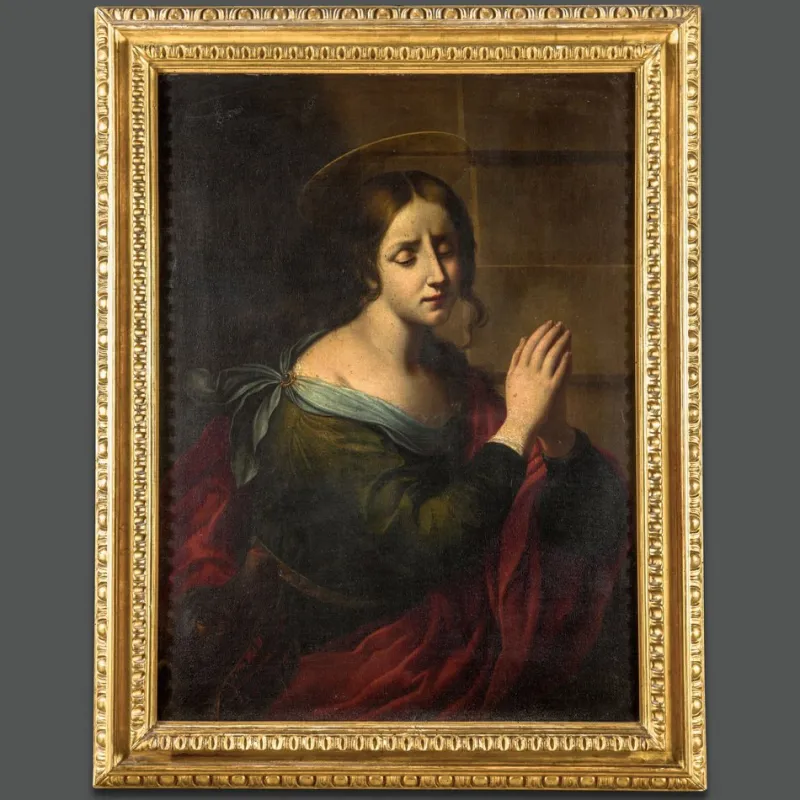

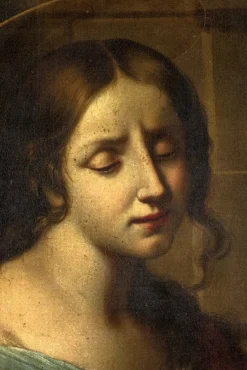
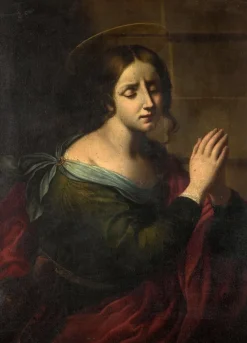
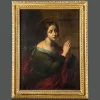
Pamono Onorio Marinari, St Margaret, 1600s, Oil on Canvas> Old Masters
$136.89
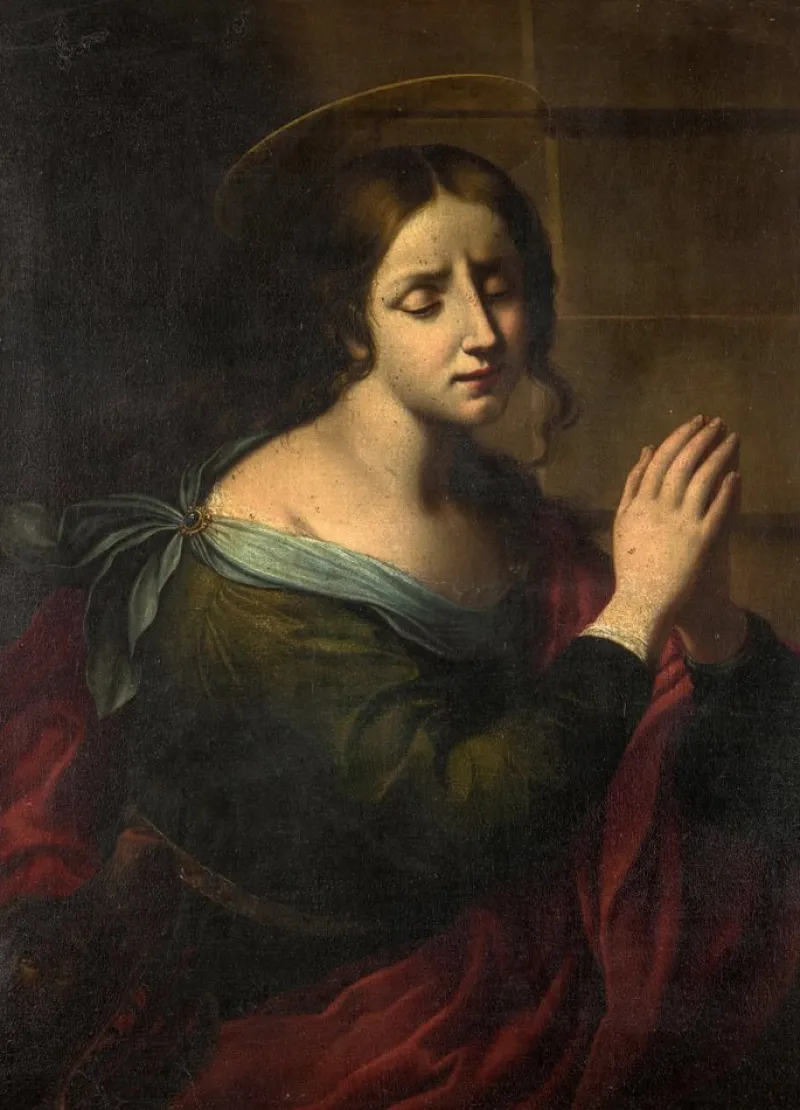
A very important painting by the great artist of the Florentine school, Onorio Marinari.Dr. Silvia Benassai has confirme…
Dr. Silvia Benassai has confirmed Marinari’s authorship of the Saint Margaret of Antioch.
Onorio Marinari (1627 – 5 January 1715) was a very important Italian painter and printmaker of the Baroque period, active mainly in Florence.
His father, Sigismondo di Pietro Marinari, was also a painter, and he trained with his cousin, Carlo Dolci, later being also influenced by Simone Pignoni and Francesco Furini.
His fresco in the Palazzo Capponi, Florence, is dated 1707. He worked mainly in Florence for Florentine and Tuscan clients, but he did not devote himself only to painting.
In fact, in 1674, he published an essay on astronomy entitled Fabbrica ed uso dell’ Annulo Astronomico. Bartolomeo Bimbi was one of his pupils.
St. Margaret of Antioch
July 20, Martyr
Margaret, known as Margaret of Antioch in the West, and as Saint Marina the Great Martyr (Ancient Greek: Ἁγία Μαρίνα) in the East, is celebrated as a saint on 20 July in Western Christianity, on 30th of July (Julian calendar) by the Eastern Orthodox Church, and on Epip 23 and Hathor 23 in the Coptic Orthodox Church.
She was reputed to have promised very powerful indulgences to those who wrote or read her life or invoked her intercessions; these no doubt helped the spread of her following.
Margaret is one of the Fourteen Holy Helpers and is one of the saints with whom Joan of Arc claimed to have spoken
Her father was a pagan priest in Pisidian Antioch, Asia Minor (modern Turkey).
Her mother died when Margaret was an infant, and the girl was raised by a Christian woman. Margaret’s father disowned her, her nurse adopted her, and Margaret converted, consecrating herself and her virginity to God.
One day a Roman prefect saw the beautiful young Margaret as she was tending sheep, and tried to get her into his bed. When she refused, the official denounced her as a outlaw Christian, and she was brought to trial. When she refused to sacrifice to the pagan gods, the authorities tried to burn her, then boil her in a large cauldron; each time her prayers kept her unharmed.
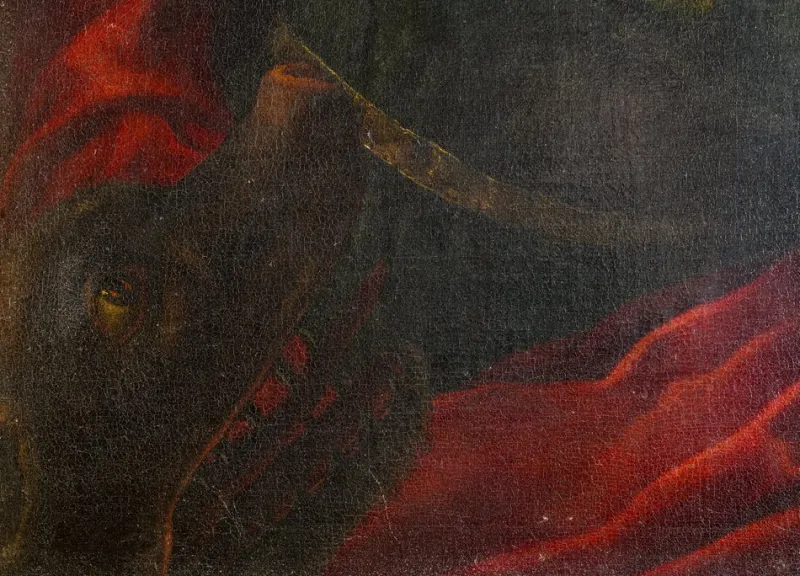
Part of her story involves her meeting the devil in the form of a dragon, being swallowed by the dragon, and then escaping safely when the cross she carried irritated the dragon‘s innards; this accounts for this virgin’s association with pregnancy, labour, and childbirth.
She was finally martyred by beheading.
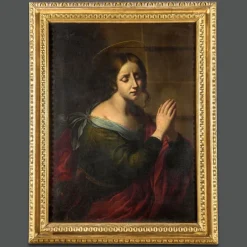
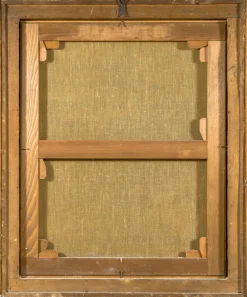
This artwork, never before on the market, comes from an important Italian private collection and is beautified by an impressive antique frame in gilded wood, in almost perfect condition.
Dimensions are frame included
The seller assumes all responsibility for this listing.
About This Piece
Dr. Silvia Benassai has confirmed Marinari’s authorship of the Saint Margaret of Antioch.
Onorio Marinari (1627 – 5 January 1715) was a very important Italian painter and printmaker of the Baroque period, active mainly in Florence.
His father, Sigismondo di Pietro Marinari, was also a painter, and he trained with his cousin, Carlo Dolci, later being also influenced by Simone Pignoni and Francesco Furini.
His fresco in the Palazzo Capponi, Florence, is dated 1707. He worked mainly in Florence for Florentine and Tuscan clients, but he did not devote himself only to painting.
In fact, in 1674, he published an essay on astronomy entitled Fabbrica ed uso dell’ Annulo Astronomico. Bartolomeo Bimbi was one of his pupils.
St. Margaret of Antioch
July 20, Martyr
Margaret, known as Margaret of Antioch in the West, and as Saint Marina the Great Martyr (Ancient Greek: Ἁγία Μαρίνα) in the East, is celebrated as a saint on 20 July in Western Christianity, on 30th of July (Julian calendar) by the Eastern Orthodox Church, and on Epip 23 and Hathor 23 in the Coptic Orthodox Church.
She was reputed to have promised very powerful indulgences to those who wrote or read her life or invoked her intercessions; these no doubt helped the spread of her following.
Margaret is one of the Fourteen Holy Helpers and is one of the saints with whom Joan of Arc claimed to have spoken
Her father was a pagan priest in Pisidian Antioch, Asia Minor (modern Turkey).
Her mother died when Margaret was an infant, and the girl was raised by a Christian woman. Margaret’s father disowned her, her nurse adopted her, and Margaret converted, consecrating herself and her virginity to God.
One day a Roman prefect saw the beautiful young Margaret as she was tending sheep, and tried to get her into his bed. When she refused, the official denounced her as a outlaw Christian, and she was brought to trial. When she refused to sacrifice to the pagan gods, the authorities tried to burn her, then boil her in a large cauldron; each time her prayers kept her unharmed.
Part of her story involves her meeting the devil in the form of a dragon, being swallowed by the dragon, and then escaping safely when the cross she carried irritated the dragon‘s innards; this accounts for this virgin’s association with pregnancy, labour, and childbirth.
She was finally martyred by beheading.
This artwork, never before on the market, comes from an important Italian private collection and is beautified by an impressive antique frame in gilded wood, in almost perfect condition.
Dimensions are frame included
Click here for full descriptionClose description
| Period | Before 1890 |
|---|---|
| Production Period | Before 1890 |
| Country of Manufacture | Italy |
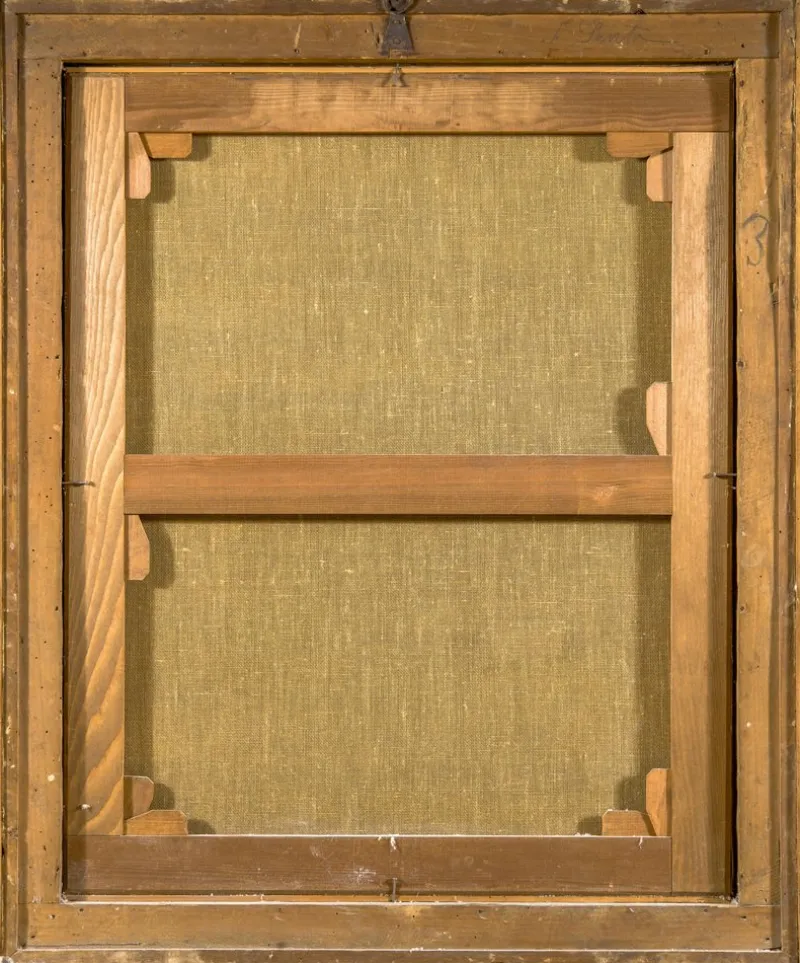
| Identifying Marks | This piece has an attribution mark |
| Style | Classical, Italian, Old Masters, Religious, Baroque |
| Detailed Condition | Very Good — This vintage/antique item has no defects, but it may show slight traces of use. |
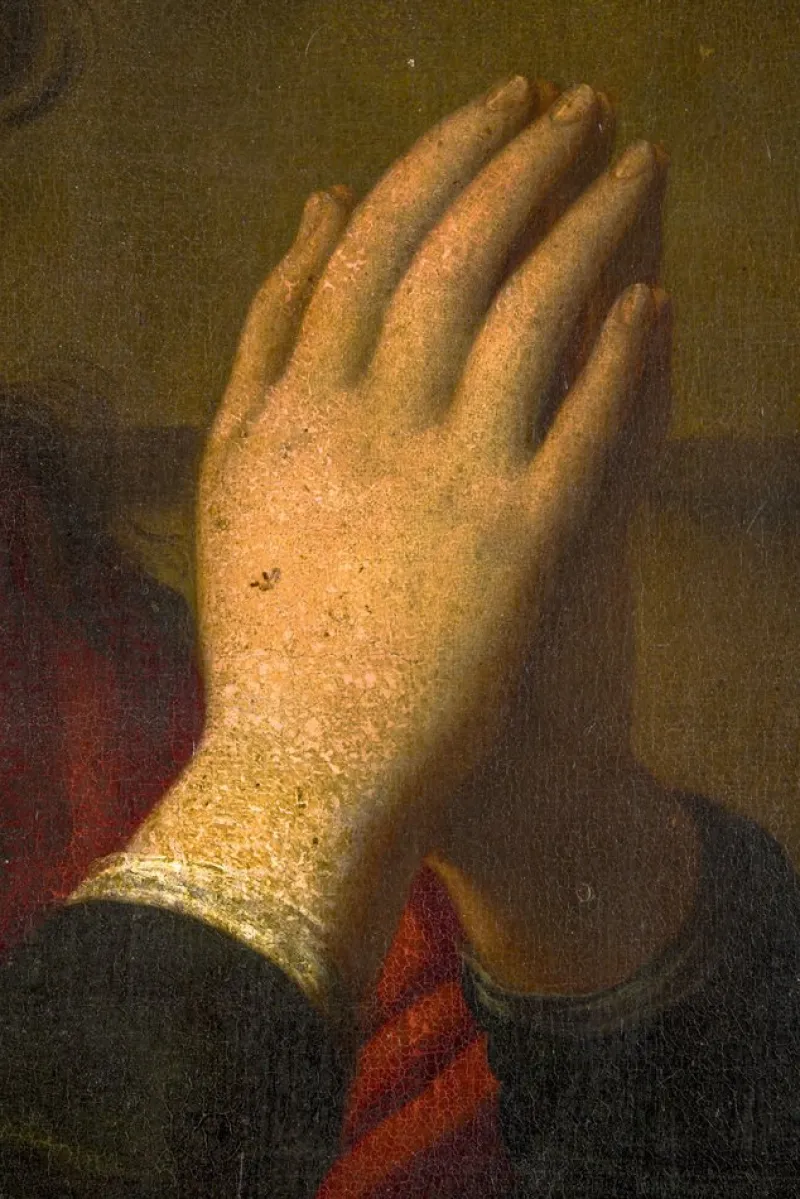
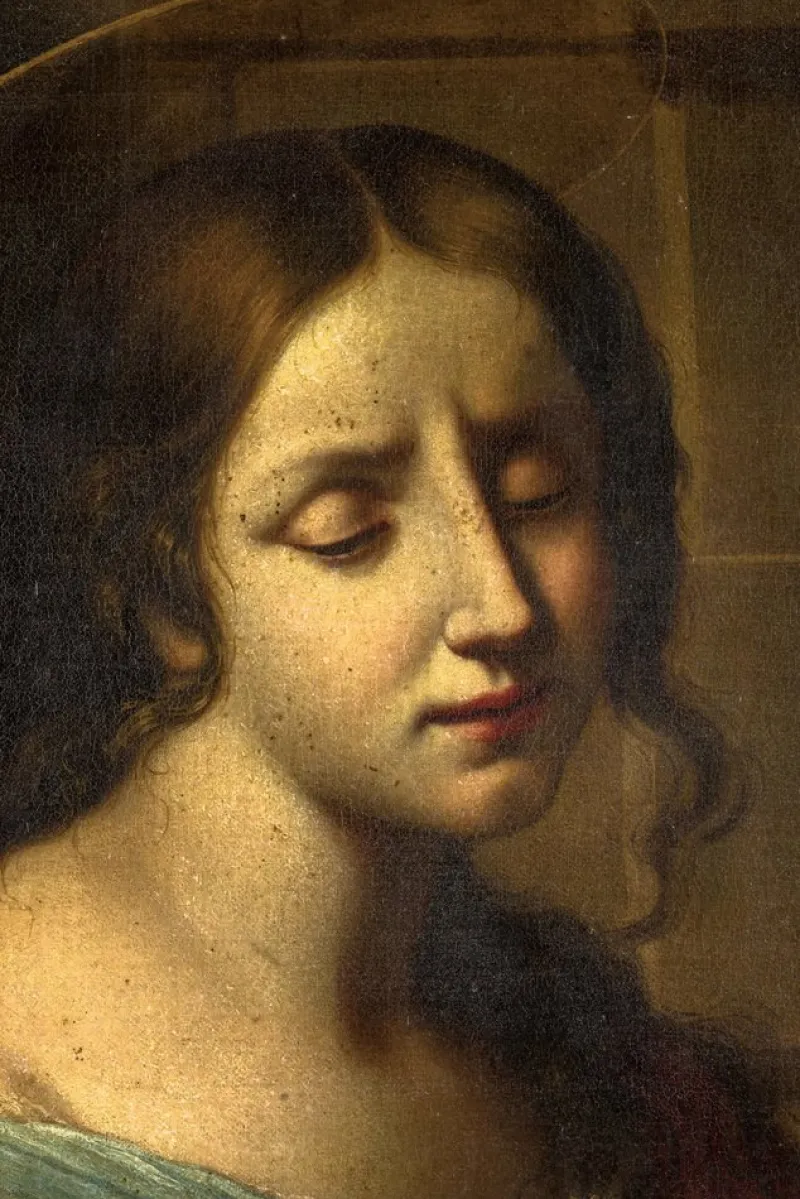
| Restoration and Damage Details | Light wear consistent with age and use, Heavy signs of use, Patina consistent with age and use |
| Product Code | MAX-2113081 |
| Materials | Oil on Canvas |
| Color | Multicolored |
| Width | 75 cm 29.5 inch |
| Depth | 10 cm 3.9 inch |
| Height | 95 cm 37.4 inch |
Be the first to review “Pamono Onorio Marinari, St Margaret, 1600s, Oil on Canvas> Old Masters”
Related products





Daybeds & Chaises Lounges


Children's Chairs




Cabinets & Wardrobes




Children's Chairs



Login
Reviews
There are no reviews yet.