
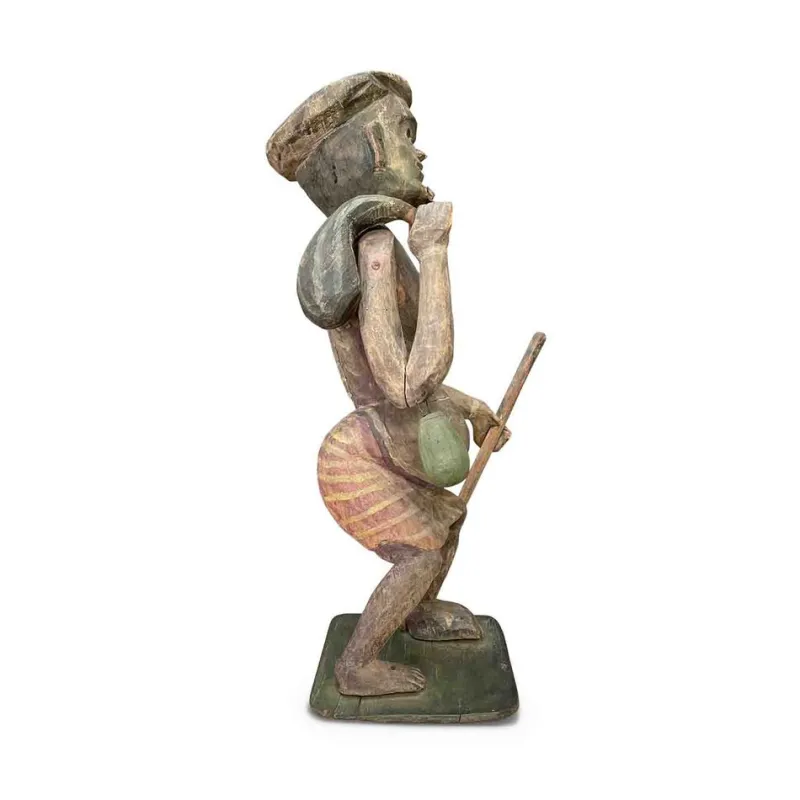
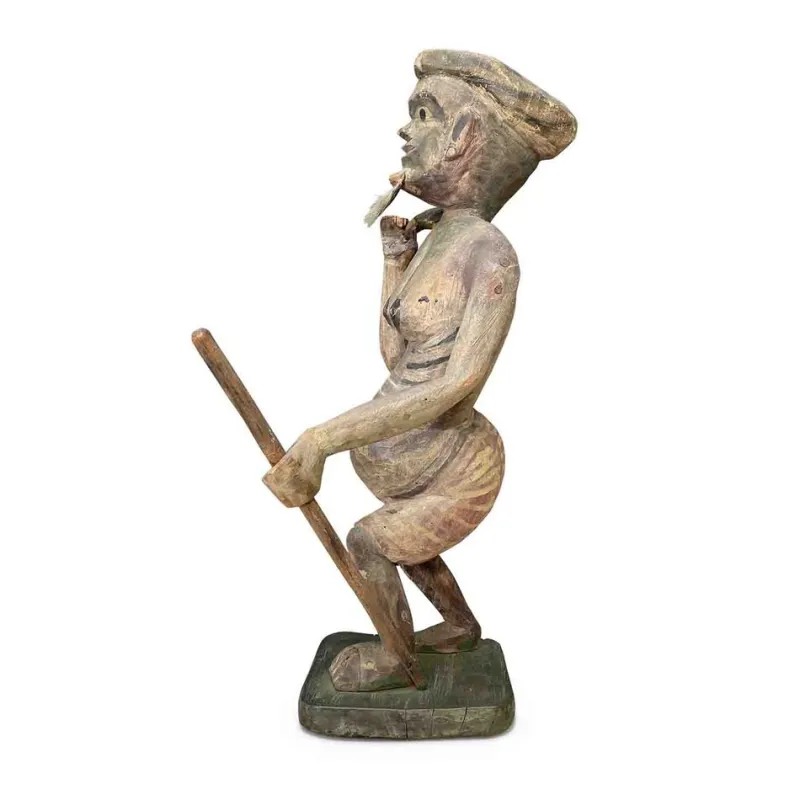
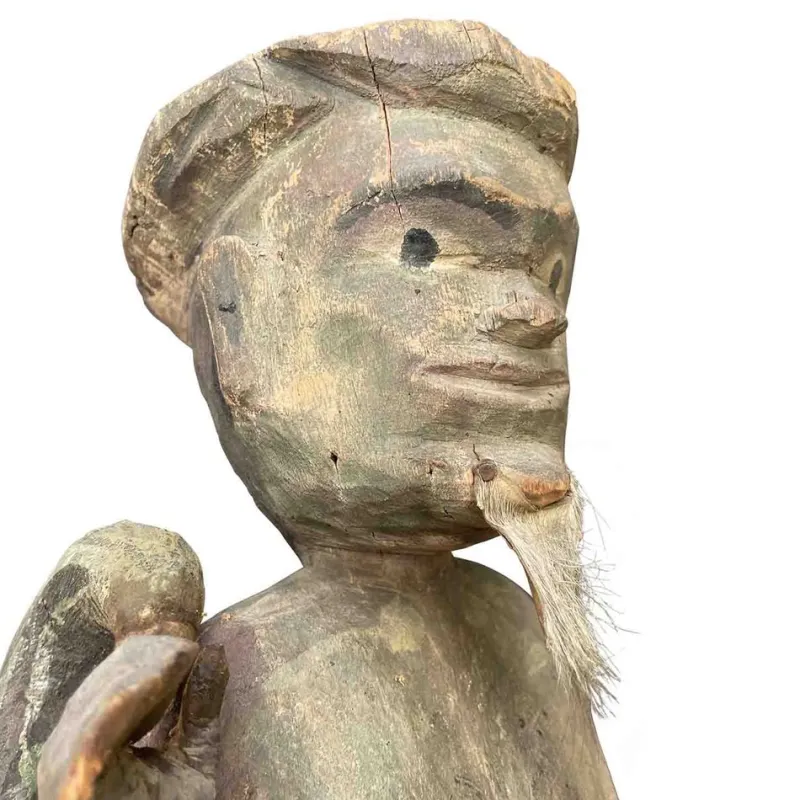
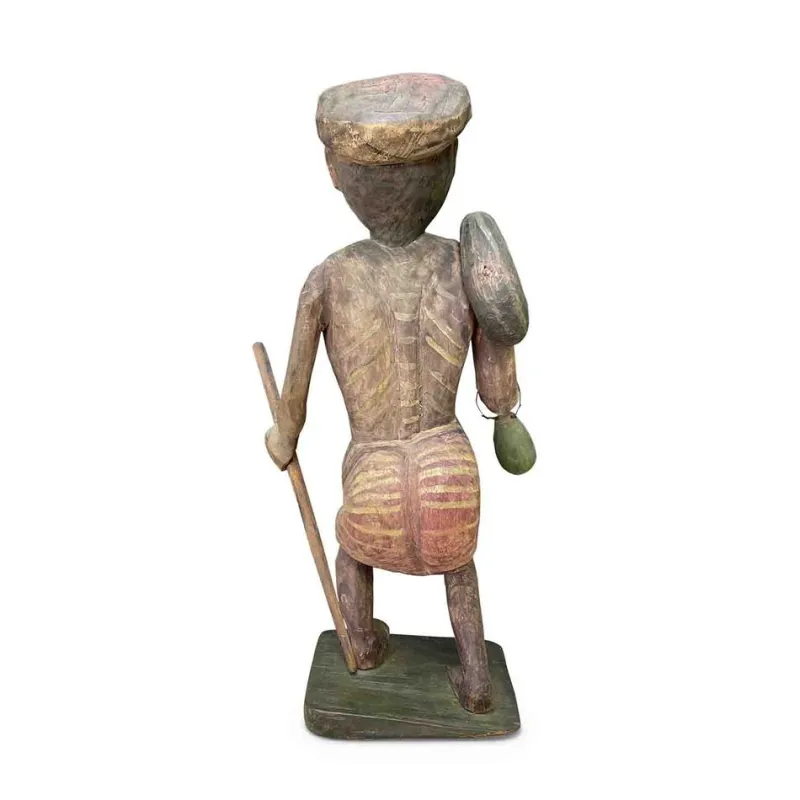
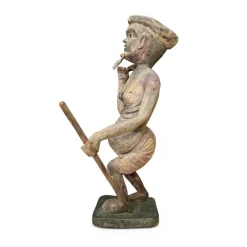
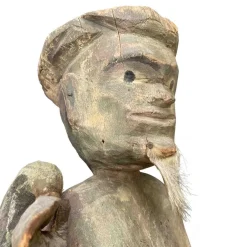
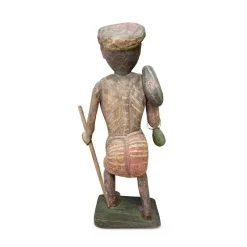
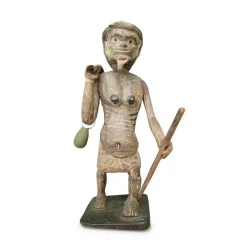
Pamono Myanmar Artist, Asian Shaman Figure, Late 1800s, Polychrome Wood> Sculpture
$124.99
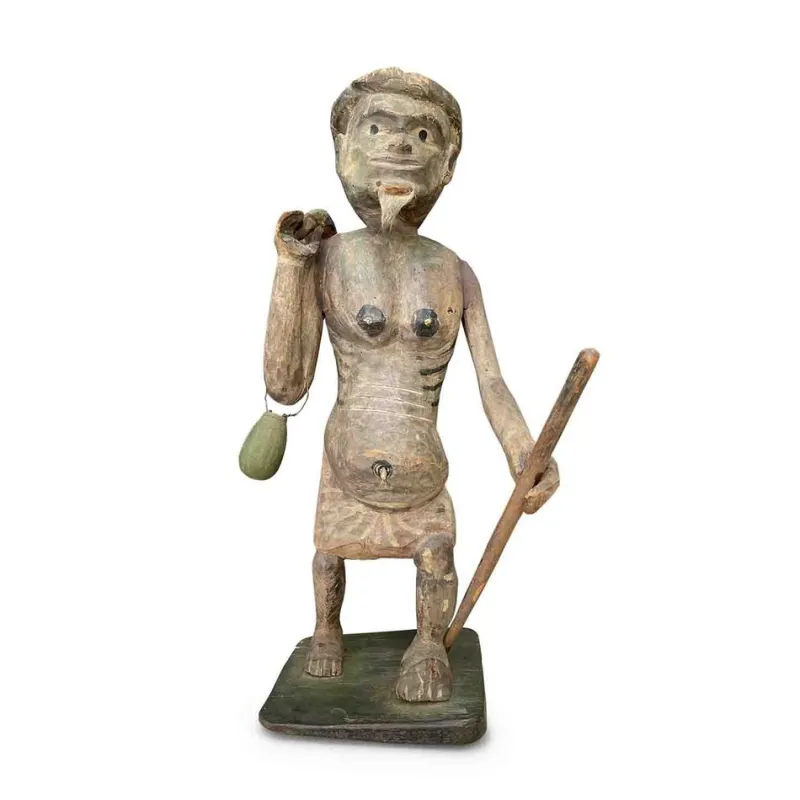
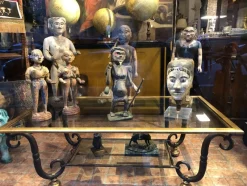
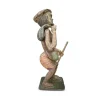
The sculpture in question is an example of traditional Burmese art, specifically a polychrome sculptural figure of a Burmese shaman. These works generally date back to the late 1800s, a period during which Burmese art reflected multiple cultural influences, including Buddhism and animist. They are often unique pieces with a strong spiritual and religious expression. In Burma, during this era, Buddhism was predominant, but animism also played an important role, so many sculptures were dedicated to deities, protective spirits, or religious figures.
Burmese shamans played a central role in the spiritual life of communities, being seen as intermediaries between the earthly and spirit worlds; they often assumed specific poses that evoked their power and connection to the invisible world. Their upright posture represents alertness, energy, and a connection between heaven and earth. The standing shaman is in the act of action: he is not in passive meditation, but active in his role as a spiritual guide. He is likely performing a ritual or depicted in a trance.
The staff is a powerful instrument. In many traditions, it represents spiritual authority and connection to the spirit world. The gourd was also used as a container for herbs, medicines, or sacred liquids, or as a musical instrument (sometimes like maracas). It is also a symbol of abundance, healing, and connection with nature.
The seller assumes all responsibility for this listing.
About This Piece
The sculpture in question is an example of traditional Burmese art, specifically a polychrome sculptural figure of a Burmese shaman. These works generally date back to the late 1800s, a period during which Burmese art reflected multiple cultural influences, including Buddhism and animist. They are often unique pieces with a strong spiritual and religious expression. In Burma, during this era, Buddhism was predominant, but animism also played an important role, so many sculptures were dedicated to deities, protective spirits, or religious figures.
Burmese shamans played a central role in the spiritual life of communities, being seen as intermediaries between the earthly and spirit worlds; they often assumed specific poses that evoked their power and connection to the invisible world. Their upright posture represents alertness, energy, and a connection between heaven and earth. The standing shaman is in the act of action: he is not in passive meditation, but active in his role as a spiritual guide. He is likely performing a ritual or depicted in a trance.
The staff is a powerful instrument. In many traditions, it represents spiritual authority and connection to the spirit world. The gourd was also used as a container for herbs, medicines, or sacred liquids, or as a musical instrument (sometimes like maracas). It is also a symbol of abundance, healing, and connection with nature.
Click here for full descriptionClose description
| Period | Before 1890 |
|---|---|
| Production Period | Before 1890 |
| Country of Manufacture | Myanmar (Burma) |
| Style | Asian Antique |
| Detailed Condition | Good — This vintage/antique item may have some wear such as scratches and other signs of ageing. |
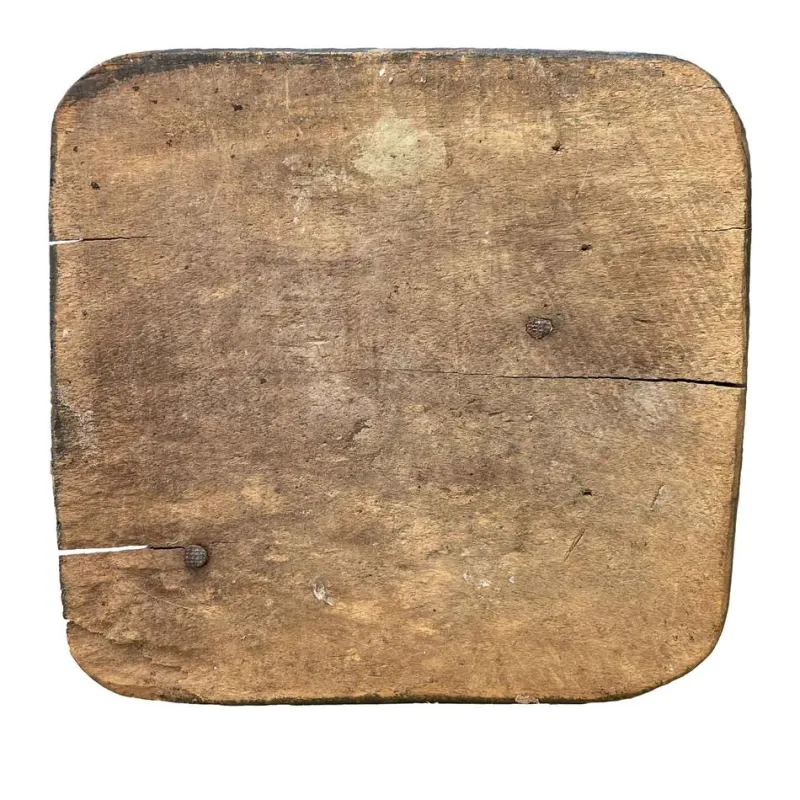
| Restoration and Damage Details | Light wear consistent with age and use, Patina consistent with age and use, Partially restored, Issue with integration of the front part of the left foot, A small loss at the end of the pumpkin |
| Product Code | TBU-2336647 |
| Materials | Wood |
| Color | Multicolored |
| Width | 22 cm 8.7 inch |
| Depth | 20 cm 7.9 inch |
| Height | 42 cm 16.5 inch |
Be the first to review “Pamono Myanmar Artist, Asian Shaman Figure, Late 1800s, Polychrome Wood> Sculpture”
Related products


Cabinets & Wardrobes
Children's Chairs



Daybeds & Chaises Lounges
Cabinets & Wardrobes
Login
Reviews
There are no reviews yet.