



Pamono Louis XVI Style French Screen in Gilded Wood with Oil Painting and Ground Glass> Room Dividers & Screens
$130.99
We kindly suggest you read the whole description, since we try to give you detailed technical and historical information…
We kindly suggest you read the whole description, since we try to give you detailed technical and historical information to ensure the authenticity of our objects.
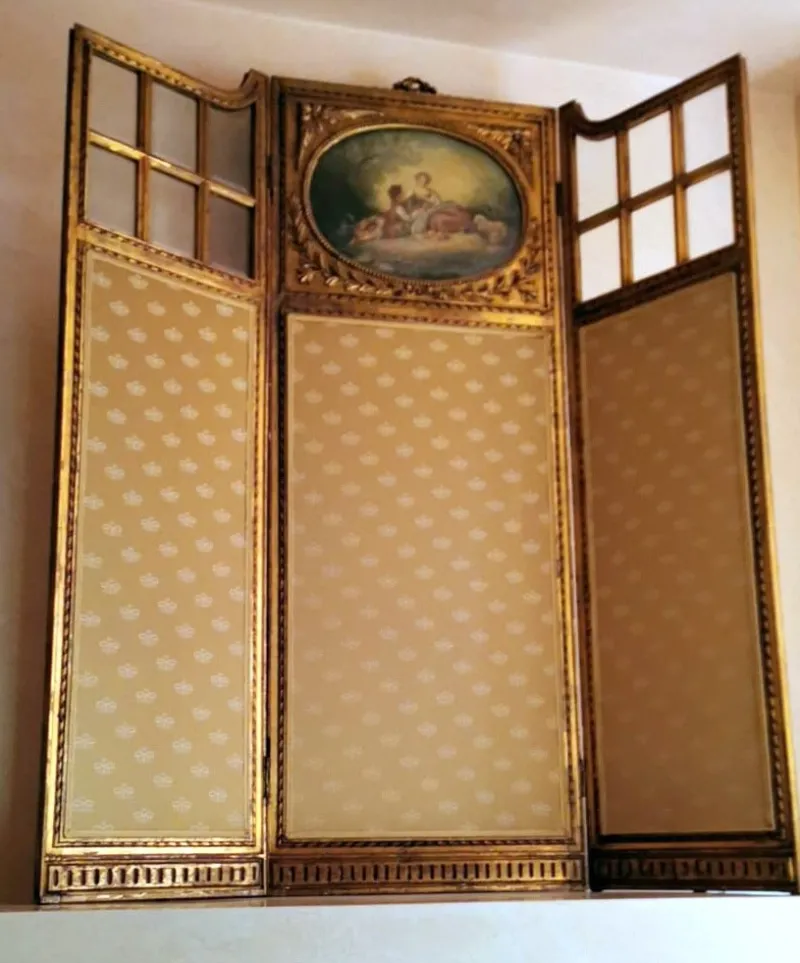
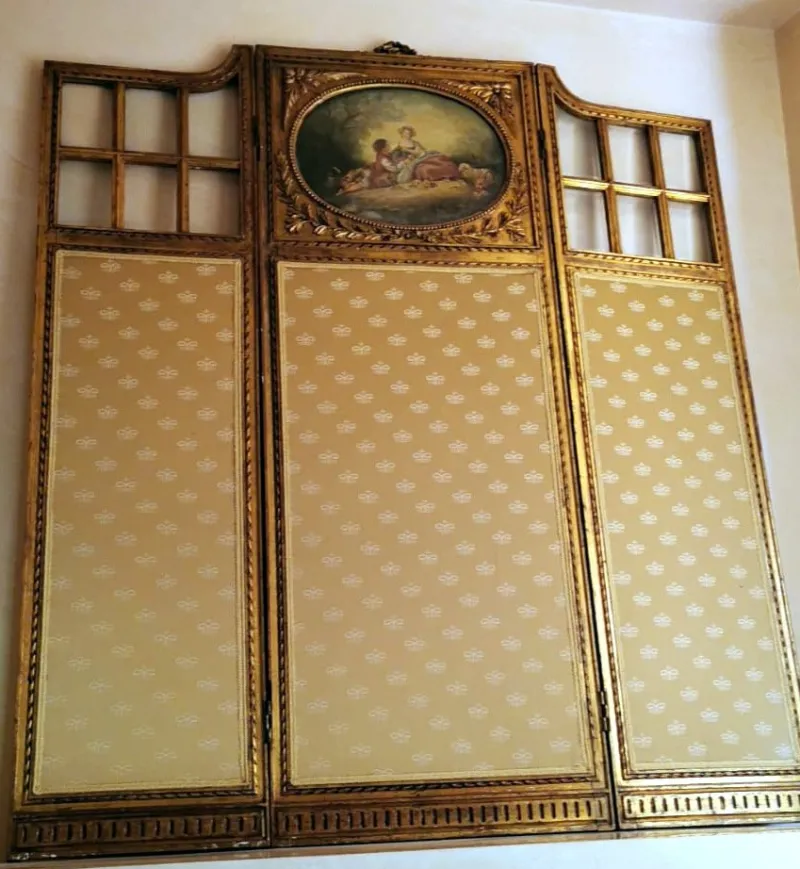
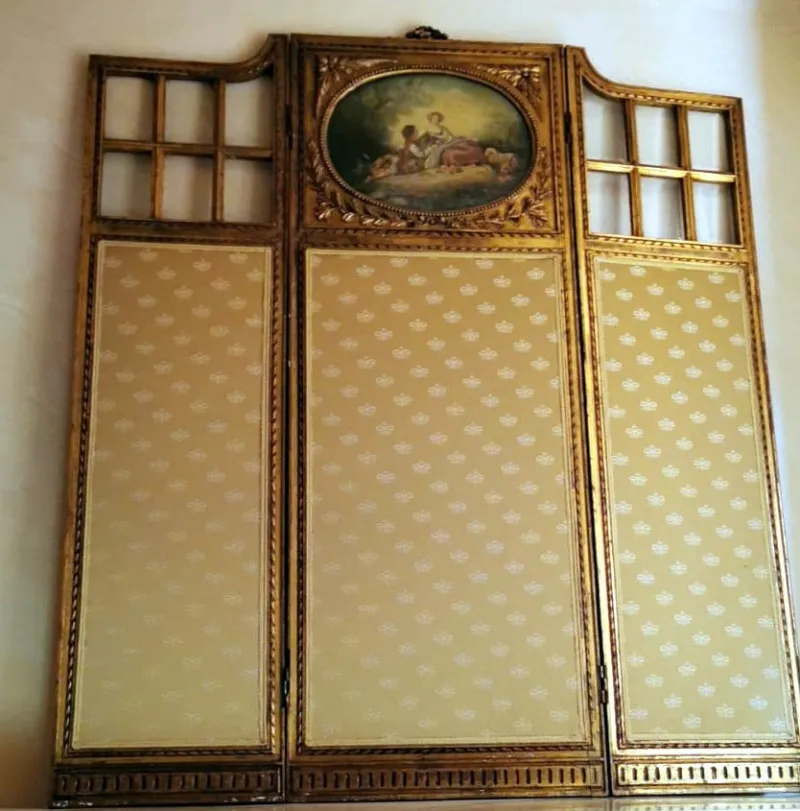
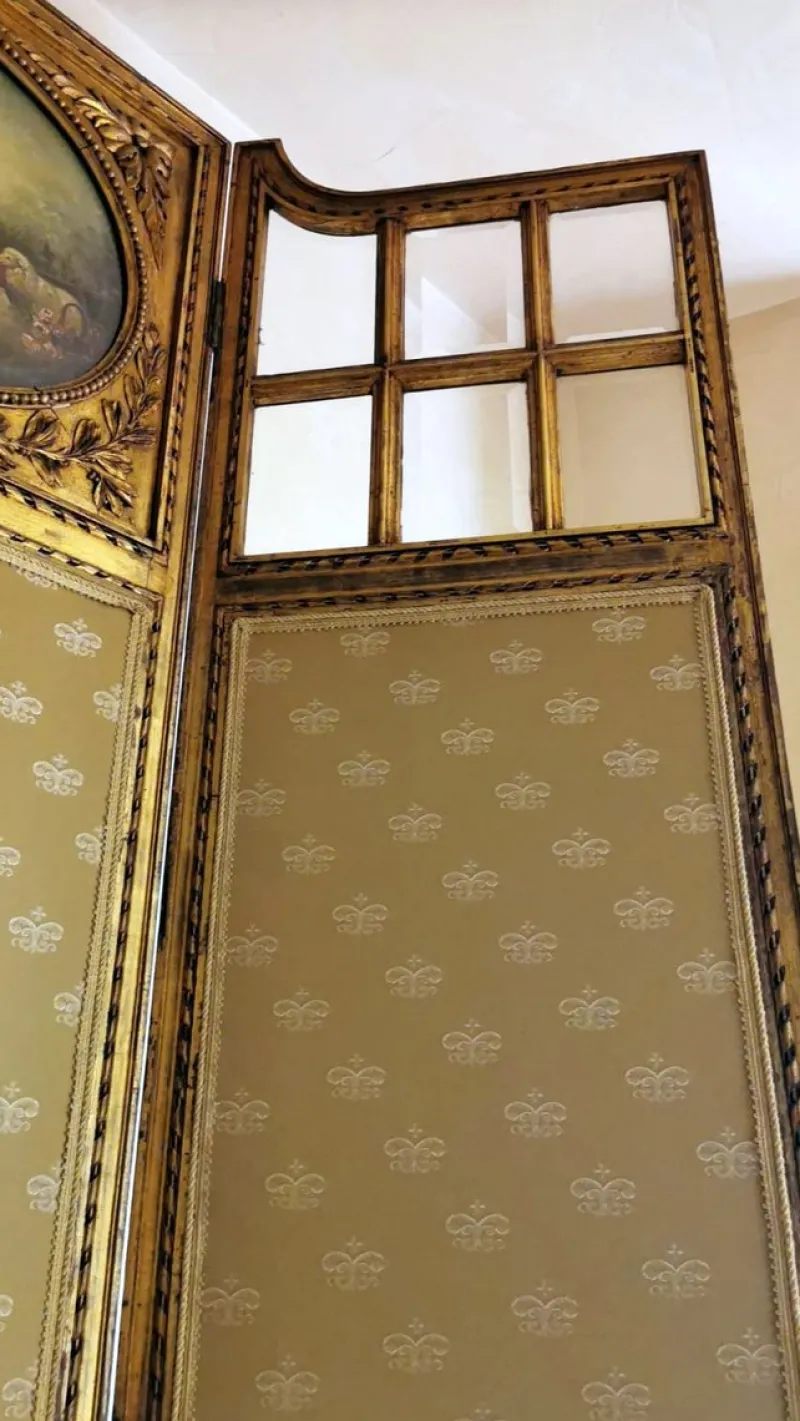
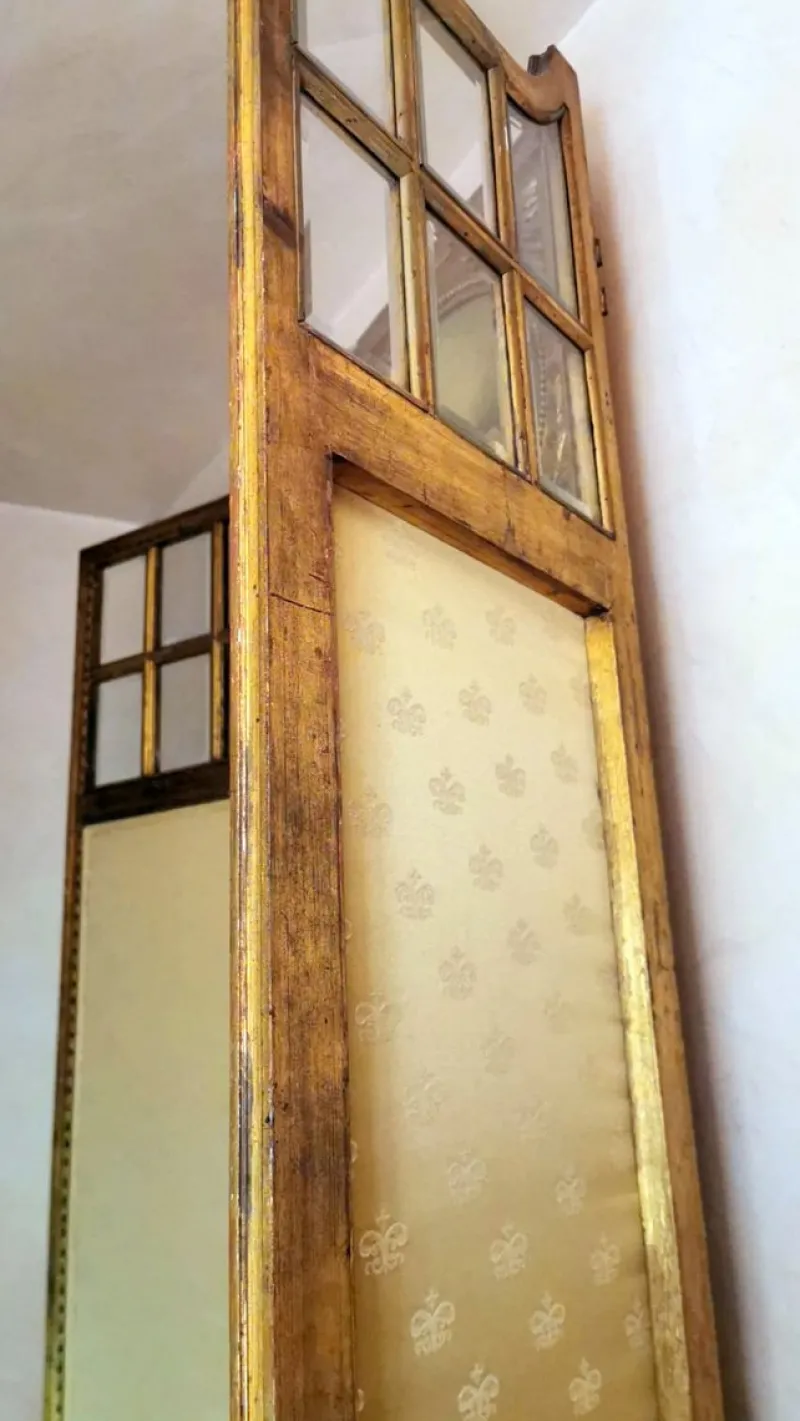
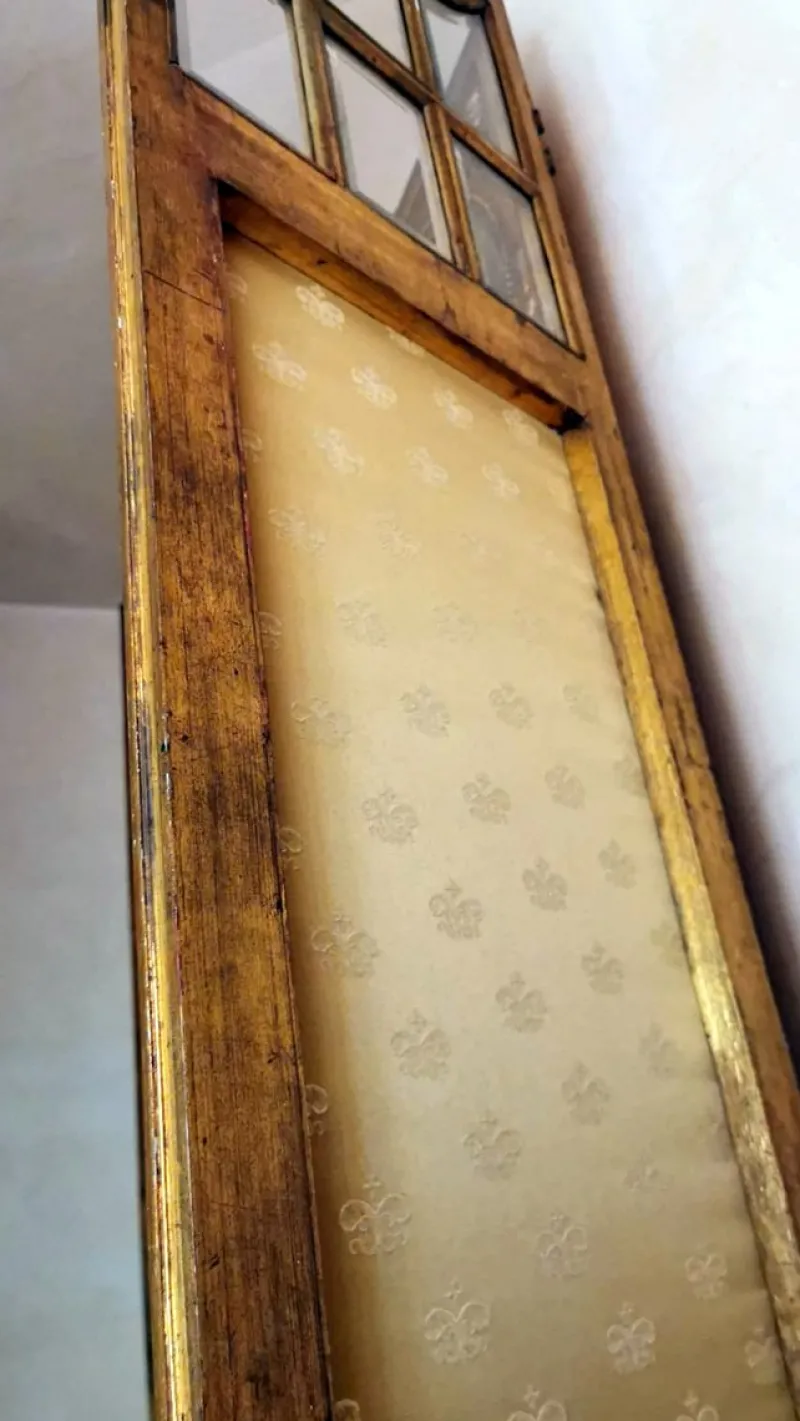
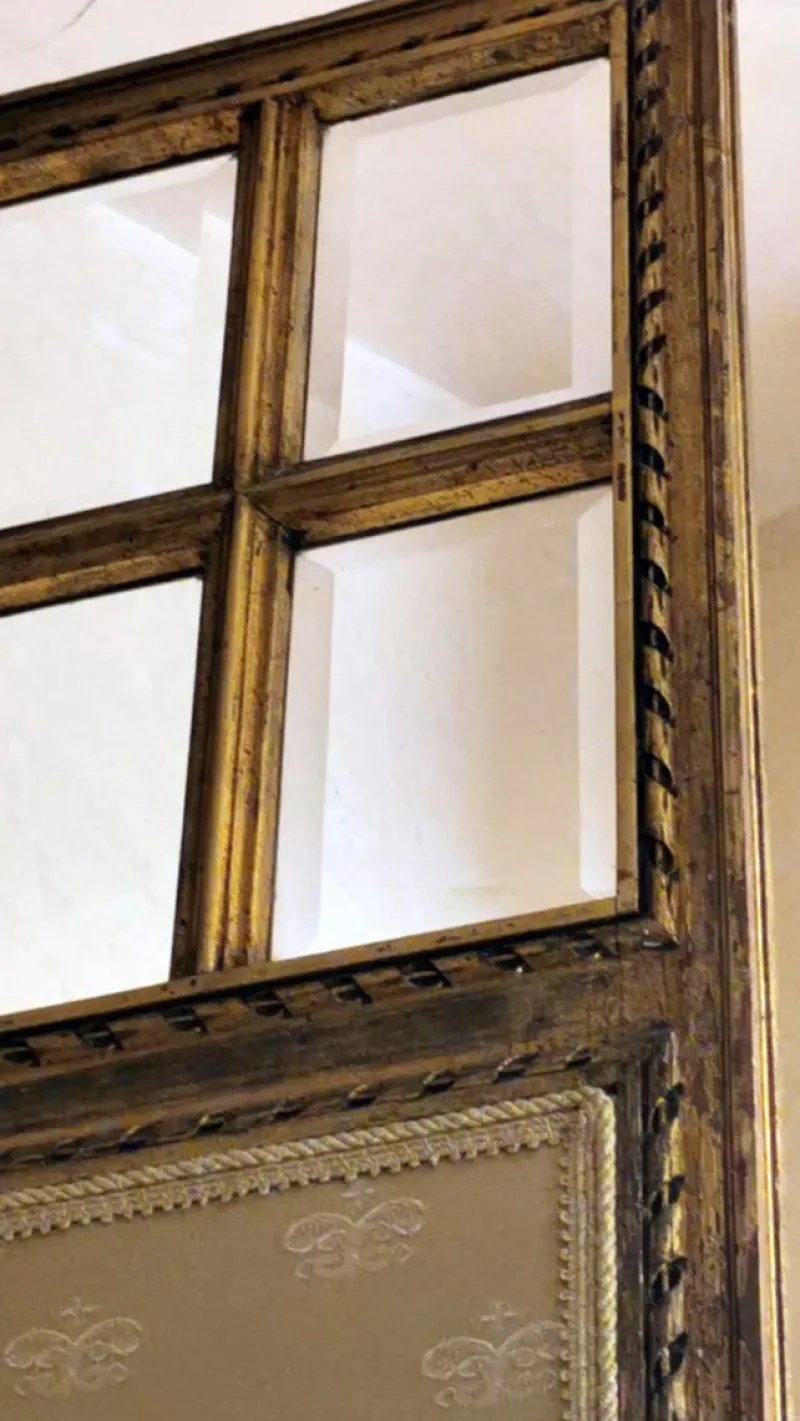
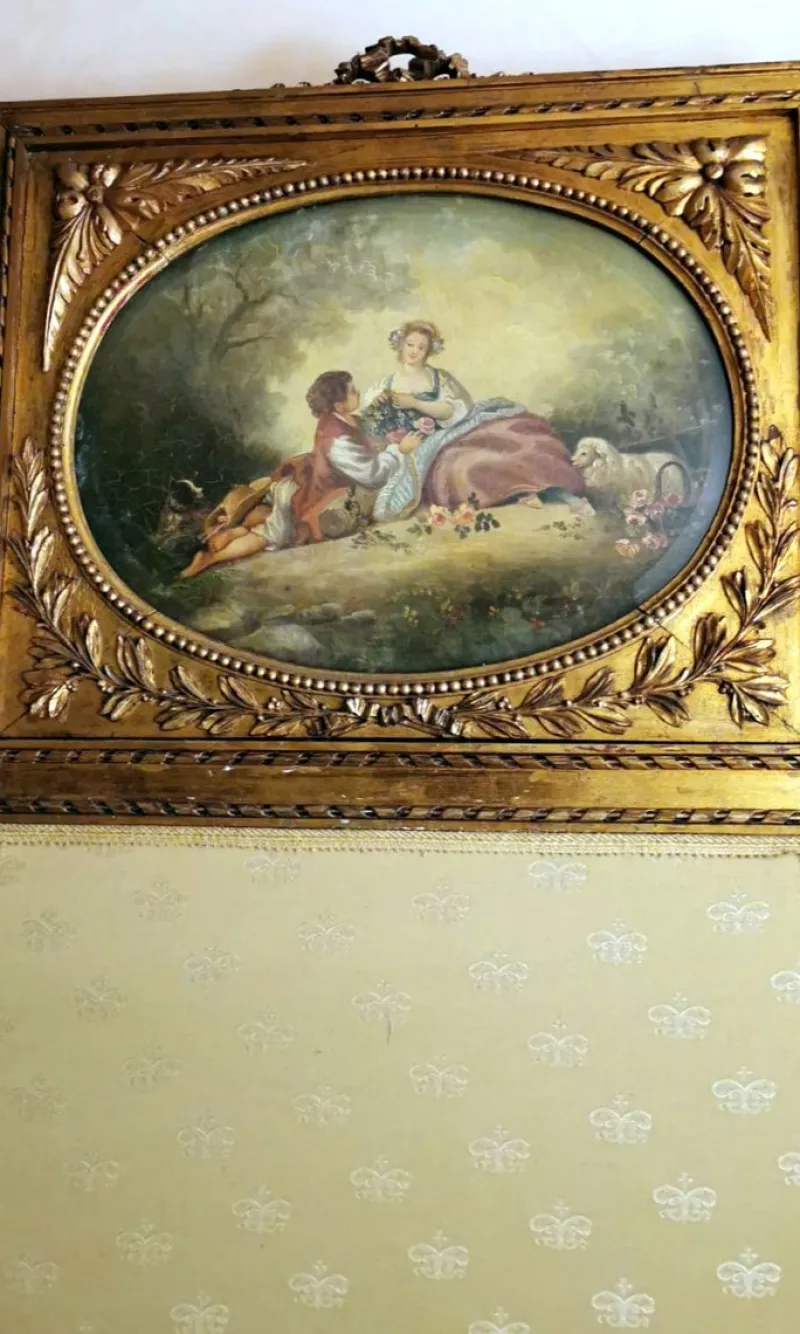
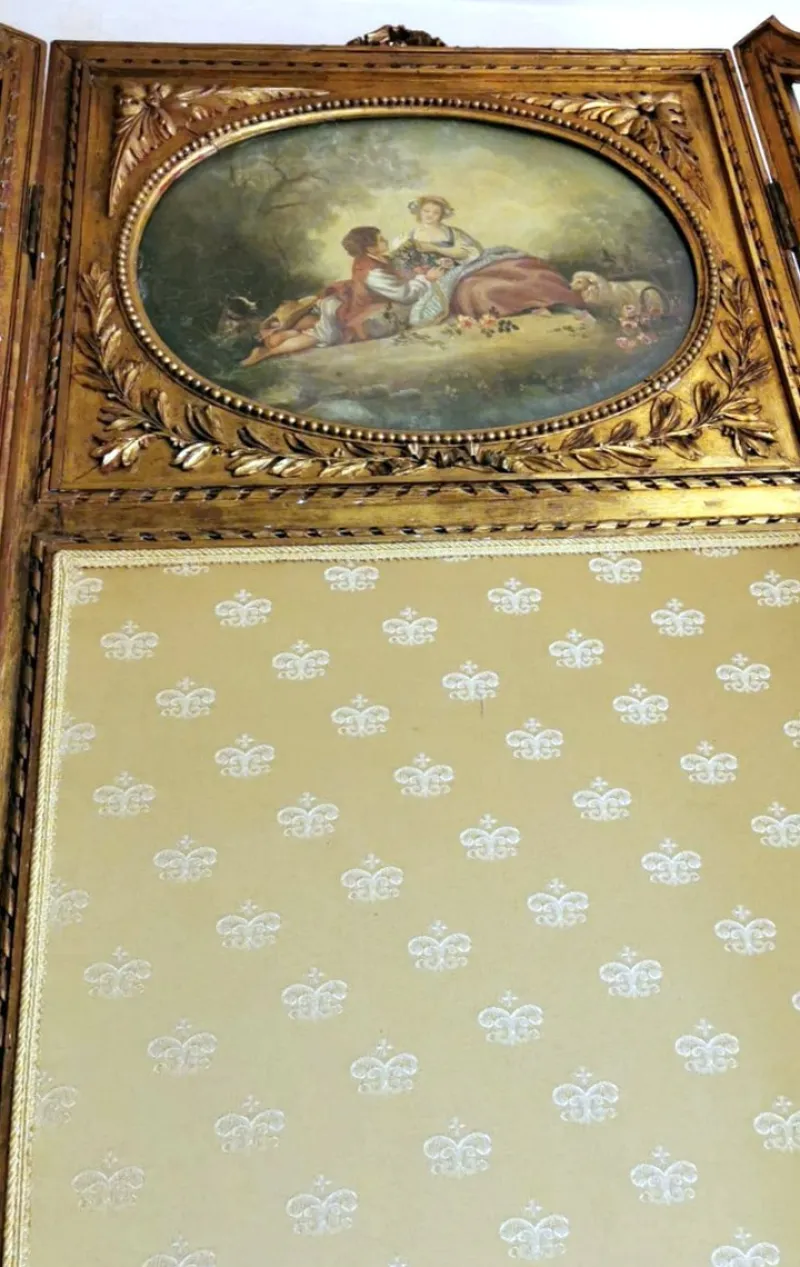
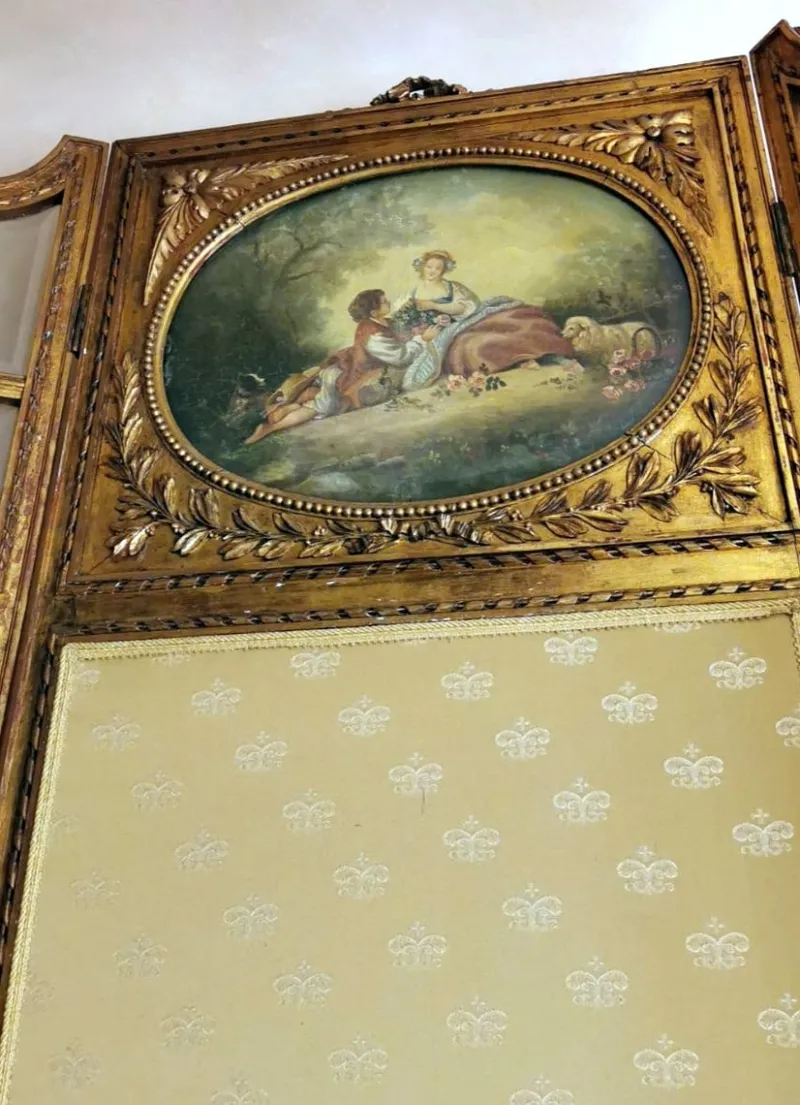
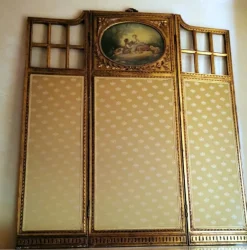
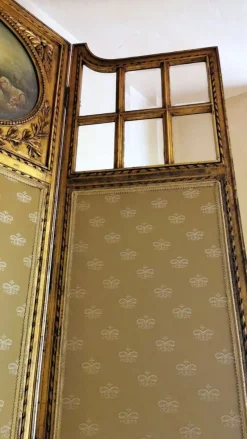
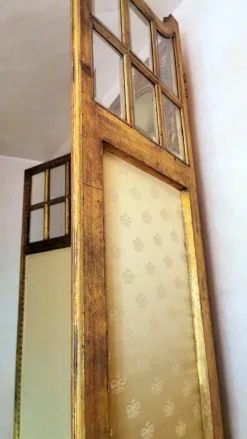
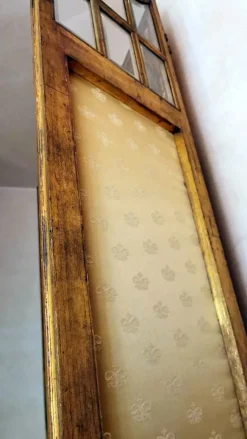
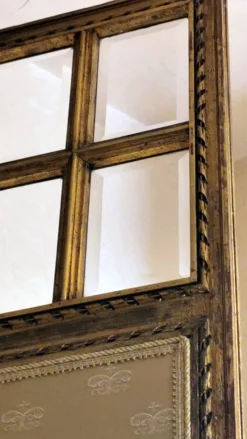
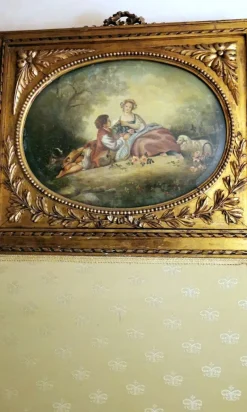
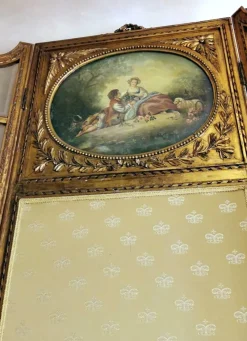
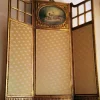
SUPERBO FRENCH SHIPMENT WITH THREE GOLDEN WOODEN GOLD WOODEN WOOD; The panels have been covered both front and back with a sumptuous damask fabric finished with trimmings; In the side panels, high to facilitate the passage of light from one side to another, a series of finely grinded windows were positioned, while on the central one we find an oval, surrounded by rich and valuable foliace decorations performed with the “A method Pill “, in which an oil painting is inserted on a paper protected by a moose glass; Painting represents an idyllic country scene with a child and a girlfriend surrounded by flowers and a pretty sheep; The wooden part of the entire screen is decorated with refined and wise imper-style carvings. The “Pilliglia” processing of the ancient artisan tradition, was born in Italy at the end of the fifteenth century, remains in use for much of the seventeenth century to be continued in the 1800s. The “Pill” was formed by a plaster-based dough (calcium carbonate), vegetable colleled resins, honey, linseed oil and often marble powder. On the wooden support there was a veil of canvas and then there were several states of “tablet”, this was then embossed or engraved or finely molded, usually the decorative motifs were bas-relief, so it left everything and at the end Extensive gold leaves were applied. The screen was created in Louis XVI style between 1920 and 1925 from very skilfully skilful and experts in a craft workshop in the French Municipality of Liffon-le-Grand located in the Department of Vosges in the Grand Est region, a popular area for woodworking. The ancient screen derives from a long and millennial eastern tradition and accompanied mutations of life and taste in France through centuries. Before being imported into Europe in the middle of the seventeenth century by the French and Dutch company des Indes, the screens had several roles in China and Japan: within a room as a mobile partition to allow to respect the intimacy, or to preserve the Heat, and also to stop the spirits at the entrance of the houses. The screen has increasing success in Europe, especially since the mid-eighteenth century that met the emergence of a rich bourgeoisie, its use has decreased at the beginning of the nineteenth century, then reappeared in 1860 under the reign of Napoleon III, to the The beginning of the twentieth century with the development of modern heating means, the functional role of insulator of the screen disappears in favor of its high decorative role. Our screen, object of extreme elegance, expression of grandeur and luxury, becomes a superb classic element for any room in your home. On the wooden structure we did not believe to make any restoration because its superficial veiled patina and its small imperfections make it truly seductive and fascinating and attest to antiquity and authenticity. Measures width cm.103, depth cm.4, height cm.164. For all our expeditions we use special packaging materials (wooden cases, polystyrene, etc.) for maximum protection and safety of objects.
SUPERBO FRENCH SHIPMENT WITH THREE GOLDEN WOODEN GOLD WOODEN WOOD; The panels have been covered both front and back with a sumptuous damask fabric finished with trimmings; In the side panels, high to facilitate the passage of light from one side to another, a series of finely grinded windows were positioned, while on the central one we find an oval, surrounded by rich and valuable foliace decorations performed with the “A method Pill “, in which an oil painting is inserted on a paper protected by a moose glass; Painting represents an idyllic country scene with a child and a girlfriend surrounded by flowers and a pretty sheep; The wooden part of the entire screen is decorated with refined and wise imper-style carvings. The “Pilliglia” processing of the ancient artisan tradition, was born in Italy at the end of the fifteenth century, remains in use for much of the seventeenth century to be continued in the 1800s. The “Pill” was formed by a plaster-based dough (calcium carbonate), vegetable colleled resins, honey, linseed oil and often marble powder. On the wooden support there was a veil of canvas and then there were several states of “tablet”, this was then embossed or engraved or finely molded, usually the decorative motifs were bas-relief, so it left everything and at the end Extensive gold leaves were applied. The screen was created in Louis XVI style between 1920 and 1925 from very skilfully skilful and experts in a craft workshop in the French Municipality of Liffon-le-Grand located in the Department of Vosges in the Grand Est region, a popular area for woodworking. The ancient screen derives from a long and millennial eastern tradition and accompanied mutations of life and taste in France through centuries. Before being imported into Europe in the middle of the seventeenth century by the French and Dutch company des Indes, the screens had several roles in China and Japan: within a room as a mobile partition to allow to respect the intimacy, or to preserve the Heat, and also to stop the spirits at the entrance of the houses. The screen has increasing success in Europe, especially since the mid-eighteenth century that met the emergence of a rich bourgeoisie, its use has decreased at the beginning of the nineteenth century, then reappeared in 1860 under the reign of Napoleon III, to the The beginning of the twentieth century with the development of modern heating means, the functional role of insulator of the screen disappears in favor of its high decorative role. Our screen, object of extreme elegance, expression of grandeur and luxury, becomes a superb classic element for any room in your home. On the wooden structure we did not believe to make any restoration because its superficial veiled patina and its small imperfections make it truly seductive and fascinating and attest to antiquity and authenticity. Measures width cm.103, depth cm.4, height cm.164. For all our expeditions we use special packaging materials (wooden cases, polystyrene, etc.) for maximum protection and safety of objects.
The seller assumes all responsibility for this listing.
About This Piece
Vintage Design
We kindly suggest you read the whole description, since we try to give you detailed technical and historical information to ensure the authenticity of our objects.
SUPERBO FRENCH SHIPMENT WITH THREE GOLDEN WOODEN GOLD WOODEN WOOD; The panels have been covered both front and back with a sumptuous damask fabric finished with trimmings; In the side panels, high to facilitate the passage of light from one side to another, a series of finely grinded windows were positioned, while on the central one we find an oval, surrounded by rich and valuable foliace decorations performed with the “A method Pill “, in which an oil painting is inserted on a paper protected by a moose glass; Painting represents an idyllic country scene with a child and a girlfriend surrounded by flowers and a pretty sheep; The wooden part of the entire screen is decorated with refined and wise imper-style carvings. The “Pilliglia” processing of the ancient artisan tradition, was born in Italy at the end of the fifteenth century, remains in use for much of the seventeenth century to be continued in the 1800s. The “Pill” was formed by a plaster-based dough (calcium carbonate), vegetable colleled resins, honey, linseed oil and often marble powder. On the wooden support there was a veil of canvas and then there were several states of “tablet”, this was then embossed or engraved or finely molded, usually the decorative motifs were bas-relief, so it left everything and at the end Extensive gold leaves were applied. The screen was created in Louis XVI style between 1920 and 1925 from very skilfully skilful and experts in a craft workshop in the French Municipality of Liffon-le-Grand located in the Department of Vosges in the Grand Est region, a popular area for woodworking. The ancient screen derives from a long and millennial eastern tradition and accompanied mutations of life and taste in France through centuries. Before being imported into Europe in the middle of the seventeenth century by the French and Dutch company des Indes, the screens had several roles in China and Japan: within a room as a mobile partition to allow to respect the intimacy, or to preserve the Heat, and also to stop the spirits at the entrance of the houses. The screen has increasing success in Europe, especially since the mid-eighteenth century that met the emergence of a rich bourgeoisie, its use has decreased at the beginning of the nineteenth century, then reappeared in 1860 under the reign of Napoleon III, to the The beginning of the twentieth century with the development of modern heating means, the functional role of insulator of the screen disappears in favor of its high decorative role. Our screen, object of extreme elegance, expression of grandeur and luxury, becomes a superb classic element for any room in your home. On the wooden structure we did not believe to make any restoration because its superficial veiled patina and its small imperfections make it truly seductive and fascinating and attest to antiquity and authenticity. Measures width cm.103, depth cm.4, height cm.164. For all our expeditions we use special packaging materials (wooden cases, polystyrene, etc.) for maximum protection and safety of objects.
SUPERBO FRENCH SHIPMENT WITH THREE GOLDEN WOODEN GOLD WOODEN WOOD; The panels have been covered both front and back with a sumptuous damask fabric finished with trimmings; In the side panels, high to facilitate the passage of light from one side to another, a series of finely grinded windows were positioned, while on the central one we find an oval, surrounded by rich and valuable foliace decorations performed with the “A method Pill “, in which an oil painting is inserted on a paper protected by a moose glass; Painting represents an idyllic country scene with a child and a girlfriend surrounded by flowers and a pretty sheep; The wooden part of the entire screen is decorated with refined and wise imper-style carvings. The “Pilliglia” processing of the ancient artisan tradition, was born in Italy at the end of the fifteenth century, remains in use for much of the seventeenth century to be continued in the 1800s. The “Pill” was formed by a plaster-based dough (calcium carbonate), vegetable colleled resins, honey, linseed oil and often marble powder. On the wooden support there was a veil of canvas and then there were several states of “tablet”, this was then embossed or engraved or finely molded, usually the decorative motifs were bas-relief, so it left everything and at the end Extensive gold leaves were applied. The screen was created in Louis XVI style between 1920 and 1925 from very skilfully skilful and experts in a craft workshop in the French Municipality of Liffon-le-Grand located in the Department of Vosges in the Grand Est region, a popular area for woodworking. The ancient screen derives from a long and millennial eastern tradition and accompanied mutations of life and taste in France through centuries. Before being imported into Europe in the middle of the seventeenth century by the French and Dutch company des Indes, the screens had several roles in China and Japan: within a room as a mobile partition to allow to respect the intimacy, or to preserve the Heat, and also to stop the spirits at the entrance of the houses. The screen has increasing success in Europe, especially since the mid-eighteenth century that met the emergence of a rich bourgeoisie, its use has decreased at the beginning of the nineteenth century, then reappeared in 1860 under the reign of Napoleon III, to the The beginning of the twentieth century with the development of modern heating means, the functional role of insulator of the screen disappears in favor of its high decorative role. Our screen, object of extreme elegance, expression of grandeur and luxury, becomes a superb classic element for any room in your home. On the wooden structure we did not believe to make any restoration because its superficial veiled patina and its small imperfections make it truly seductive and fascinating and attest to antiquity and authenticity. Measures width cm.103, depth cm.4, height cm.164. For all our expeditions we use special packaging materials (wooden cases, polystyrene, etc.) for maximum protection and safety of objects.
Click here for full descriptionClose description
| Design Period | 1920 to 1949 |
|---|---|
| Year | 1920 |
| Production Period | 1920 to 1929 |
| Country of Manufacture | France |
| Style | Louis XVI |
| Detailed Condition | Good — This vintage/antique item may have some wear such as scratches and other signs of ageing. |
| Restoration and Damage Details | Light wear consistent with age and use, Minor wear |
| Product Code | QRS-1091486 |
| Materials | Antiqued Glass, Damask, Gold Leaf |
| Color | Blonde, gold |
| Width | 143 cm 56.3 inch |
| Depth | 4 cm 1.6 inch |
| Height | 164 cm 64.6 inch |
Be the first to review “Pamono Louis XVI Style French Screen in Gilded Wood with Oil Painting and Ground Glass> Room Dividers & Screens”
Related products
Children's Chairs
$128.89


$126.89
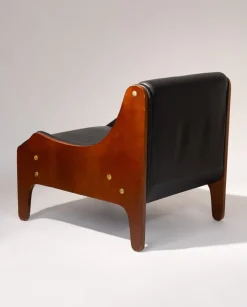
$136.89


Children's Chairs
$120.99
Sale!


Original price was: $2,111.00.$138.99Current price is: $138.99.
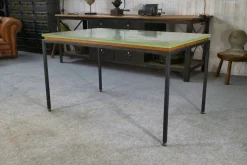

Dining Tables & Sets
New Pamono Vintage Table in Glass and Black Lacquered Metal, 1960s
$124.89
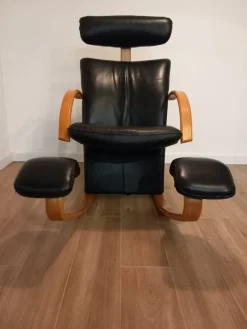
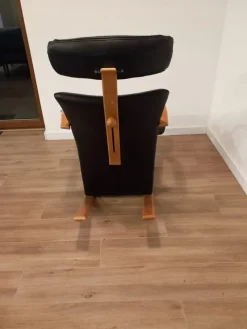
$140.99
$120.89
Sale!
Original price was: $547.00.$122.89Current price is: $122.89.
Sale!
Dressers, Commodes & Chests
Original price was: $1,907.00.$132.89Current price is: $132.89.
Login
Reviews
There are no reviews yet.