
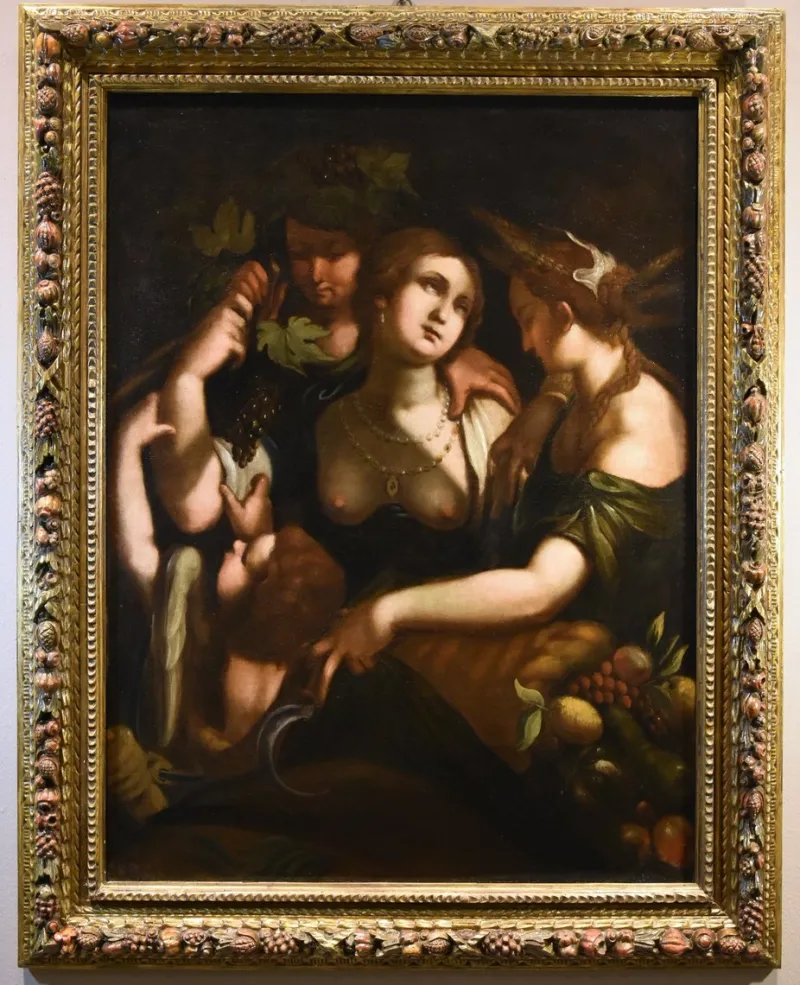
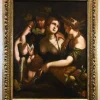
Pamono Giovanni Battista Paggi, Venus Bacchus Ceres, 1620, Oil on Canvas, Framed
$128.99
Giovanni Battista Paggi (Genoa 1554 – Genoa 1627)Venus, Bacchus, and Ceres (Parallel title: ‘Sine Cerere et Baccho, fr…
Venus, Bacchus, and Ceres (Parallel title: ‘Sine Cerere et Baccho, friget Venus’)
Oil on canvas
103 x 78 cm – Framed 125 x 100 cm
‘Sine Cerere et Baccho, friget Venus’ is a Latin quotation from a comedy by Terence (2nd century BC), which became a popular Dutch proverb and gave our painting its title. Literally, it translates as ‘Without Ceres and Bacchus, Love fades’, and its simplest, naturally ironic, meaning is that love in its carnal sense requires food and wine to thrive.
In art, it became a very popular theme, especially between the 16th and 17th centuries in the Netherlands and among the circle of Mannerist artists at the court of Emperor Rudolf II in Prague, as it offered the combination of a relatively intriguing classical reference and the opportunity to depict abundant nudity.
Aside from its decorative nature, this type of painting therefore also had an erotic connotation, not uncommon even in a culture dominated by the restrictions of the Counter-Reformation.
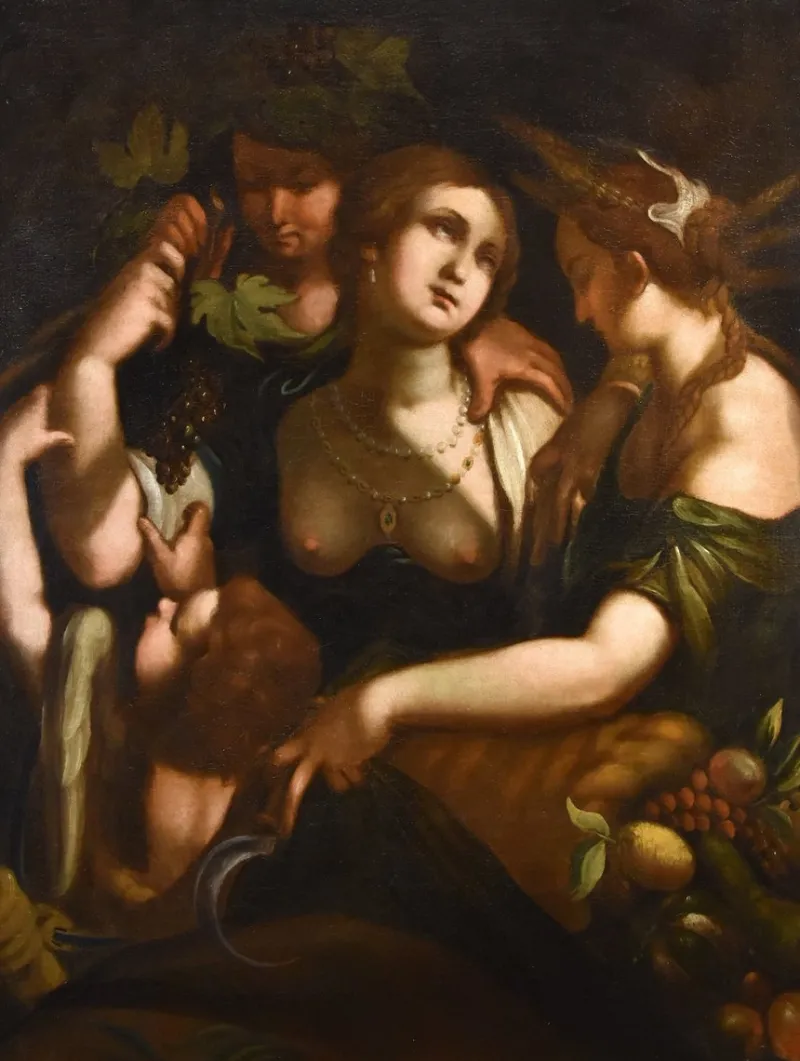
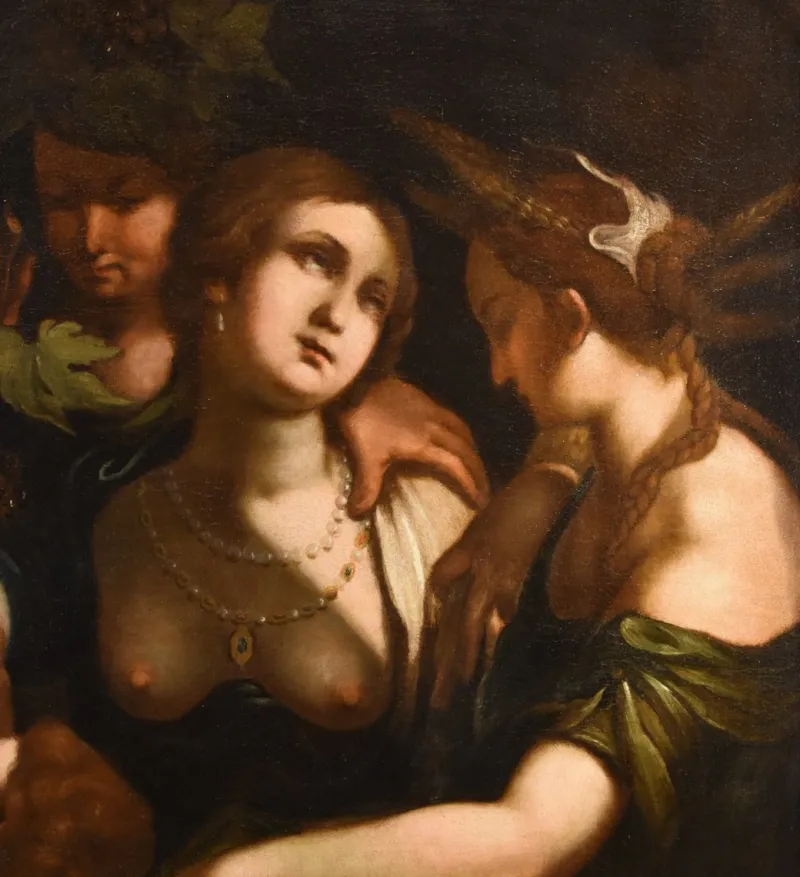
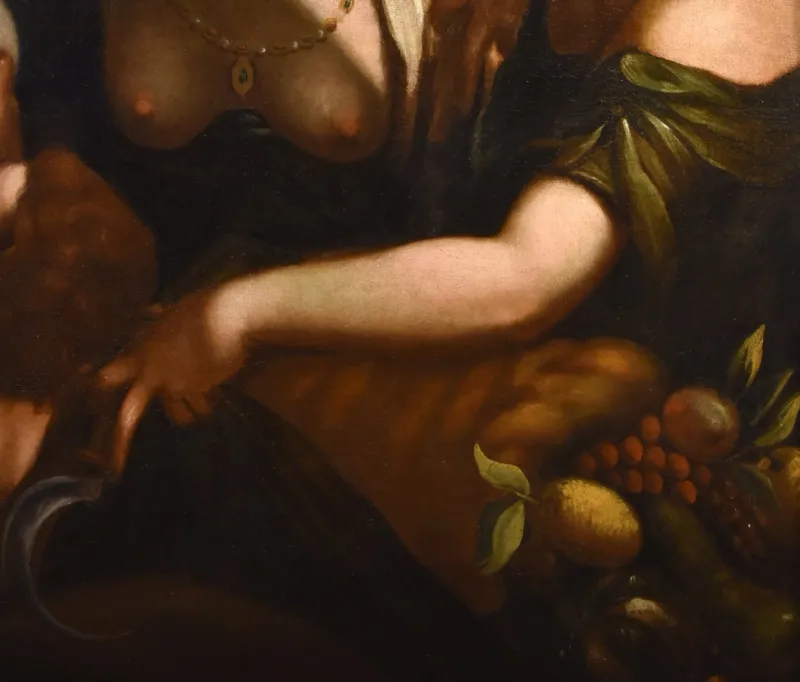
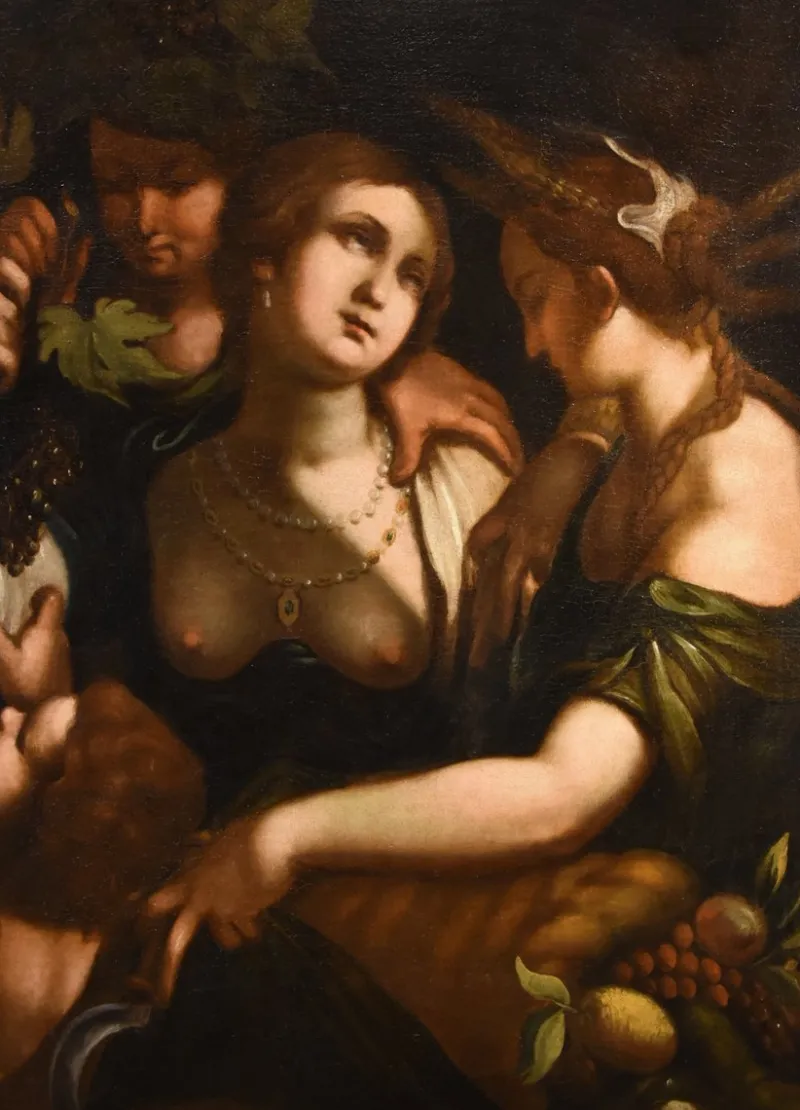
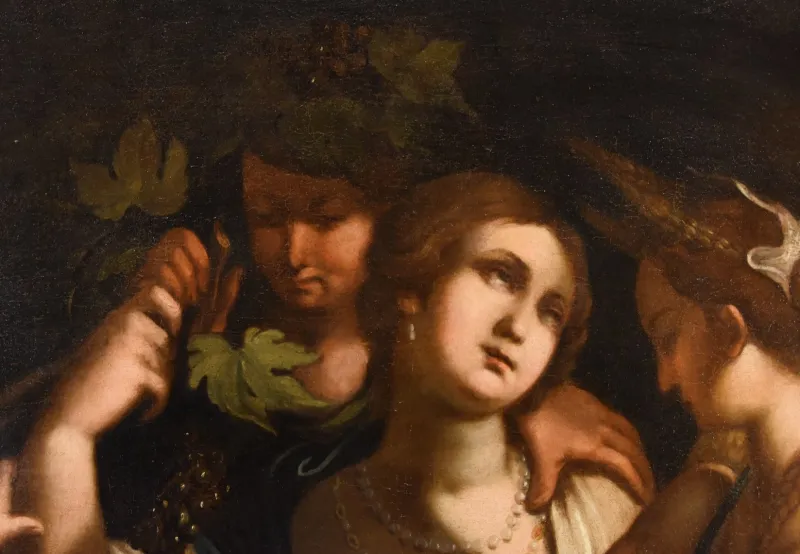
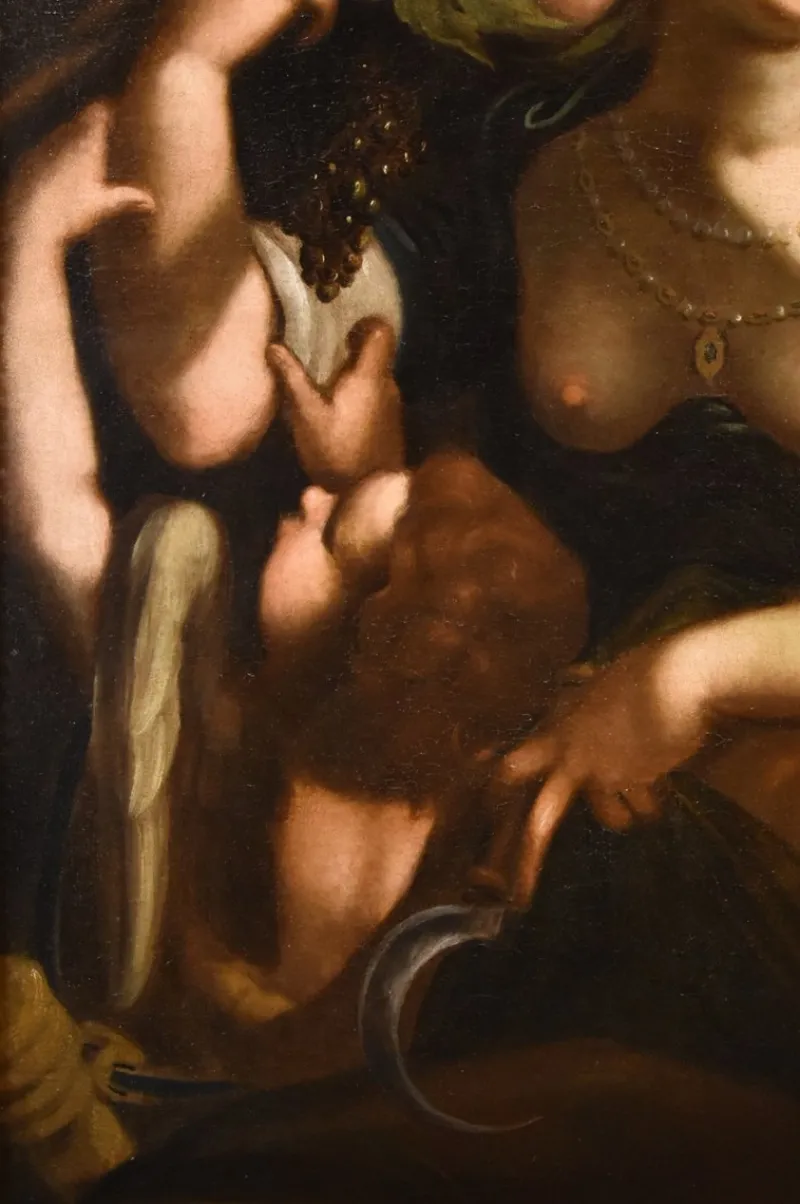
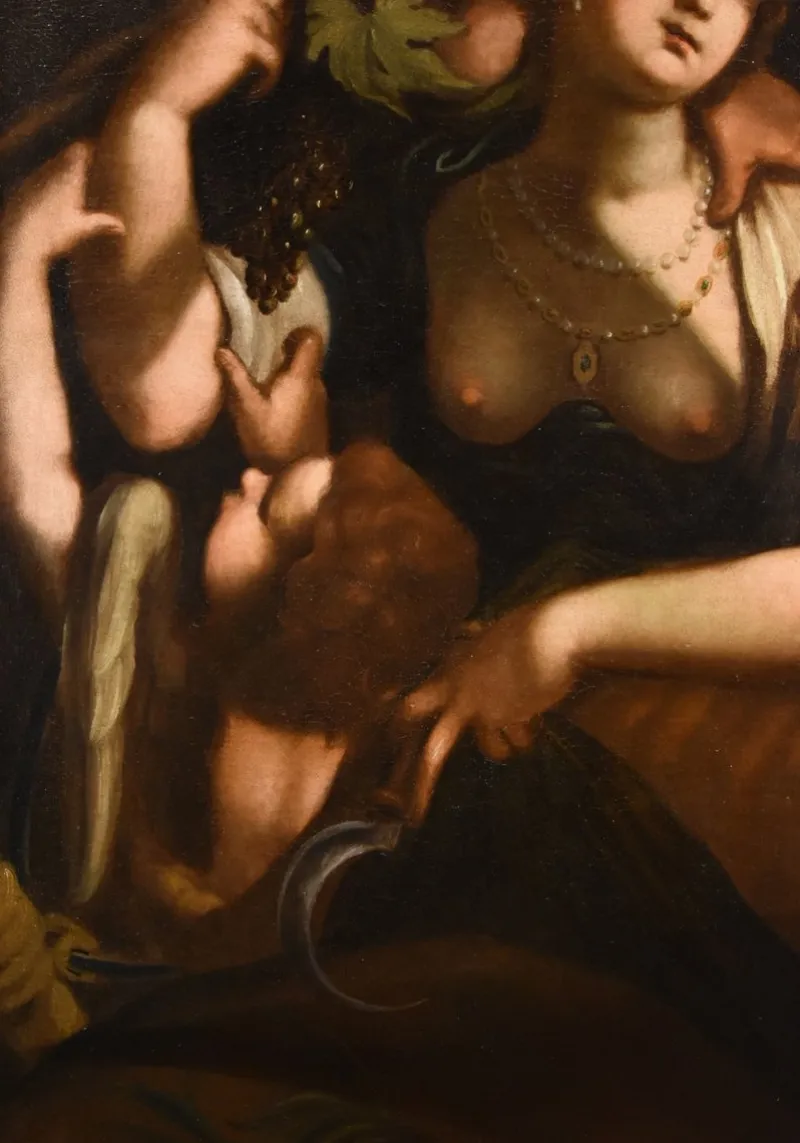
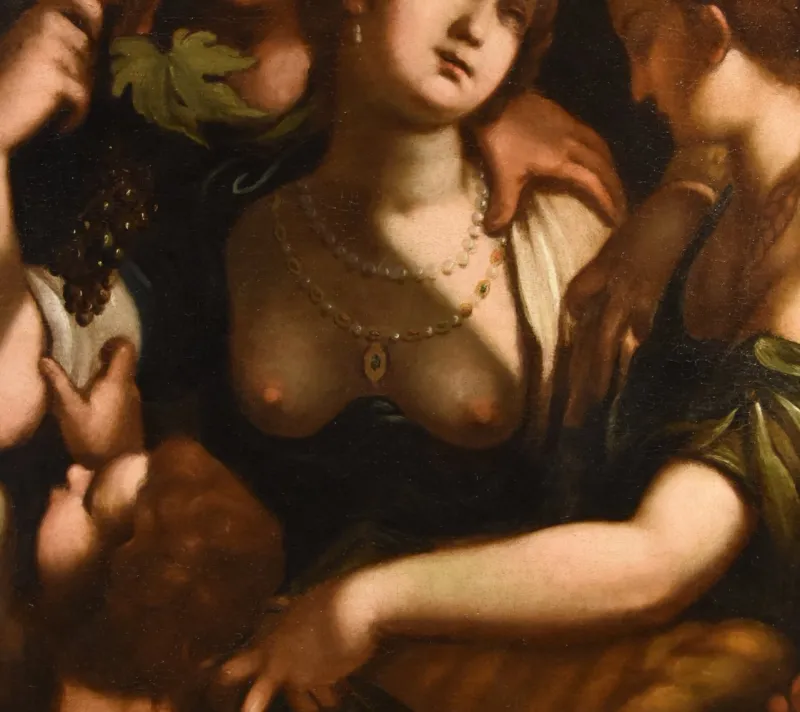
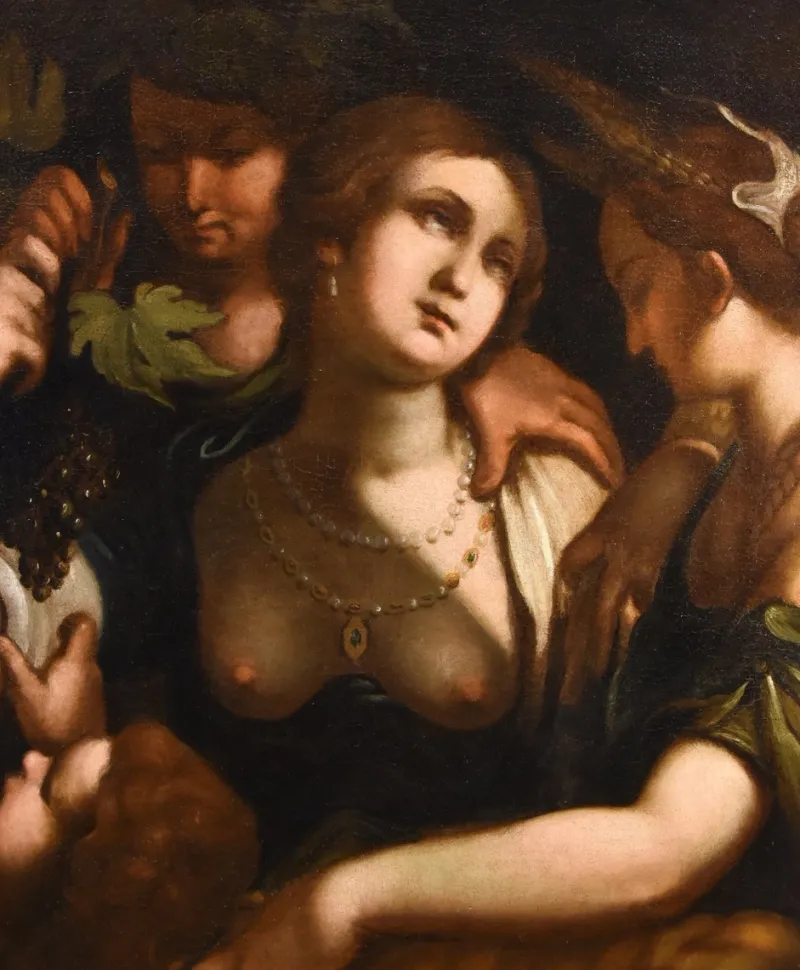
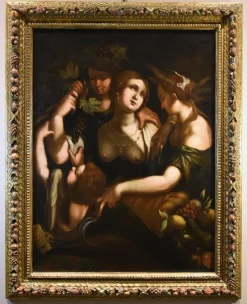
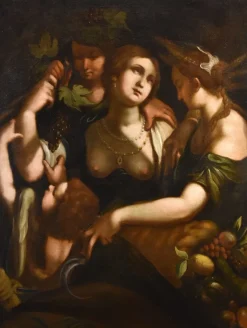
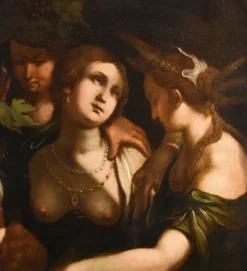
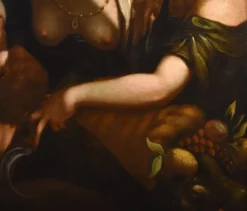
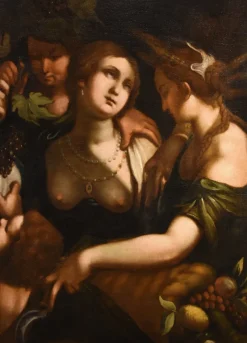
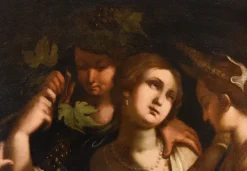
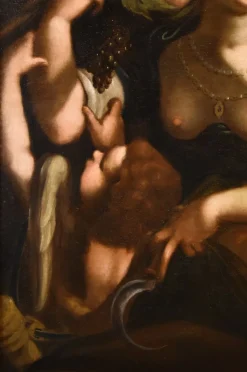
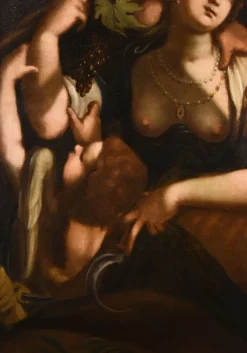
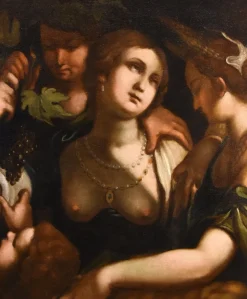
In our painting, the seductive Venus, hungry and thirsty, is surrounded by the god Bacchus, wrapped in vines who passes her a pick of grapes, and Ceres, with a crown of wheat and a cornucopia filled with fruit; Cupid, at her side, also appears hungry, as he tries to reach his mother’s arm to greedily grasp the grapes.
In particular, we are faced with a very famous iconographic invention by the painter Abraham Bloemart (c. 1600), which was popularized at the time by an engraving by Jan Saenredam (1565-1607), later taken up by numerous artists such as J. Saenredam, Joachim von Sandrart, and Bartholomäus Spranger.
Even in Italy, especially in the northern part of the country influenced by Flemish influences, the subject was particularly appreciated, as in our case by an artist of the Genoese school from the early 17th century. Specifically, the painting is attributed to the Genoese artist Giovanni Battista Paggi (Genoa 1554 – Genoa 1627), who here reproduced it with his typical refined style, well-balanced with Baroque exuberance.
In our case, we find a pleasing blend of the typically Genoese style, the Flemish style absorbed from the rich community of other Northern Italians active in Genoa, and the Tuscan style, assimilated during his stay in Florence, which lasted over a decade. We also find a Caravaggesque touch of light that particularly highlights the theatricality of the scene.
Author of works with predominantly religious themes, his collection also includes splendid mythological works (see Venus in Vulcan’s Forge, Private Collection, or Venus and Cupid Kissing, Banca Carige Art Collection).
ADDITIONAL INFORMATION:
The painting is sold complete with a beautiful frame and comes with a certificate of authenticity and an iconographic .
The seller assumes all responsibility for this listing.
About This Piece
Venus, Bacchus, and Ceres (Parallel title: ‘Sine Cerere et Baccho, friget Venus’)
Oil on canvas
103 x 78 cm – Framed 125 x 100 cm
‘Sine Cerere et Baccho, friget Venus’ is a Latin quotation from a comedy by Terence (2nd century BC), which became a popular Dutch proverb and gave our painting its title. Literally, it translates as ‘Without Ceres and Bacchus, Love fades’, and its simplest, naturally ironic, meaning is that love in its carnal sense requires food and wine to thrive.
In art, it became a very popular theme, especially between the 16th and 17th centuries in the Netherlands and among the circle of Mannerist artists at the court of Emperor Rudolf II in Prague, as it offered the combination of a relatively intriguing classical reference and the opportunity to depict abundant nudity.
Aside from its decorative nature, this type of painting therefore also had an erotic connotation, not uncommon even in a culture dominated by the restrictions of the Counter-Reformation.
In our painting, the seductive Venus, hungry and thirsty, is surrounded by the god Bacchus, wrapped in vines who passes her a pick of grapes, and Ceres, with a crown of wheat and a cornucopia filled with fruit; Cupid, at her side, also appears hungry, as he tries to reach his mother’s arm to greedily grasp the grapes.
In particular, we are faced with a very famous iconographic invention by the painter Abraham Bloemart (c. 1600), which was popularized at the time by an engraving by Jan Saenredam (1565-1607), later taken up by numerous artists such as J. Saenredam, Joachim von Sandrart, and Bartholomäus Spranger.
Even in Italy, especially in the northern part of the country influenced by Flemish influences, the subject was particularly appreciated, as in our case by an artist of the Genoese school from the early 17th century. Specifically, the painting is attributed to the Genoese artist Giovanni Battista Paggi (Genoa 1554 – Genoa 1627), who here reproduced it with his typical refined style, well-balanced with Baroque exuberance.
In our case, we find a pleasing blend of the typically Genoese style, the Flemish style absorbed from the rich community of other Northern Italians active in Genoa, and the Tuscan style, assimilated during his stay in Florence, which lasted over a decade. We also find a Caravaggesque touch of light that particularly highlights the theatricality of the scene.
Author of works with predominantly religious themes, his collection also includes splendid mythological works (see Venus in Vulcan’s Forge, Private Collection, or Venus and Cupid Kissing, Banca Carige Art Collection).
ADDITIONAL INFORMATION:
The painting is sold complete with a beautiful frame and comes with a certificate of authenticity and an iconographic .
Click here for full descriptionClose description
| Period | Before 1890 |
|---|---|
| Year | 1620 |
| Production Period | Before 1890 |
| Country of Manufacture | Italy |
| Identifying Marks | This piece is attributed to the above-mentioned designer/maker. It has no attribution mark |
| Style | Classical, Figurative, Grand Tour, Italian, Louis XIII, Mediterranean, Old Masters, Portraiture, Baroque |
| Detailed Condition | Good — This vintage/antique item may have some wear such as scratches and other signs of ageing. |
| Restoration and Damage Details | Light wear consistent with age and use, Patina consistent with age and use, Reupholstered, Partially restored |
| Product Code | CYT-2313801 |
| Materials | Oil on Canvas |
| Color | Multicolored |
| Width | 100 cm 39.4 inch |
| Depth | 12 cm 4.7 inch |
| Height | 125 cm 49.2 inch |
Be the first to review “Pamono Giovanni Battista Paggi, Venus Bacchus Ceres, 1620, Oil on Canvas, Framed”
Related products



Cabinets & Wardrobes







Children's Chairs







Cabinets & Wardrobes

Coffee & Side Tables
Sale Pamono Helix Spiral Sculptural Glass Coffee Table in the style of Danny Lane, 1980s




Daybeds & Chaises Lounges


Login
Reviews
There are no reviews yet.