
Pamono Fritz Wagner, Dutch Genre Interior, 1920s, Oil on Canvas, Framed> Classical
$120.89
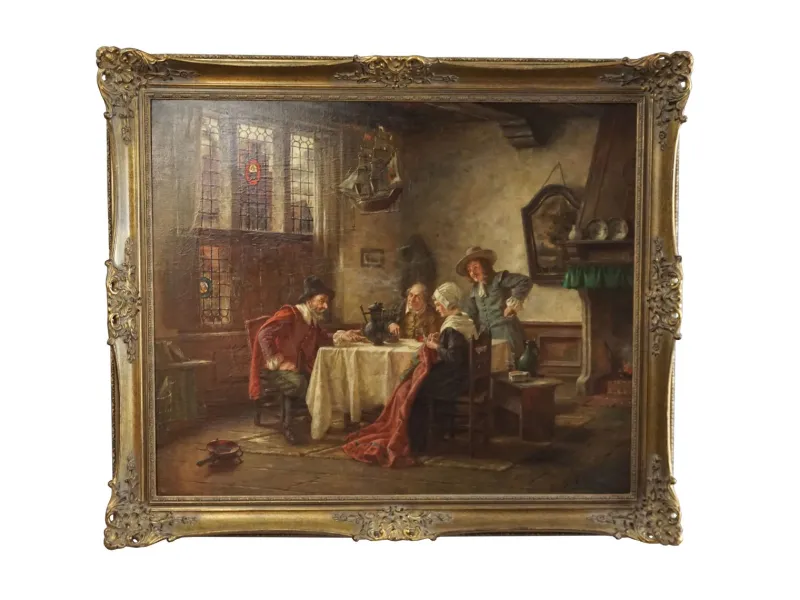
Atmospheric painting by the Munich painter Fritz Wagner.Born on May 18, 1896 in Munich – died on April 3, 1939 in the sa…
Born on May 18, 1896 in Munich – died on April 3, 1939 in the same place.
Wagner was an important Munich genre painter, known primarily for his paintings of monks, individual portraits of wealthy gentlemen, and his figure scenes in Flemish/Dutch interiors.
In the latter, the paintings in a Dutch setting, he drew inspiration from 17th- and 18th-century Flemish-style works. What these paintings have in common is that everything depicted takes place in a single room, in which Wagner repeatedly uses certain objects and people, sometimes slightly modified, but often redesigns the space. Nevertheless, his artistic signature is immediately recognizable.
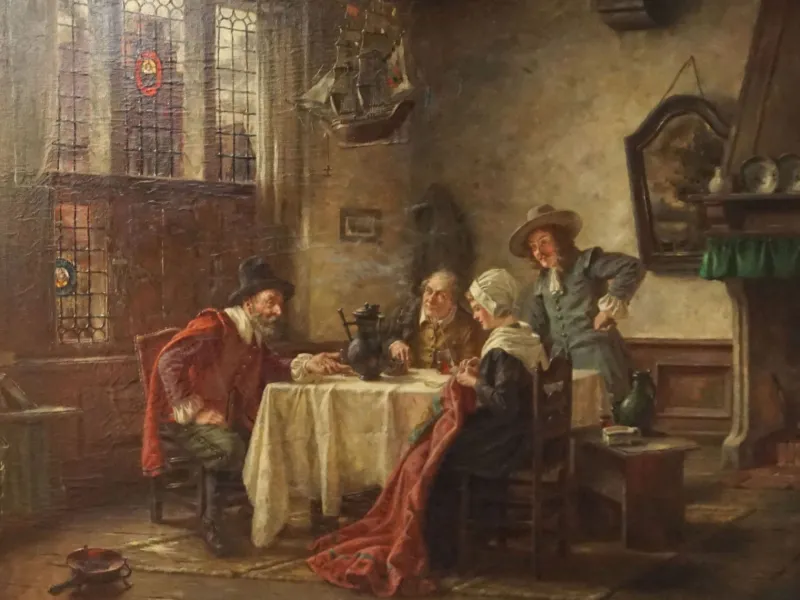
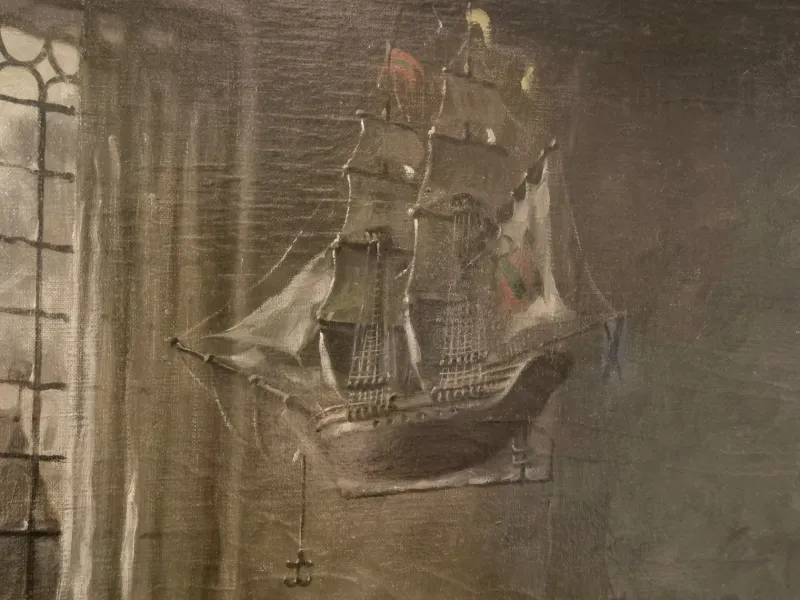
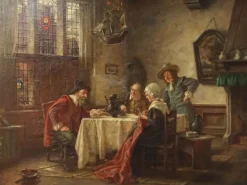
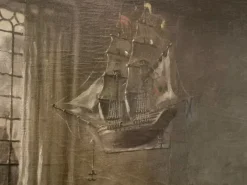
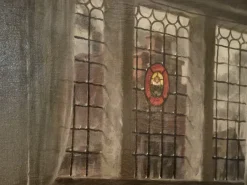
Thus, one usually sees a large window with latticework and leaded glass on the left, a group of people at a table in the center, and an open carmine on the right. A model of a Dutch cog hangs from the ceiling. Pictures, books, maps, dishes, a coal pan, and smaller details often decorate his rooms.
Wagner “plays” with these “objects,” sometimes more… sometimes less, and continually rearranges them.
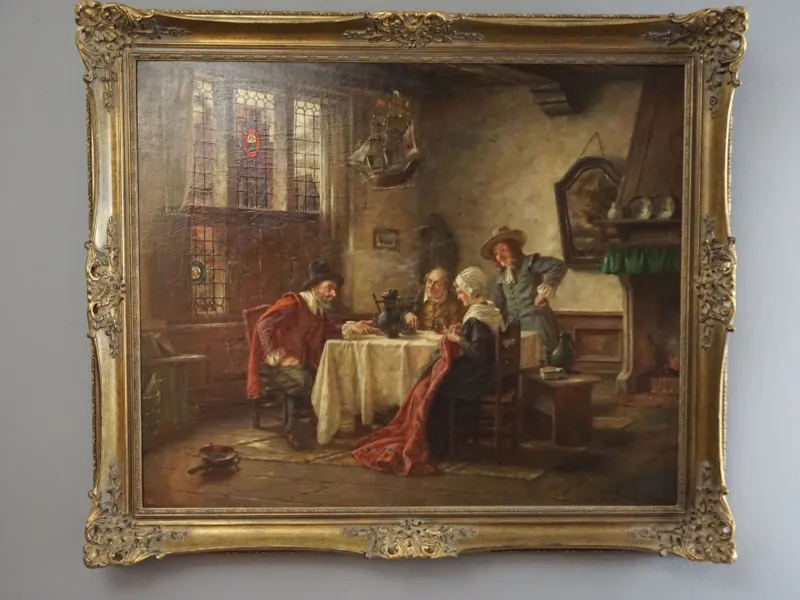
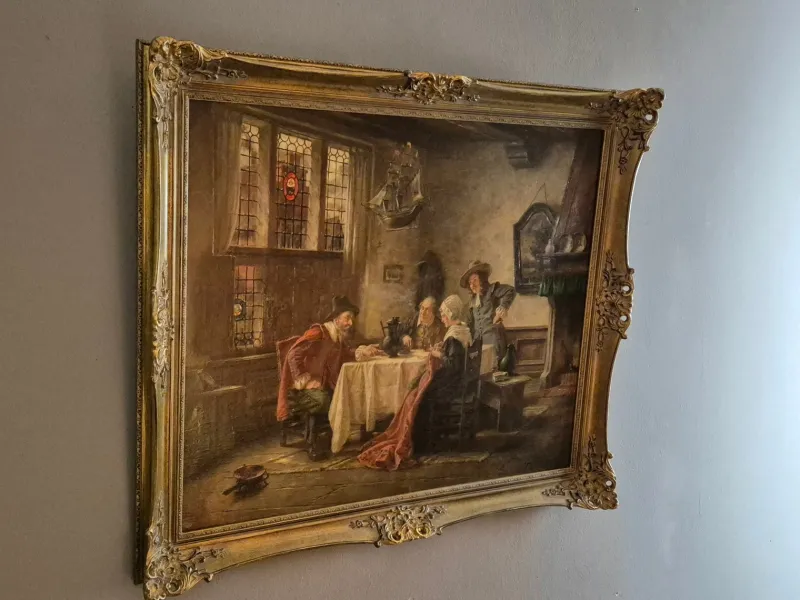
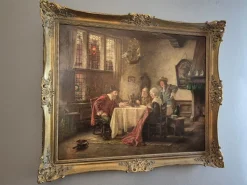
This is also the case with this wonderful painting in landscape format. Painted in oil on canvas with an antique gold frame.
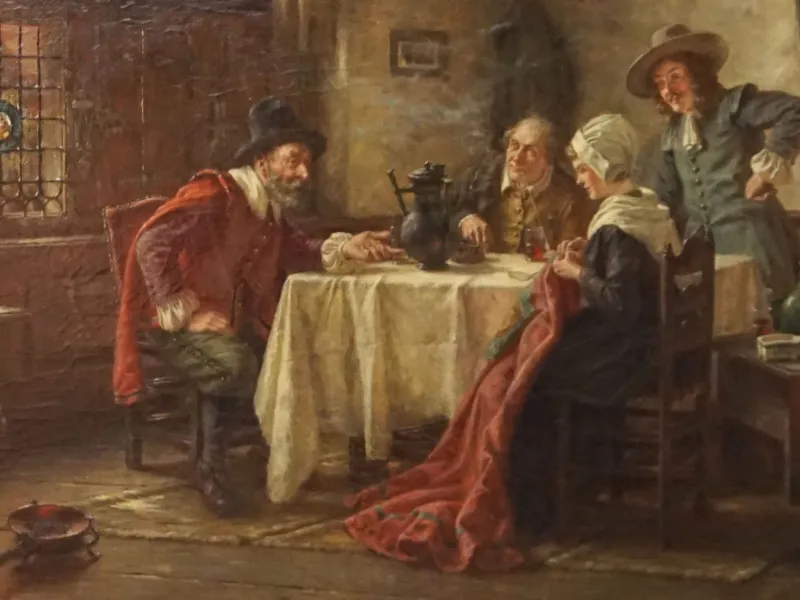
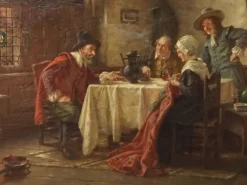
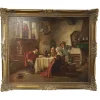
A group of four people – two older gentlemen, a young nobleman, and a young woman – are sitting or standing around a table.
The young woman is sitting sewing, engrossed in working on a patterned red cloak. Opposite her, one of the older, well-dressed men speaks to her with gentle gestures. The second older person, sitting in the middle and smoking a pipe, listens with interest to what is being said… and also turns his gaze specifically to the sheltered older man. Next to him, also sheltered, stands a younger nobleman, his gaze directed at the young woman, his posture expectant.
Whether the sheltered men are a father and son, perhaps negotiating a marriage that was still common at the time, or whether it simply refers to the work of the young woman who lives in the household of her smoking father, is a matter of speculation.
The portrayal of the gazes and body language in this way testifies to Fritz Wagner’s great skill. The light and shadows that appear on the faces, objects, and fabrics are magnificent.
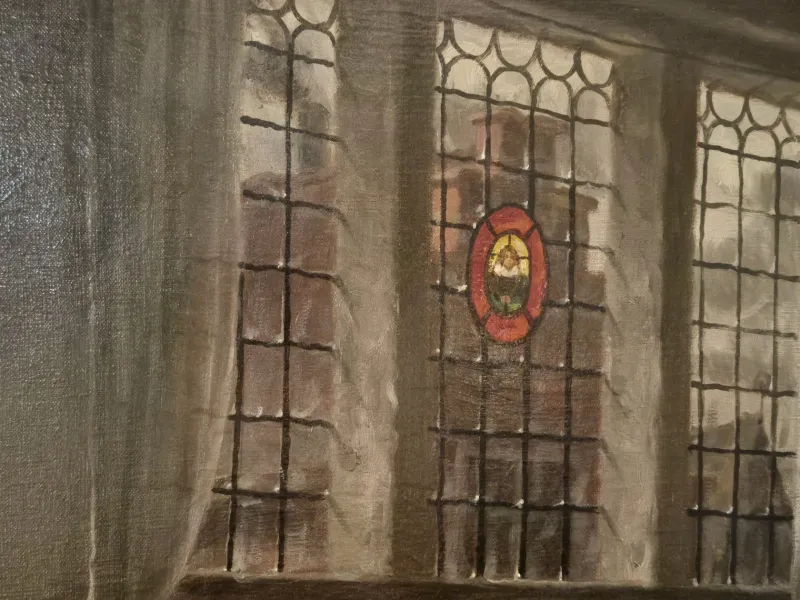
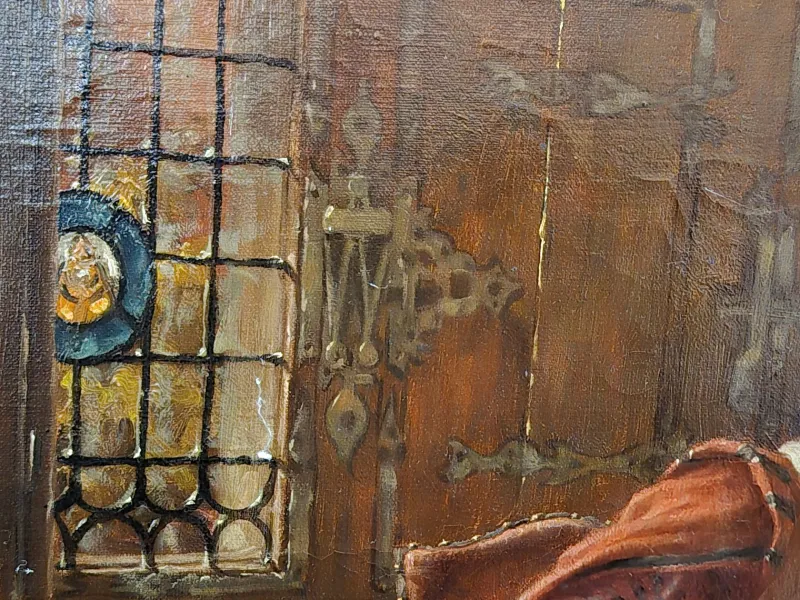
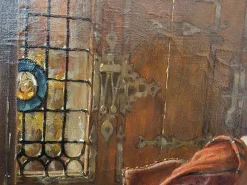
Details such as the suggested mullions of the window still visible through the curtain, the picture within the picture next to the carmine, the irregular surface of the walls and floor at that time…, the slight curvature and reflection of the light in the glass panes…, the gables of the neighboring buildings visible through the window…, the smoke from the pipe spreading through the room… simply wonderful. The longer you look at the painting, the more details you notice.
It’s not without reason that many contemporaries have “attempted” their hand at his paintings—without achieving the same level of detail and precision.
The painting is signed lower right with Fritz Wagner and the abbreviation for Munich.
Good original condition. No holes, patches, or anything of the sort.
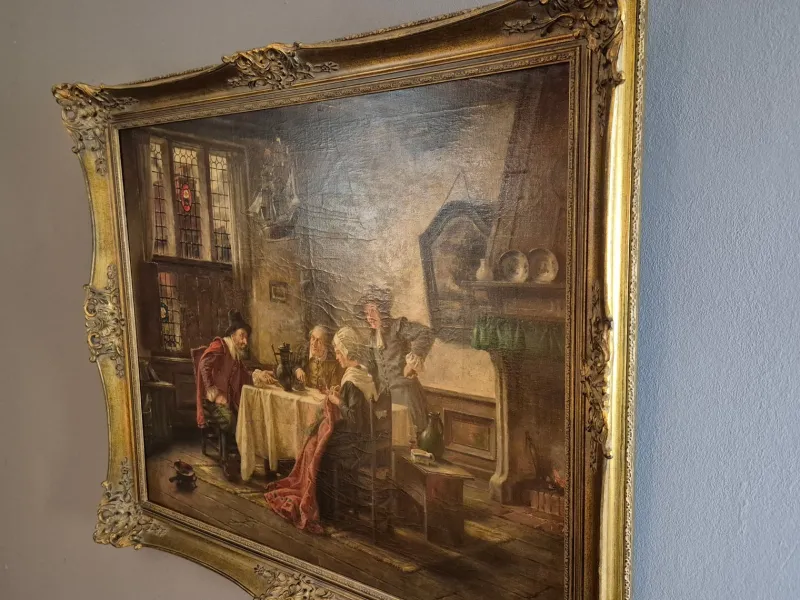
Due to its age, however, it does have a charming craquelure, as is somewhat common with older oil paintings.
Image size: 85 x 70 cm
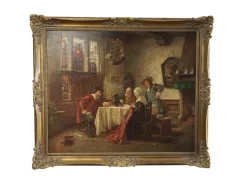
Total dimensions with frame: 99 x 84 x 10 cm.
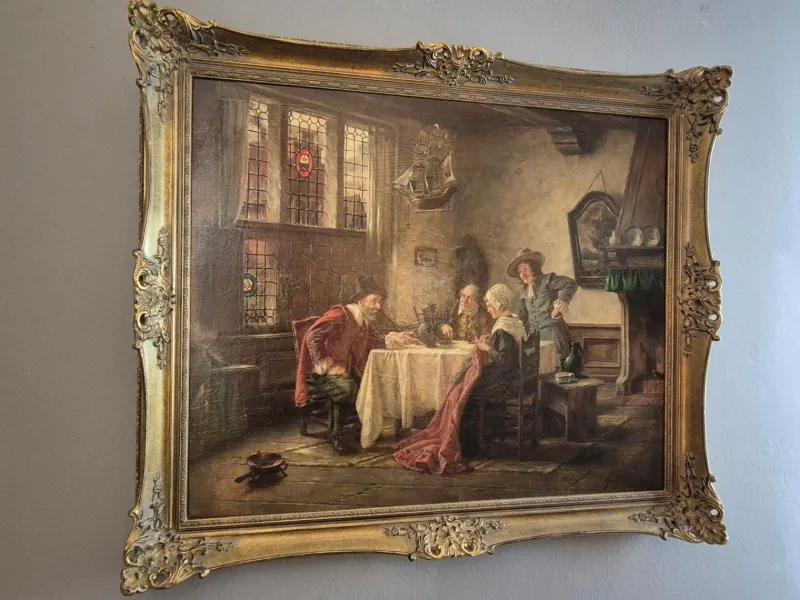
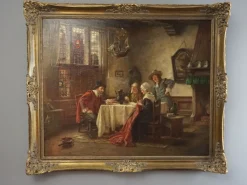
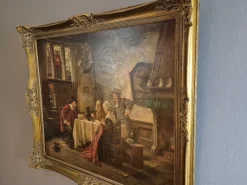
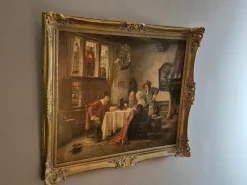
Please note that some of the product photos may have light reflections, which may be more or less reflected in the painting depending on the viewing angle. Therefore, we also like to show the side views :-).
The seller assumes all responsibility for this listing.
About This Piece
Born on May 18, 1896 in Munich – died on April 3, 1939 in the same place.
Wagner was an important Munich genre painter, known primarily for his paintings of monks, individual portraits of wealthy gentlemen, and his figure scenes in Flemish/Dutch interiors.
In the latter, the paintings in a Dutch setting, he drew inspiration from 17th- and 18th-century Flemish-style works. What these paintings have in common is that everything depicted takes place in a single room, in which Wagner repeatedly uses certain objects and people, sometimes slightly modified, but often redesigns the space. Nevertheless, his artistic signature is immediately recognizable.
Thus, one usually sees a large window with latticework and leaded glass on the left, a group of people at a table in the center, and an open carmine on the right. A model of a Dutch cog hangs from the ceiling. Pictures, books, maps, dishes, a coal pan, and smaller details often decorate his rooms.
Wagner “plays” with these “objects,” sometimes more… sometimes less, and continually rearranges them.
This is also the case with this wonderful painting in landscape format. Painted in oil on canvas with an antique gold frame.
A group of four people – two older gentlemen, a young nobleman, and a young woman – are sitting or standing around a table.
The young woman is sitting sewing, engrossed in working on a patterned red cloak. Opposite her, one of the older, well-dressed men speaks to her with gentle gestures. The second older person, sitting in the middle and smoking a pipe, listens with interest to what is being said… and also turns his gaze specifically to the sheltered older man. Next to him, also sheltered, stands a younger nobleman, his gaze directed at the young woman, his posture expectant.
Whether the sheltered men are a father and son, perhaps negotiating a marriage that was still common at the time, or whether it simply refers to the work of the young woman who lives in the household of her smoking father, is a matter of speculation.
The portrayal of the gazes and body language in this way testifies to Fritz Wagner’s great skill. The light and shadows that appear on the faces, objects, and fabrics are magnificent.
Details such as the suggested mullions of the window still visible through the curtain, the picture within the picture next to the carmine, the irregular surface of the walls and floor at that time…, the slight curvature and reflection of the light in the glass panes…, the gables of the neighboring buildings visible through the window…, the smoke from the pipe spreading through the room… simply wonderful. The longer you look at the painting, the more details you notice.
It’s not without reason that many contemporaries have “attempted” their hand at his paintings—without achieving the same level of detail and precision.
The painting is signed lower right with Fritz Wagner and the abbreviation for Munich.
Good original condition. No holes, patches, or anything of the sort.
Due to its age, however, it does have a charming craquelure, as is somewhat common with older oil paintings.
Image size: 85 x 70 cm
Total dimensions with frame: 99 x 84 x 10 cm.
Please note that some of the product photos may have light reflections, which may be more or less reflected in the painting depending on the viewing angle. Therefore, we also like to show the side views :-).
Click here for full descriptionClose description
| Period | 1920 to 1949 |
|---|---|
| Production Period | 1890 to 1919, 1920 to 1929 |
| Country of Manufacture | Germany |
| Identifying Marks | This piece has an attribution mark |
| Style | Classical, Figurative |
| Detailed Condition | Very Good — This vintage/antique item has no defects, but it may show slight traces of use. |
| Restoration and Damage Details | Light wear consistent with age and use, Patina consistent with age and use, Well-preserved original condition. Age-related craquelure. |
| Product Code | YYE-2218530 |
| Materials | Oil on Canvas |
| Color | Multicolored |
| Width | 99 cm 39.0 inch |
| Depth | 10 cm 3.9 inch |
| Height | 84 cm 33.1 inch |
Be the first to review “Pamono Fritz Wagner, Dutch Genre Interior, 1920s, Oil on Canvas, Framed> Classical”
Related products

Cabinets & Wardrobes


Children's Chairs


Daybeds & Chaises Lounges





Children's Chairs





Dressers, Commodes & Chests





Login
Reviews
There are no reviews yet.