
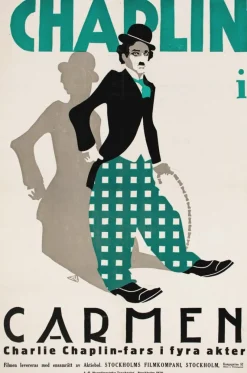
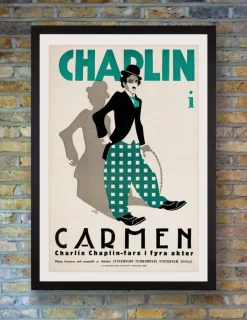
Pamono Chaplin Burlesque on Carmen Original Linocut Movie Poster, Swedish, 1920> Posters
Original price was: $7,718.00.$132.99Current price is: $132.99.
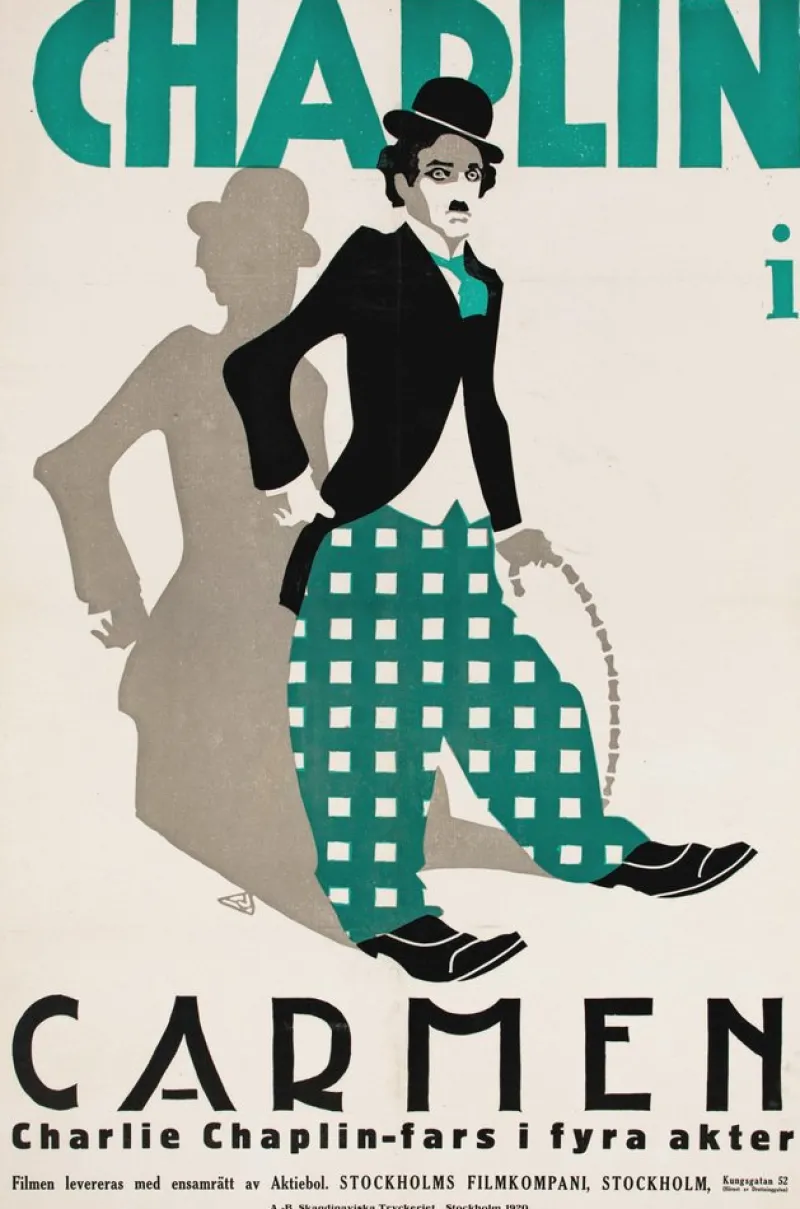
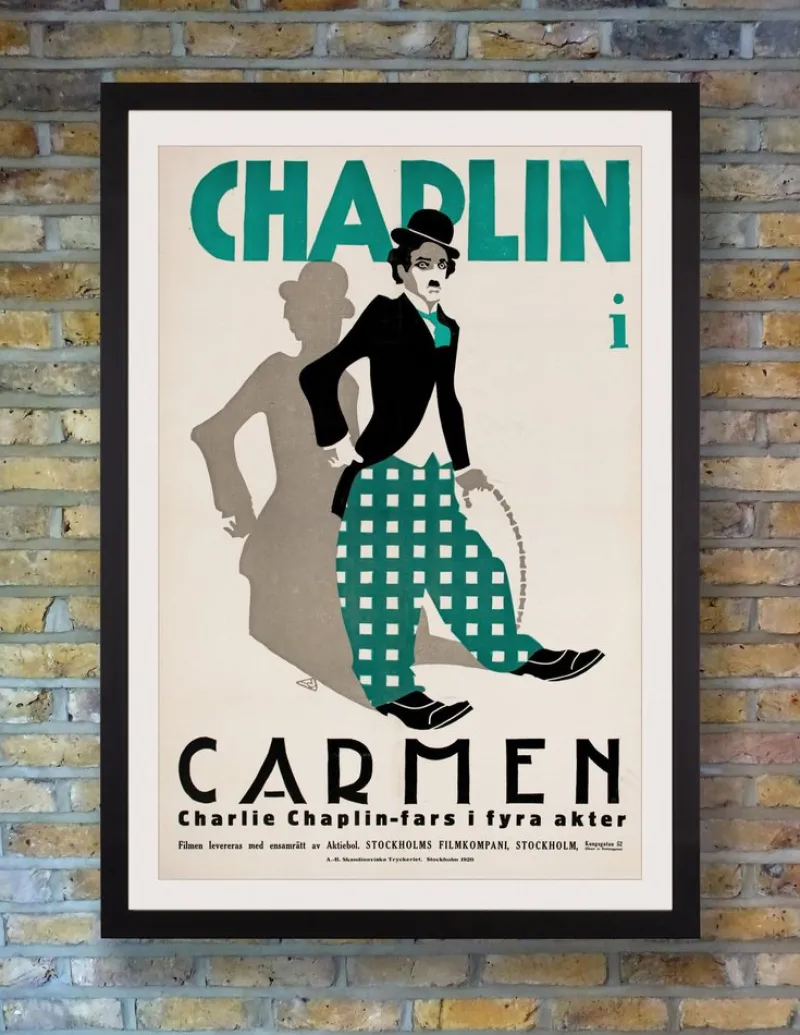
Boldly linocut printed in black, grey and teal green, this stylish Art Deco style Swedish One Sheet poster for the picture presents a startlingly simple and modern appearance compared to the painterly American movie posters of the time, which were saturated with realistic detail and colour. The linocut printmaking technique is a variant of woodcut in which a sheet of linoleum is used for the relief surface. A design is cut into the linoleum surface, inked with a roller called a brayer, and then impressed onto the paper. As the technique favours flat planes of colour rather than texture and detail, the Swedish poster artists who employed this printing method created bold compositions of geometric shapes and sweeping curves, their dynamic designs standing out splendidly against unprinted or single colour backgrounds. Exceedingly rare, these Swedish linocut posters were produced only for a short period of time until the early 1920s. This exquisite example is likely to be one of only a handful of surviving copies for this picture. Printed in Sweden by Aktiebolaget Skandinaviska Tryckeriet, Stockholm.
Conservation backed on linen. Backing and light colour touching has smoothed and diminished one vertical and three horizontal folds. Double crease to upper portion of vertical fold. Some faint ghosting to folds in white ground. Small surface gouge or ding to white ground at right of “H” in “Chaplin.” Printed slightly off register. A few printer’s ink spots and smudges, which only add to the charm of this hundred-year-old linocut print. Image and colours otherwise excellent.
The seller assumes all responsibility for this listing.
About This Piece
Vintage Design
Boldly linocut printed in black, grey and teal green, this stylish Art Deco style Swedish One Sheet poster for the picture presents a startlingly simple and modern appearance compared to the painterly American movie posters of the time, which were saturated with realistic detail and colour. The linocut printmaking technique is a variant of woodcut in which a sheet of linoleum is used for the relief surface. A design is cut into the linoleum surface, inked with a roller called a brayer, and then impressed onto the paper. As the technique favours flat planes of colour rather than texture and detail, the Swedish poster artists who employed this printing method created bold compositions of geometric shapes and sweeping curves, their dynamic designs standing out splendidly against unprinted or single colour backgrounds. Exceedingly rare, these Swedish linocut posters were produced only for a short period of time until the early 1920s. This exquisite example is likely to be one of only a handful of surviving copies for this picture. Printed in Sweden by Aktiebolaget Skandinaviska Tryckeriet, Stockholm.
Conservation backed on linen. Backing and light colour touching has smoothed and diminished one vertical and three horizontal folds. Double crease to upper portion of vertical fold. Some faint ghosting to folds in white ground. Small surface gouge or ding to white ground at right of “H” in “Chaplin.” Printed slightly off register. A few printer’s ink spots and smudges, which only add to the charm of this hundred-year-old linocut print. Image and colours otherwise excellent.
Click here for full descriptionClose description
| Design Period | 1920 to 1949 |
|---|---|
| Year | 1920 |
| Production Period | Before 2010 |
| Country of Manufacture | Sweden |
| Identifying Marks | This piece is attributed to the above-mentioned designer/maker. It has no attribution mark |
| Style | Vintage, Mid-Century, Art Deco |
| Detailed Condition | Good — This vintage/antique item may have some wear such as scratches and other signs of ageing. |
| Restoration and Damage Details | Light wear consistent with age and use |
| Product Code | VDY-1461471 |
| Materials | Paper |
| Color | Beige, green |
| Width | 60 cm 23.4 inch |
| Depth | 1 cm 0.4 inch |
| Height | 90 cm 35.4 inch |
Be the first to review “Pamono Chaplin Burlesque on Carmen Original Linocut Movie Poster, Swedish, 1920> Posters”
Related products
Coffee & Side Tables
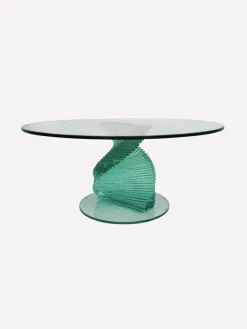
Sale Pamono Helix Spiral Sculptural Glass Coffee Table in the style of Danny Lane, 1980s
Daybeds & Chaises Lounges
Cabinets & Wardrobes
Cabinets & Wardrobes


Children's Chairs
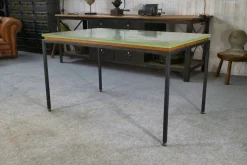

Dining Tables & Sets
New Pamono Vintage Table in Glass and Black Lacquered Metal, 1960s
Beds & Bedroom Sets
Login

Reviews
There are no reviews yet.