
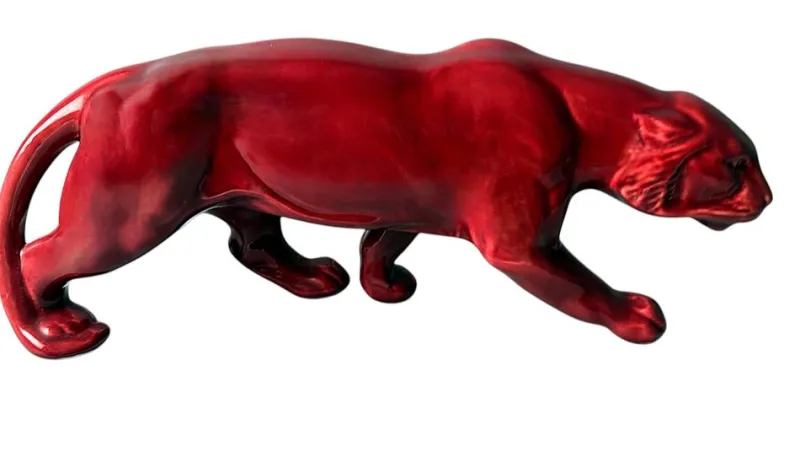
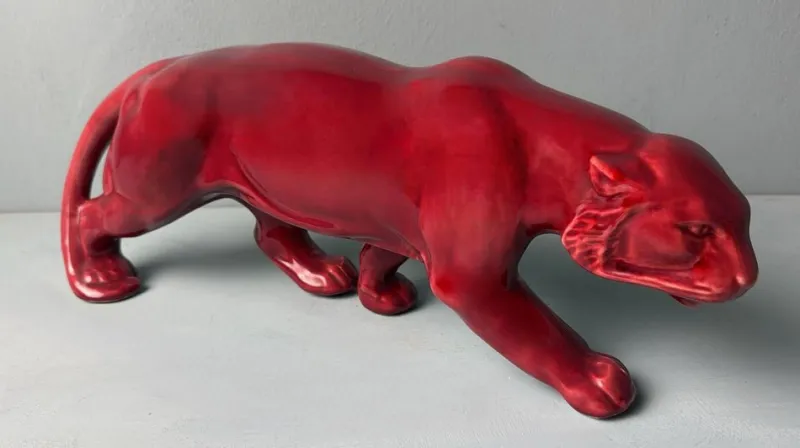
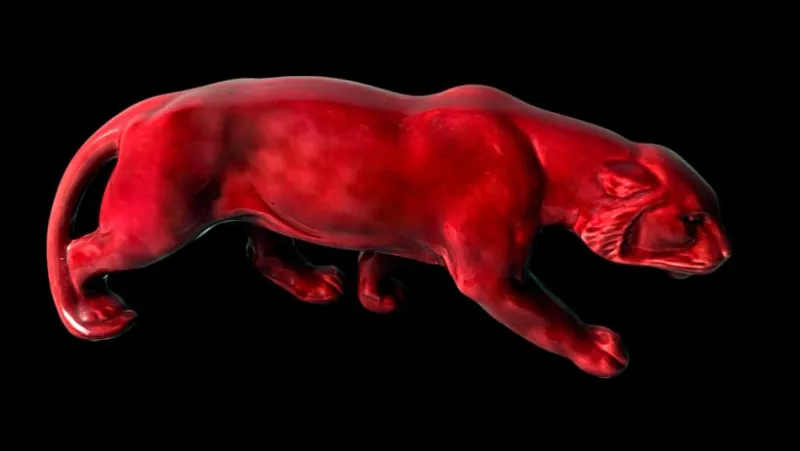
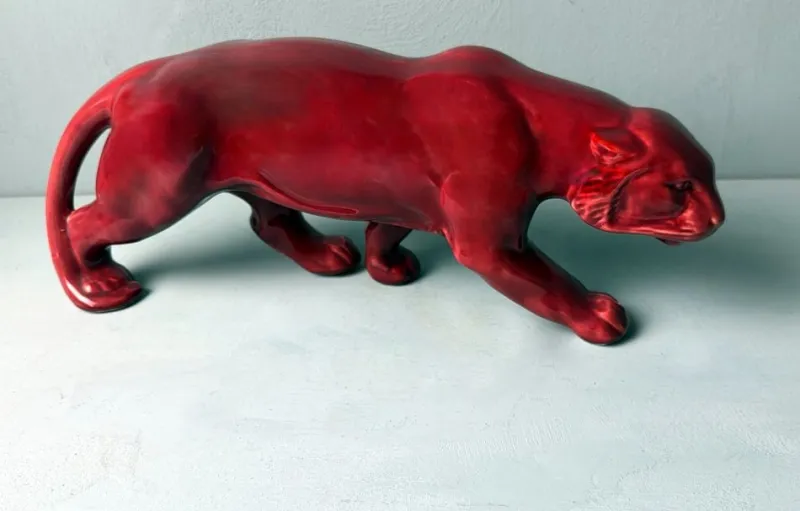
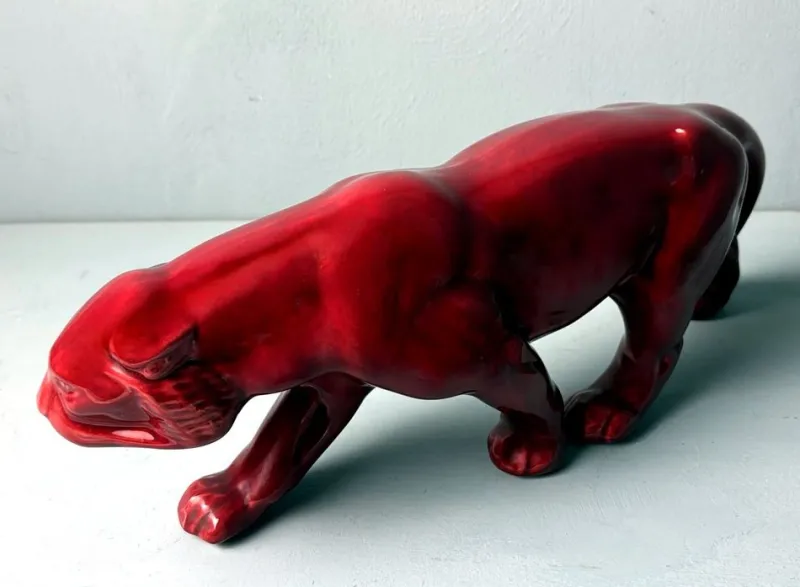
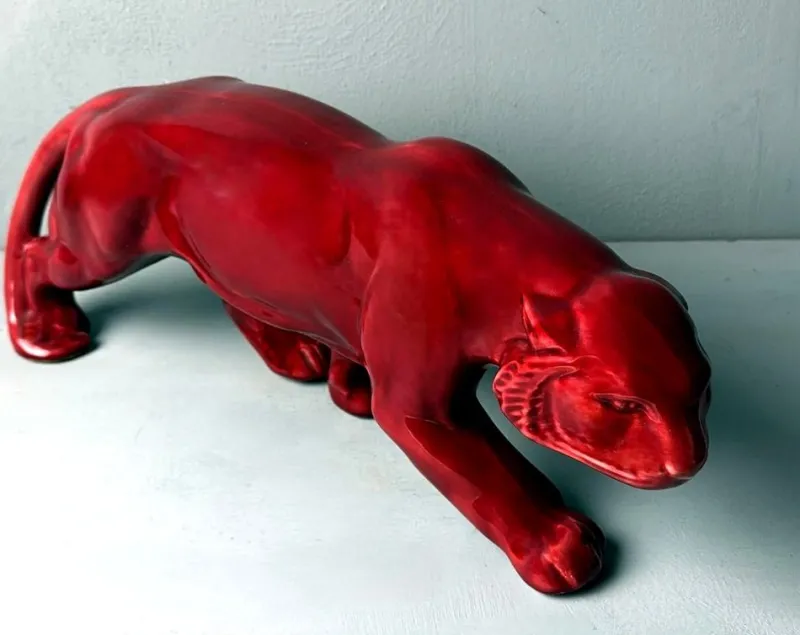
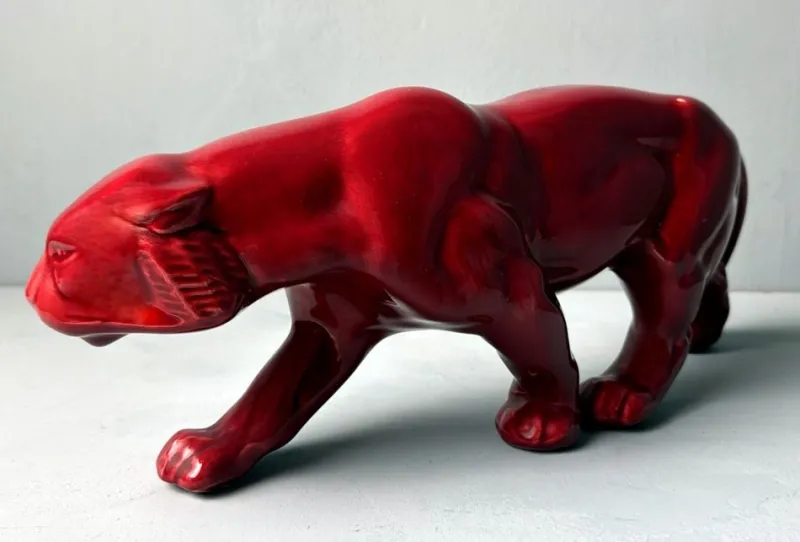
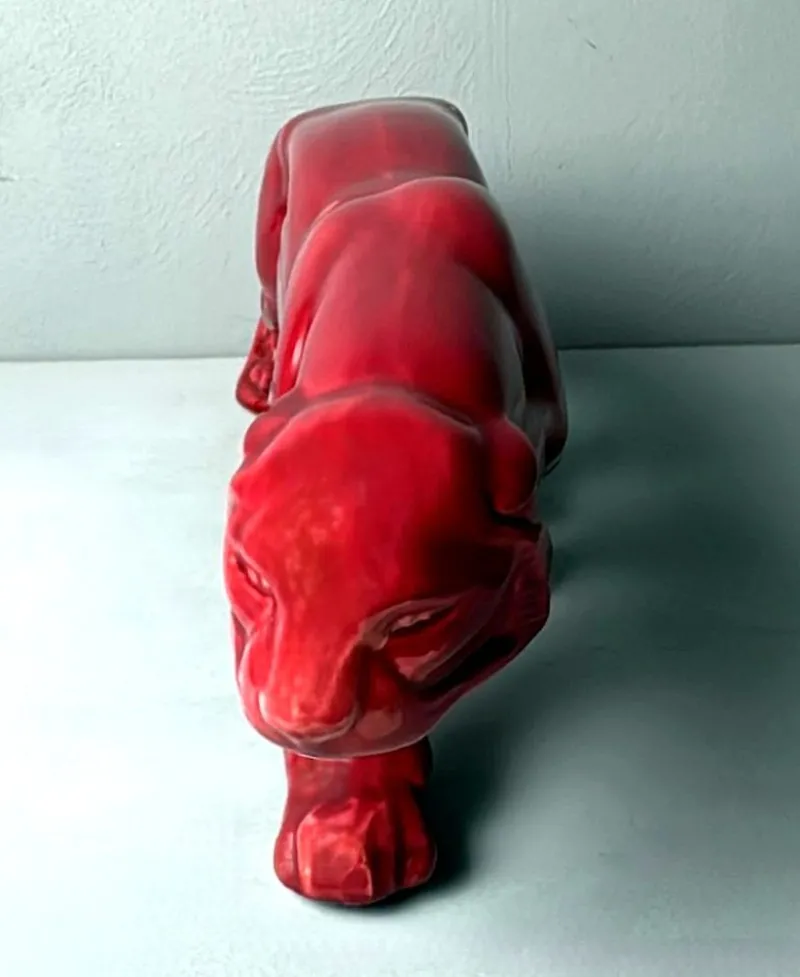


Pamono Art Deco Fremch Saint-Clément Panther in Glazed Red Ceramic, 1930s
$134.89
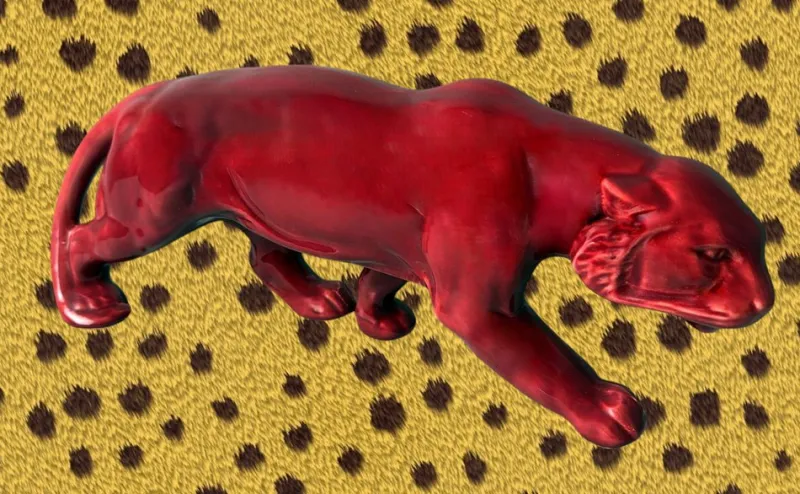
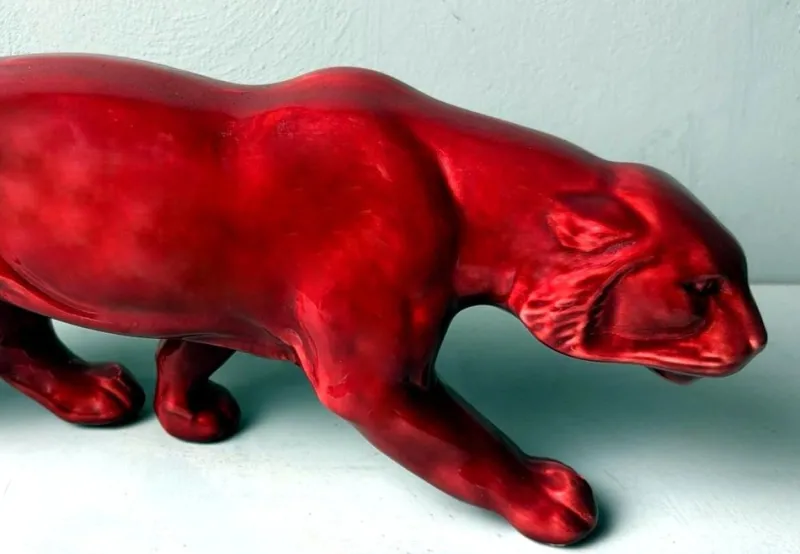
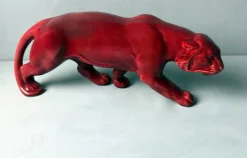
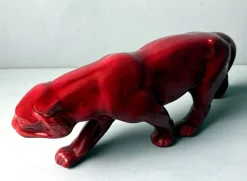
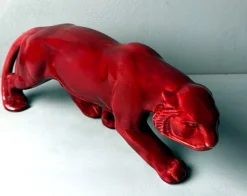
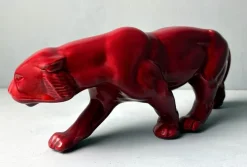
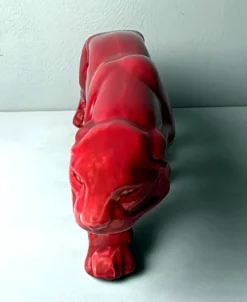
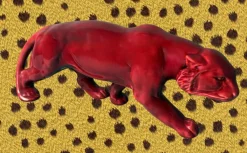
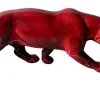
A stunning and large Art Deco glazed red ceramic panther. The majestic feline is depicted in its classic pre-attack stance: its body tense, poised to spring forward with lightning speed for a lethal strike. This piece exudes power and suspense, embodying the essence of Art Deco, which in its artistic expressions celebrated form, strength, and dynamism—both human and animal.
The craftsmanship of this piece is particularly remarkable. The raw ceramic was first shaped into its final, elegant form and then fired at approximately 1000°C. Next, an ancient glazing technique was applied, using a transparent glass-like coating known as “cristallina,” meticulously brushed on with an ox-hair brush. Once this layer was set, the red glaze was carefully applied by hand to ensure even coverage. The glazing process requires great skill, as it is crucial for the enamel to adhere uniformly to the surface. Finally, to set the glaze, the piece underwent a second firing at temperatures between 920°C and 940°C. Observing the underside of the paws, one can better appreciate this intricate technique. This panther was crafted between 1930 and 1933 in the Lunéville region of France, following the style of the renowned Saint-Clément ceramic manufactory. Saint-Clément was founded in 1758 by Jacques Chambrette of Lunéville and has a rich legacy in ceramic craftsmanship. The history of terracotta production in the Lunévillois region dates back to the 18th century, and the pieces still produced in Saint-Clément and its surroundings reflect this long-standing tradition. In 1892, the Lunéville and Saint-Clément factories merged, establishing their dominance in the French ceramics market. Dimensions:•Length: 46 cm•Depth: 11 cm•Height: 18 cm. Our panther is in good condition, though it has a small imperfection on its back (see photos). This is not a flaw or damage but rather a natural color variation in the material, which commonly occurs during the firing process of terracotta.
The craftsmanship of this piece is particularly remarkable. The raw ceramic was first shaped into its final, elegant form and then fired at approximately 1000°C. Next, an ancient glazing technique was applied, using a transparent glass-like coating known as “cristallina,” meticulously brushed on with an ox-hair brush. Once this layer was set, the red glaze was carefully applied by hand to ensure even coverage. The glazing process requires great skill, as it is crucial for the enamel to adhere uniformly to the surface. Finally, to set the glaze, the piece underwent a second firing at temperatures between 920°C and 940°C. Observing the underside of the paws, one can better appreciate this intricate technique. This panther was crafted between 1930 and 1933 in the Lunéville region of France, following the style of the renowned Saint-Clément ceramic manufactory. Saint-Clément was founded in 1758 by Jacques Chambrette of Lunéville and has a rich legacy in ceramic craftsmanship. The history of terracotta production in the Lunévillois region dates back to the 18th century, and the pieces still produced in Saint-Clément and its surroundings reflect this long-standing tradition. In 1892, the Lunéville and Saint-Clément factories merged, establishing their dominance in the French ceramics market. Dimensions:•Length: 46 cm•Depth: 11 cm•Height: 18 cm. Our panther is in good condition, though it has a small imperfection on its back (see photos). This is not a flaw or damage but rather a natural color variation in the material, which commonly occurs during the firing process of terracotta.
The seller assumes all responsibility for this listing.
About This Piece
A stunning and large Art Deco glazed red ceramic panther. The majestic feline is depicted in its classic pre-attack stance: its body tense, poised to spring forward with lightning speed for a lethal strike. This piece exudes power and suspense, embodying the essence of Art Deco, which in its artistic expressions celebrated form, strength, and dynamism—both human and animal.
The craftsmanship of this piece is particularly remarkable. The raw ceramic was first shaped into its final, elegant form and then fired at approximately 1000°C. Next, an ancient glazing technique was applied, using a transparent glass-like coating known as “cristallina,” meticulously brushed on with an ox-hair brush. Once this layer was set, the red glaze was carefully applied by hand to ensure even coverage. The glazing process requires great skill, as it is crucial for the enamel to adhere uniformly to the surface. Finally, to set the glaze, the piece underwent a second firing at temperatures between 920°C and 940°C. Observing the underside of the paws, one can better appreciate this intricate technique. This panther was crafted between 1930 and 1933 in the Lunéville region of France, following the style of the renowned Saint-Clément ceramic manufactory. Saint-Clément was founded in 1758 by Jacques Chambrette of Lunéville and has a rich legacy in ceramic craftsmanship. The history of terracotta production in the Lunévillois region dates back to the 18th century, and the pieces still produced in Saint-Clément and its surroundings reflect this long-standing tradition. In 1892, the Lunéville and Saint-Clément factories merged, establishing their dominance in the French ceramics market. Dimensions:•Length: 46 cm•Depth: 11 cm•Height: 18 cm. Our panther is in good condition, though it has a small imperfection on its back (see photos). This is not a flaw or damage but rather a natural color variation in the material, which commonly occurs during the firing process of terracotta.
The craftsmanship of this piece is particularly remarkable. The raw ceramic was first shaped into its final, elegant form and then fired at approximately 1000°C. Next, an ancient glazing technique was applied, using a transparent glass-like coating known as “cristallina,” meticulously brushed on with an ox-hair brush. Once this layer was set, the red glaze was carefully applied by hand to ensure even coverage. The glazing process requires great skill, as it is crucial for the enamel to adhere uniformly to the surface. Finally, to set the glaze, the piece underwent a second firing at temperatures between 920°C and 940°C. Observing the underside of the paws, one can better appreciate this intricate technique. This panther was crafted between 1930 and 1933 in the Lunéville region of France, following the style of the renowned Saint-Clément ceramic manufactory. Saint-Clément was founded in 1758 by Jacques Chambrette of Lunéville and has a rich legacy in ceramic craftsmanship. The history of terracotta production in the Lunévillois region dates back to the 18th century, and the pieces still produced in Saint-Clément and its surroundings reflect this long-standing tradition. In 1892, the Lunéville and Saint-Clément factories merged, establishing their dominance in the French ceramics market. Dimensions:•Length: 46 cm•Depth: 11 cm•Height: 18 cm. Our panther is in good condition, though it has a small imperfection on its back (see photos). This is not a flaw or damage but rather a natural color variation in the material, which commonly occurs during the firing process of terracotta.
Click here for full descriptionClose description
| Period | 1920 to 1949 |
|---|---|
| Year | 1930 |
| Production Period | 1930 to 1939 |
| Country of Manufacture | France |
| Style | Mid-Century |
| Detailed Condition | Good — This vintage/antique item may have some wear such as scratches and other signs of ageing. |
| Restoration and Damage Details | Light wear consistent with age and use, Has a small imperfection on its back (see photos). This is not a flaw or damage but rather a natural color variation in the material, which commonly occurs during the firing process of terracotta |
| Product Code | QRS-2193027 |
| Materials | Ceramic |
| Color | Crimson |
| Width | 46 cm 18.1 inch |
| Depth | 11 cm 4.3 inch |
| Height | 18 cm 7.1 inch |
Be the first to review “Pamono Art Deco Fremch Saint-Clément Panther in Glazed Red Ceramic, 1930s”
Related products
Sale!
Dressers, Commodes & Chests
Original price was: $1,907.00.$132.89Current price is: $132.89.

$124.99



Dining Tables & Sets
New Pamono Vintage Table in Glass and Black Lacquered Metal, 1960s
$124.89
Sale!

Original price was: $11,359.00.$120.99Current price is: $120.99.
Sale!

Original price was: $4,566.00.$128.89Current price is: $128.89.


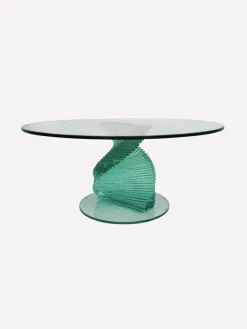
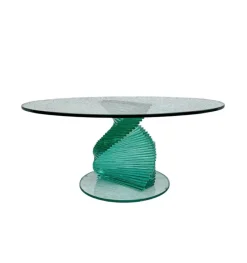
Coffee & Side Tables
Sale Pamono Helix Spiral Sculptural Glass Coffee Table in the style of Danny Lane, 1980s
$122.89
Sale!


Original price was: $3,717.00.$122.89Current price is: $122.89.


$136.89
$136.99
Sale!


Original price was: $2,111.00.$138.99Current price is: $138.99.


Children's Chairs
$120.99
Sale!


Original price was: $625.00.$136.89Current price is: $136.89.
Sale!

Daybeds & Chaises Lounges
Original price was: $2,866.00.$140.89Current price is: $140.89.
Login
Reviews
There are no reviews yet.