
Pamono 19th Century Signed Italian Military Painting, Michele Cammarano> Old Masters
$124.89
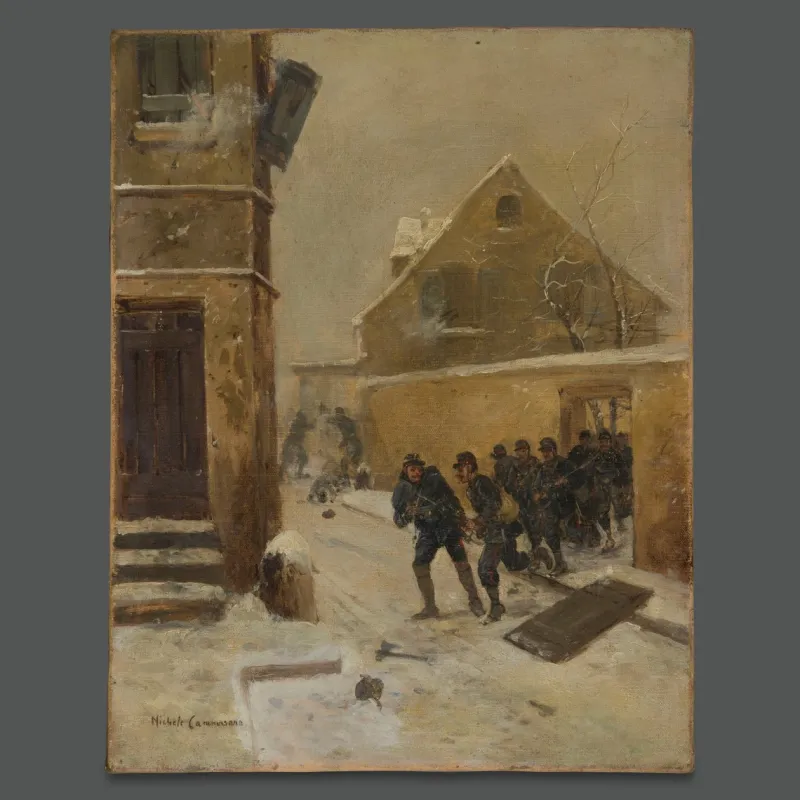
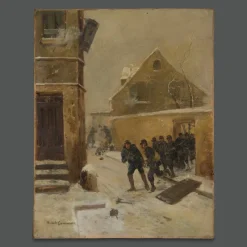
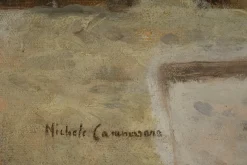
In this beautiful painting, the great Neapolitan artist Michele Cammarano performs one of his favourite subjects: s of b…
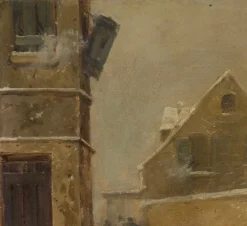
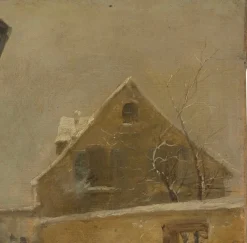
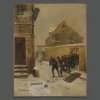
Our important painting depicts a handful of soldiers raiding a city, routing the enemy
This artwork, never before on the market, comes from an European important private collection
Certificate of authenticity issued by Sabrina Egidi official Expert in Italian furniture for the Chamber of Commerce of Rome and for the Rome Civil Courts.
Michele Cammarano (Naples 23 February 1835 – 15 September 1920) was an Italian painter who was best known for his battle scenes, although he worked with a wide variety of subjects.
His grandfather was Giuseppe Cammarano, a painter and occasional actor, and his father was Salvadore Cammarano, a famous opera librettist who wrote for Giuseppe Verdi.
He enrolled at the Accademia di Belle Arti di Napoli in 1853.
Later, he studied with Gabriele Smargiassi, Giuseppe Mancinelli and the Palizzi brothers (Filippo and Giuseppe), painters in the Naturalistic style.
He had his first exhibition in 1855 at the “”Real Museo Borbonico”.
In 1860, however, he became fascinated with Giuseppe Garibaldi and enlisted in the “Guardia Nazionale” to help eliminate the brigantaggio; a major step in the reunification of Italy.
His experiences had a decisive influence on his artistic career.
A brief stay in Florence after his service brought him into contact with the Macchiaioli, who also had some influence.
In 1863, one of his paintings was purchased by King Victor Emmanuel II.
In 1865, he moved to Rome then, in 1867, to Venice.
In 1870, his admiration for Gustave Courbet led him to Paris.
He was determined to meet Courbet, which he did and, while he was there, discovered the works of Théodore Géricault.
In 1888, he was commissioned by the Italian government to create a monumental canvas depicting the Battle of Dogali (1887).
After reading about the geography and local customs, he moved to Massawa to inspect the battle site in person and remained for almost five years to complete the painting.
While there, he also created landscapes and portraits of the local people.
In 1900, he was appointed to succeed his old teacher, Filippo Palizzi, as Professor at the Institute in Naples.
After that, his productivity declined; although he made a few trips to Sicily to paint landscapes.
A street in Naples has been named after him.
The seller assumes all responsibility for this listing.
About This Piece
Our important painting depicts a handful of soldiers raiding a city, routing the enemy
This artwork, never before on the market, comes from an European important private collection
Certificate of authenticity issued by Sabrina Egidi official Expert in Italian furniture for the Chamber of Commerce of Rome and for the Rome Civil Courts.
Michele Cammarano (Naples 23 February 1835 – 15 September 1920) was an Italian painter who was best known for his battle scenes, although he worked with a wide variety of subjects.
His grandfather was Giuseppe Cammarano, a painter and occasional actor, and his father was Salvadore Cammarano, a famous opera librettist who wrote for Giuseppe Verdi.
He enrolled at the Accademia di Belle Arti di Napoli in 1853.
Later, he studied with Gabriele Smargiassi, Giuseppe Mancinelli and the Palizzi brothers (Filippo and Giuseppe), painters in the Naturalistic style.
He had his first exhibition in 1855 at the “”Real Museo Borbonico”.
In 1860, however, he became fascinated with Giuseppe Garibaldi and enlisted in the “Guardia Nazionale” to help eliminate the brigantaggio; a major step in the reunification of Italy.
His experiences had a decisive influence on his artistic career.
A brief stay in Florence after his service brought him into contact with the Macchiaioli, who also had some influence.
In 1863, one of his paintings was purchased by King Victor Emmanuel II.
In 1865, he moved to Rome then, in 1867, to Venice.
In 1870, his admiration for Gustave Courbet led him to Paris.
He was determined to meet Courbet, which he did and, while he was there, discovered the works of Théodore Géricault.
In 1888, he was commissioned by the Italian government to create a monumental canvas depicting the Battle of Dogali (1887).
After reading about the geography and local customs, he moved to Massawa to inspect the battle site in person and remained for almost five years to complete the painting.
While there, he also created landscapes and portraits of the local people.
In 1900, he was appointed to succeed his old teacher, Filippo Palizzi, as Professor at the Institute in Naples.
After that, his productivity declined; although he made a few trips to Sicily to paint landscapes.
A street in Naples has been named after him.
Click here for full descriptionClose description
| Period | Before 1890 |
|---|---|
| Production Period | Before 1890 |
| Country of Manufacture | Italy |
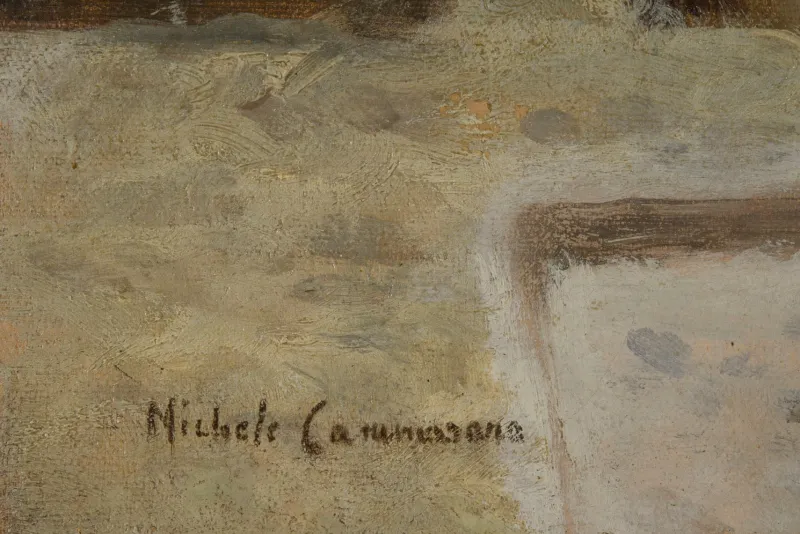
| Identifying Marks | This piece has an attribution mark |
| Style | Classical, Figurative, Italian, Old Masters, Antique |
| Detailed Condition | Good — This vintage/antique item may have some wear such as scratches and other signs of ageing. |
| Restoration and Damage Details | Patina consistent with age and use, Light wear consistent with age and use |
| Product Code | MAX-2177502 |
| Materials | Oil on Canvas |
| Color | Multicolored |
| Width | 33 cm 12.8 inch |
| Depth | 2 cm 0.8 inch |
| Height | 41 cm 16.1 inch |
Be the first to review “Pamono 19th Century Signed Italian Military Painting, Michele Cammarano> Old Masters”
Related products
Beds & Bedroom Sets

Cabinets & Wardrobes
Cabinets & Wardrobes


Children's Chairs
Coffee & Side Tables
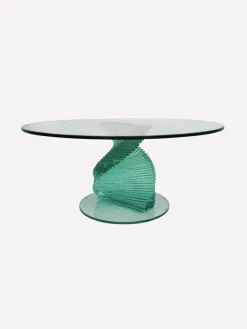
Sale Pamono Helix Spiral Sculptural Glass Coffee Table in the style of Danny Lane, 1980s
Login
Reviews
There are no reviews yet.