
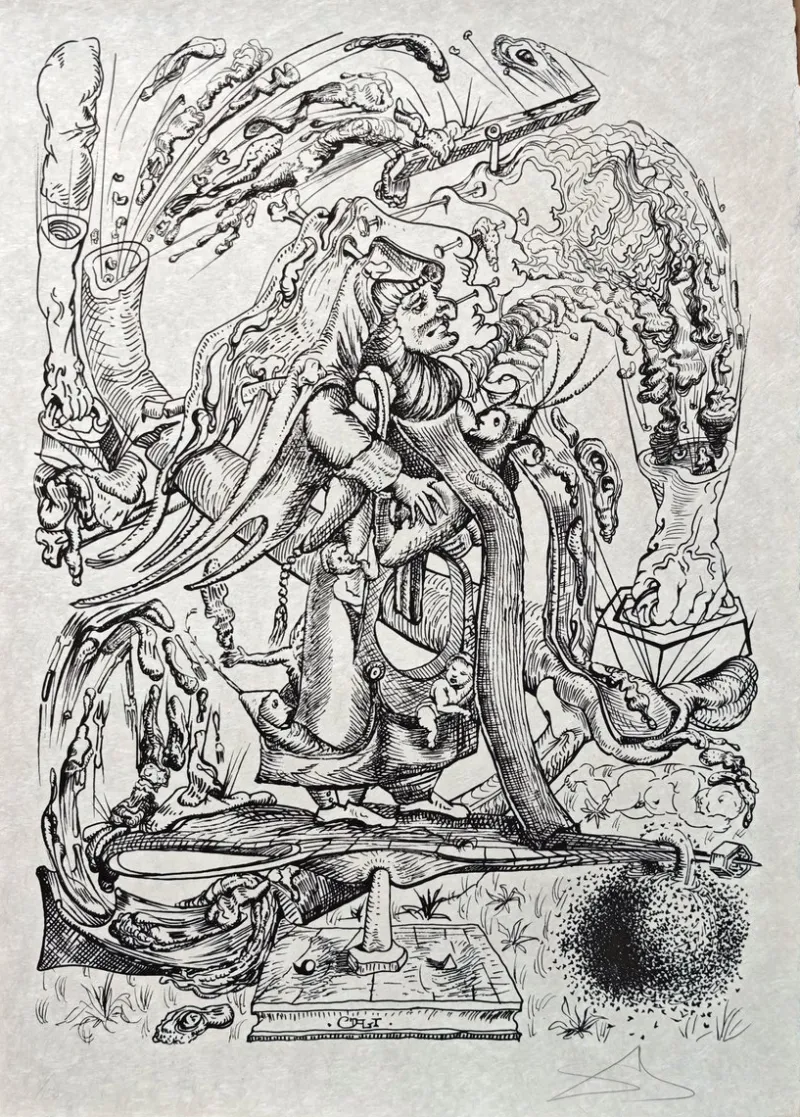
Outlet Pamono Salvador Dali, Antiphysie from Les Songes Drôlatiques de Pantagruel, Original Large Lithograph, 1973
$140.89
Salvador Dali”Antiphysie” (The Antiphysical Creature)from “Les Songes Drôlatiques de Pantagruel” (The Drolatic Dreams o…
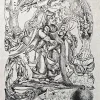
“Antiphysie” (The Antiphysical Creature)
from “Les Songes Drôlatiques de Pantagruel” (The Drolatic Dreams of Pantagruel)
from the rarest edition of 50 only
Original Lithograph on Japan paper
year: 1973
76 x 56 cm ca
Hand-signed
Hand-numbered 8/50
Catalogue Raisonné:
R.Michler and L. W. Löpsinger
“Salvador Dali, Catalogue Raisonné of Prints II – Lithographs and Wood Engravings 1956-1980” pages 155 – ref. 1421
with Certificate
HISTORY of This Artwork
Sometime in the 1960s, Spanish surrealist artist Salvador Dali, already considered one of the leading artists worldwide, discovered a special book published in Paris in 1565 by Richard Breton, as the ‘last work’ of the writer François Rabelais, and named it after his bestseller about the Giant Pantagruel. This book, “Les Songes Drôlatiques de Pantagruel”, i.e. The Drolatic Dreams of Pantagruel (where ‘Drolatic’ means funny and amusing), consists of 120 woodcuts, each page showing a completely different figure: strange, hybrid creatures, combinations of man and animal, insect, plant and object, pot-bellied or hunchbacked, with special noses, snouts, trunks or beaks; each having a title in the end of the book.
Enraptured and inspired by the new discovery, he chose 25 images and devised variations on these then four-century-old prints. These images have been printed as original lithographs at Atelier Grapholith in Paris, and published by Carpentier in Geneve in 1973.
This very artwork is one meant to represent The Antiphysical Creature, i.e. an unnatural and monstrous being which challenges the laws of Physics and Nature.
This image is particularly interesting among the ones in the series because it resembles Dali’s face, although the very image which inspired him predates his birth by centuries!
Here the original text in French (an English translation follows):
Cet affreux personnage, affublé du bonnet de la folie, paré d’un long scapulaire, tenant dans chaque bras un enfant emmailloté, et dont l’un est également coiffé du bonnet de la folie, et portant dans le plis de sa robe un tas de petits magots, ses enfants, aussi affreux qu’elle, est évidemment l’Antiphysie, du chap. XXXII, liv. IV. C’est d’eux que Rabelais dit dans ce chapitre: “Depuys elle (l’Antiphysie) engendra les matagots, cagots, papelards, etc.
This horrible character, wearing the cap of madness, adorned with a long scapular, holding in each arm a swaddled child, one of whom is also wearing the cap of madness, and carrying in the folds of his robe a pile of little magots, his children, as horrible as she, is obviously Antiphysia, from chap. XXXII, book IV. It is of them that Rabelais says in this chapter: “Since she (Antiphysia) engendered the matagots, cagots, papelards, etc.
Magots, Matagots, Cagots, Papelards are all names of phantastical, monstrous being in French folklore.
___
Sold with certificate of authenticity, copy of the catalogue raisonné, and copy of the original woodcut and which inspired Dali (we have it in our collection)
The seller assumes all responsibility for this listing.
About This Piece
“Antiphysie” (The Antiphysical Creature)
from “Les Songes Drôlatiques de Pantagruel” (The Drolatic Dreams of Pantagruel)
from the rarest edition of 50 only
Original Lithograph on Japan paper
year: 1973
76 x 56 cm ca
Hand-signed
Hand-numbered 8/50
Catalogue Raisonné:
R.Michler and L. W. Löpsinger
“Salvador Dali, Catalogue Raisonné of Prints II – Lithographs and Wood Engravings 1956-1980” pages 155 – ref. 1421
with Certificate
HISTORY of This Artwork
Sometime in the 1960s, Spanish surrealist artist Salvador Dali, already considered one of the leading artists worldwide, discovered a special book published in Paris in 1565 by Richard Breton, as the ‘last work’ of the writer François Rabelais, and named it after his bestseller about the Giant Pantagruel. This book, “Les Songes Drôlatiques de Pantagruel”, i.e. The Drolatic Dreams of Pantagruel (where ‘Drolatic’ means funny and amusing), consists of 120 woodcuts, each page showing a completely different figure: strange, hybrid creatures, combinations of man and animal, insect, plant and object, pot-bellied or hunchbacked, with special noses, snouts, trunks or beaks; each having a title in the end of the book.
Enraptured and inspired by the new discovery, he chose 25 images and devised variations on these then four-century-old prints. These images have been printed as original lithographs at Atelier Grapholith in Paris, and published by Carpentier in Geneve in 1973.
This very artwork is one meant to represent The Antiphysical Creature, i.e. an unnatural and monstrous being which challenges the laws of Physics and Nature.
This image is particularly interesting among the ones in the series because it resembles Dali’s face, although the very image which inspired him predates his birth by centuries!
Here the original text in French (an English translation follows):
Cet affreux personnage, affublé du bonnet de la folie, paré d’un long scapulaire, tenant dans chaque bras un enfant emmailloté, et dont l’un est également coiffé du bonnet de la folie, et portant dans le plis de sa robe un tas de petits magots, ses enfants, aussi affreux qu’elle, est évidemment l’Antiphysie, du chap. XXXII, liv. IV. C’est d’eux que Rabelais dit dans ce chapitre: “Depuys elle (l’Antiphysie) engendra les matagots, cagots, papelards, etc.
This horrible character, wearing the cap of madness, adorned with a long scapular, holding in each arm a swaddled child, one of whom is also wearing the cap of madness, and carrying in the folds of his robe a pile of little magots, his children, as horrible as she, is obviously Antiphysia, from chap. XXXII, book IV. It is of them that Rabelais says in this chapter: “Since she (Antiphysia) engendered the matagots, cagots, papelards, etc.
Magots, Matagots, Cagots, Papelards are all names of phantastical, monstrous being in French folklore.
___
Sold with certificate of authenticity, copy of the catalogue raisonné, and copy of the original woodcut and which inspired Dali (we have it in our collection)
Click here for full descriptionClose description
| Period | 1970 to 1979 |
|---|---|
| Year | 1973 |
| Production Period | 1970 to 1979 |
| Country of Manufacture | France |
| Identifying Marks | This piece has an attribution mark |
| Style | Surrealist |
| Detailed Condition | Excellent — This vintage/antique piece is in near original condition. It may show minimal traces of use and/or have slight restorations. |
| Product Code | YWW-2210172 |
| Restoration and Damage Details | Excellent condition, never framed, minimal traces of time, no restoration |
| Materials | Lithograph, Paper |
| Color | Black |
| Width | 56 cm 22.0 inch |
| Depth | 1 cm 0.0 inch |
| Height | 76 cm 29.9 inch |
Be the first to review “Outlet Pamono Salvador Dali, Antiphysie from Les Songes Drôlatiques de Pantagruel, Original Large Lithograph, 1973”
Related products


Children's Chairs
Coffee & Side Tables
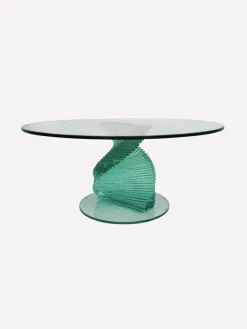
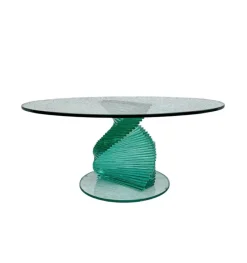
Sale Pamono Helix Spiral Sculptural Glass Coffee Table in the style of Danny Lane, 1980s



Dressers, Commodes & Chests


Beds & Bedroom Sets
Login
Reviews
There are no reviews yet.