
Outlet Pamono Lombard School Artist, Saint Michael the Archangel, 1650, Oil on Canvas
$132.89
17th-century Lombard painterSaint Michael the ArchangelOil on canvas139 x 75 cm – Framed 156 x 91 cmAncient painting of …
Saint Michael the Archangel
Oil on canvas
139 x 75 cm – Framed 156 x 91 cm
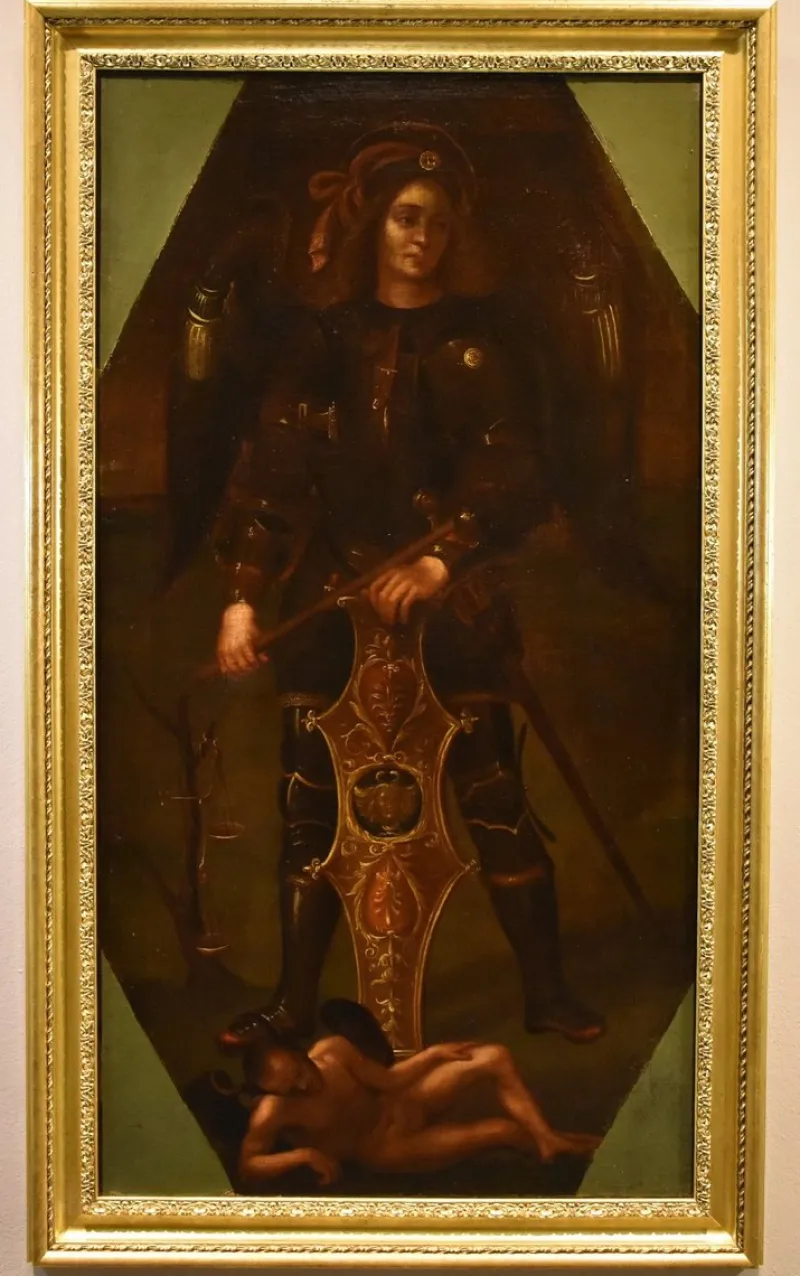
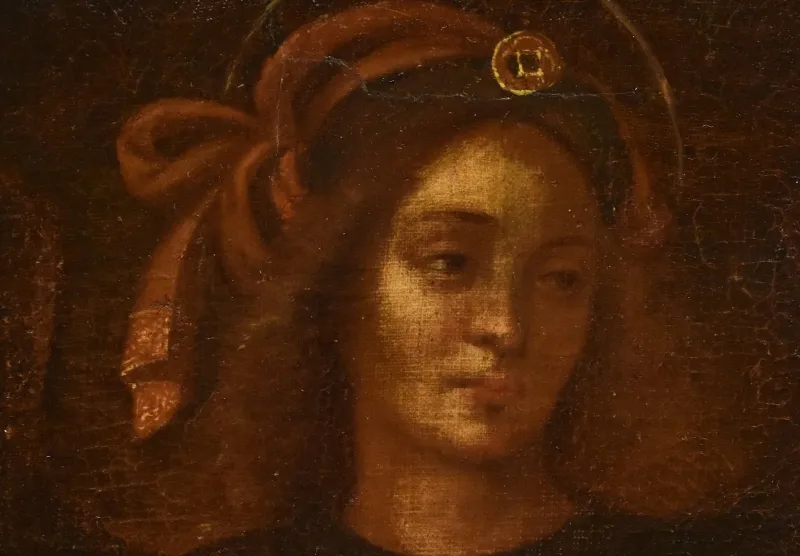
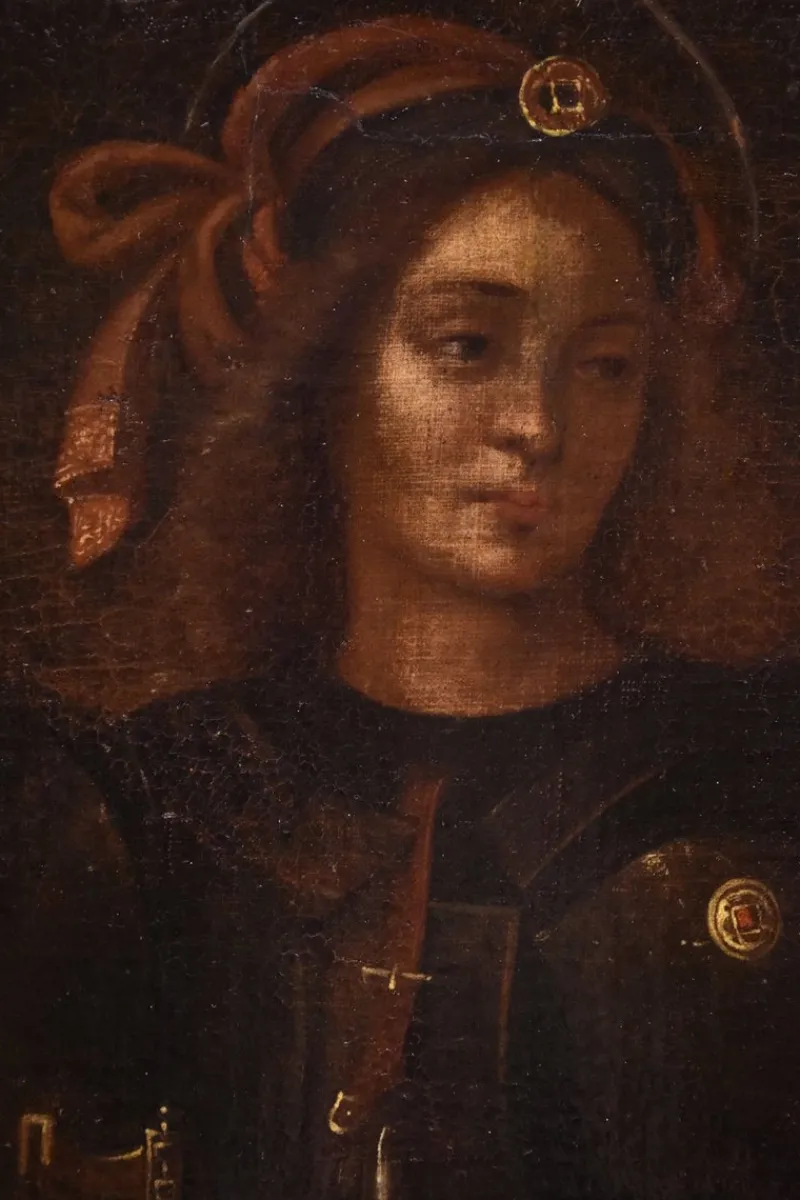
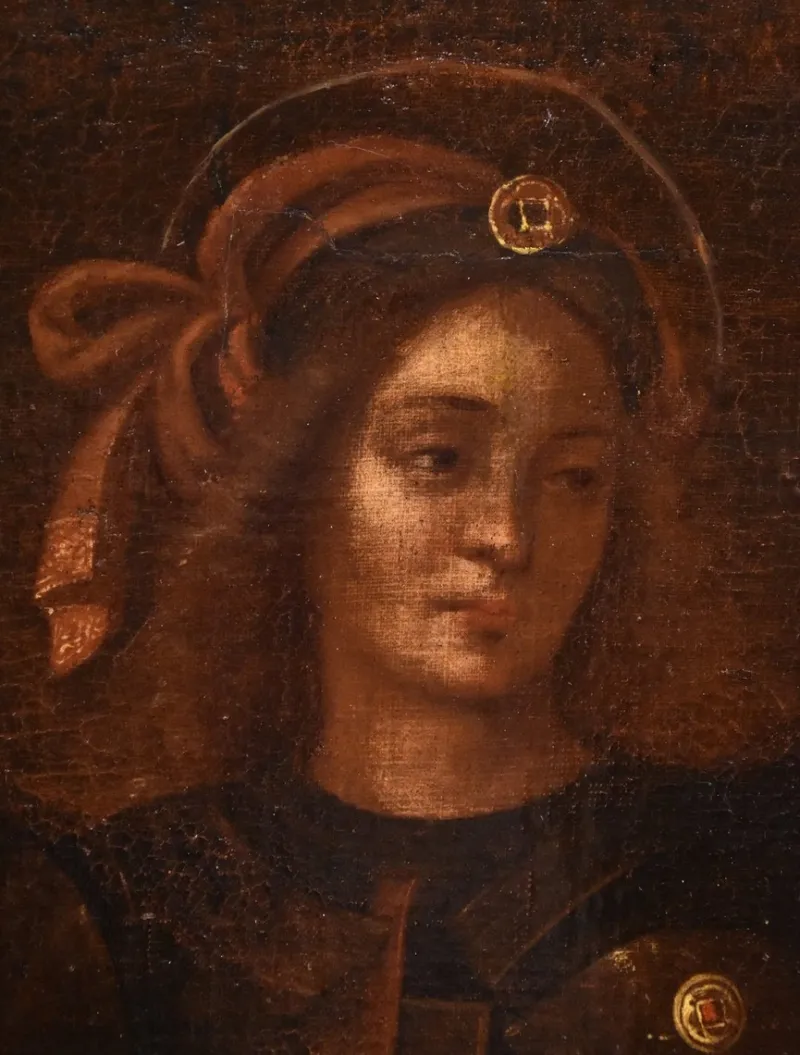
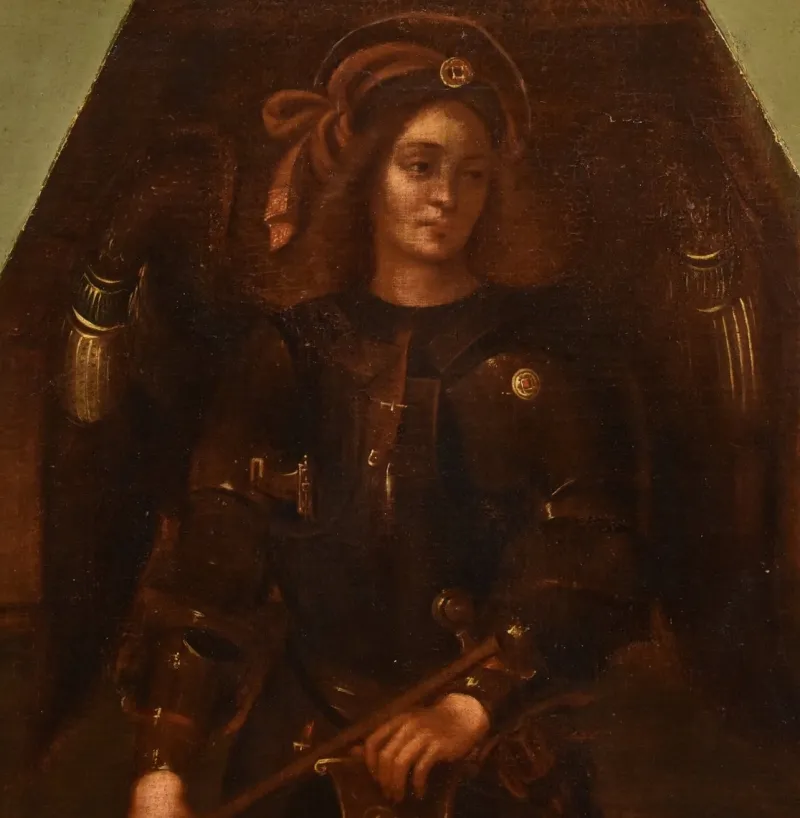
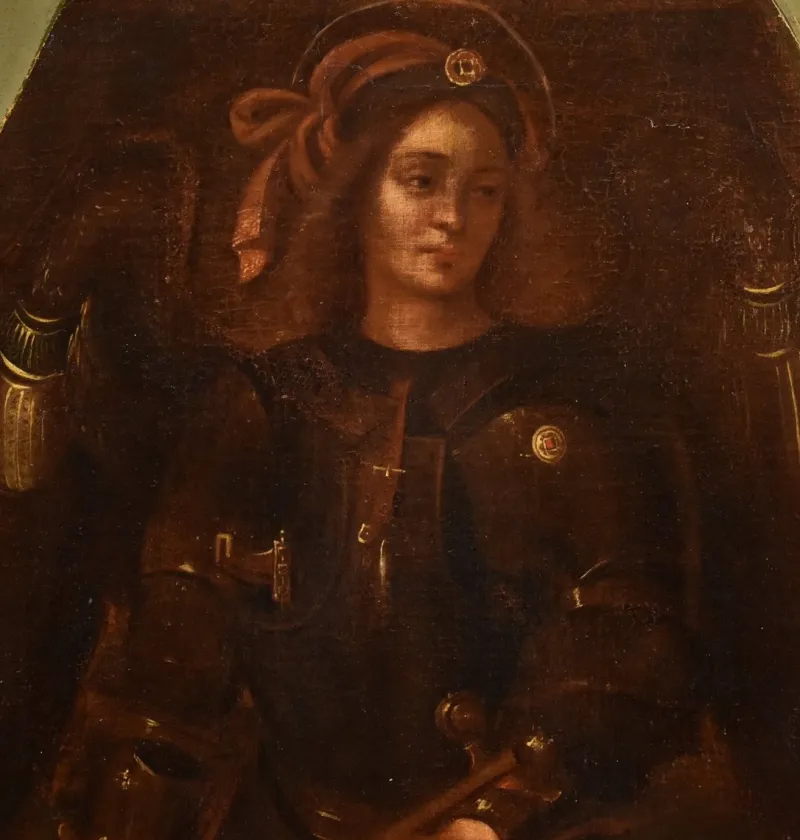
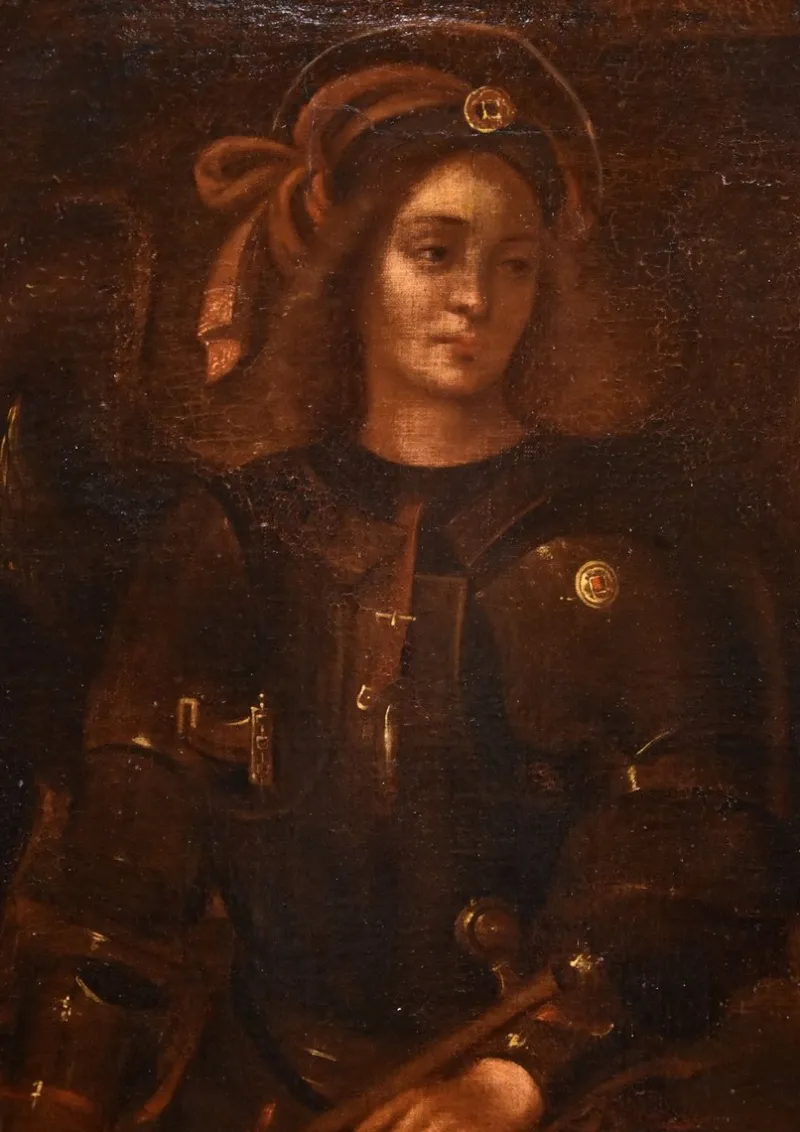
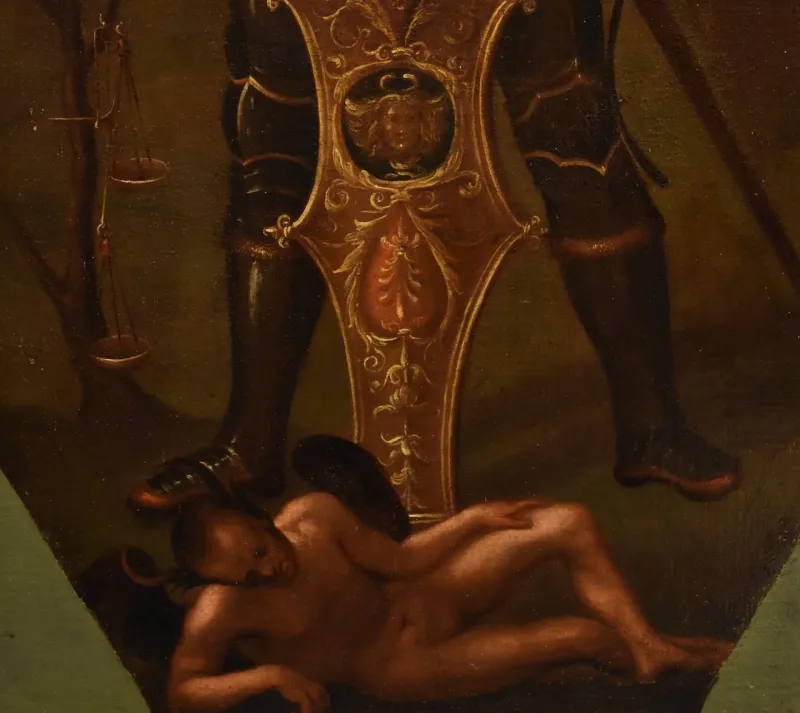
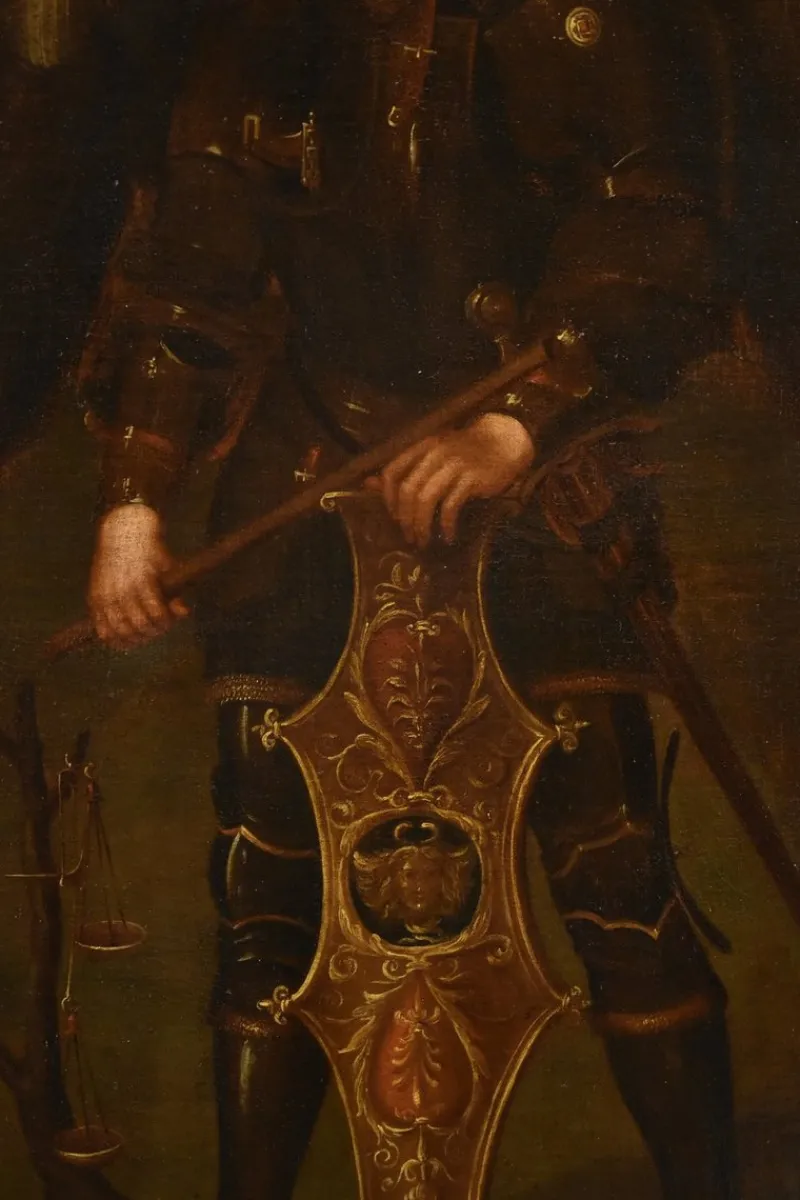
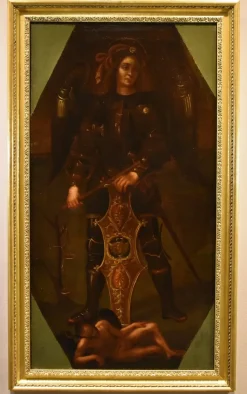
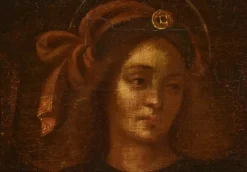
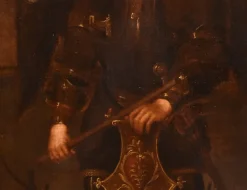
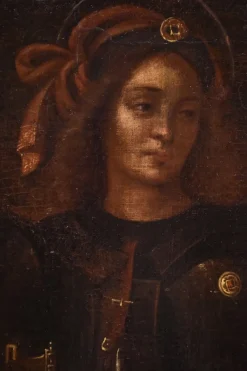
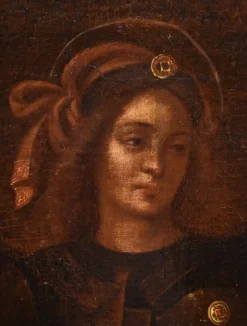
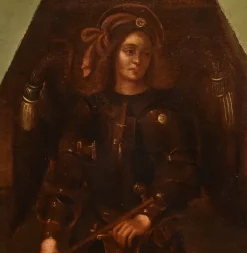
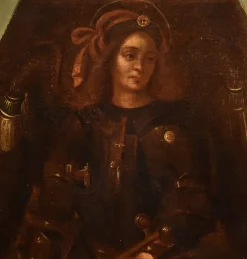
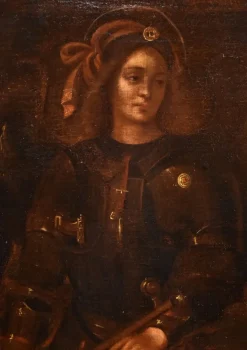
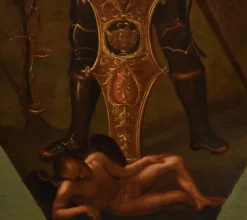
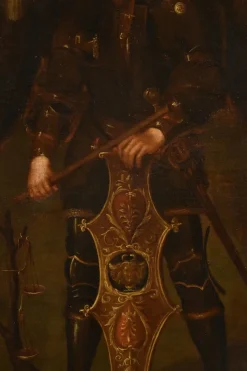
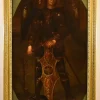
Ancient painting of Saint Michael the Archangel, immortalized full-length as a youth of ethereal beauty, simultaneously strong and delicate, with large wings and a shield decorated with grotesques, clad in gleaming armor, indicating his role as prince of the celestial armies.
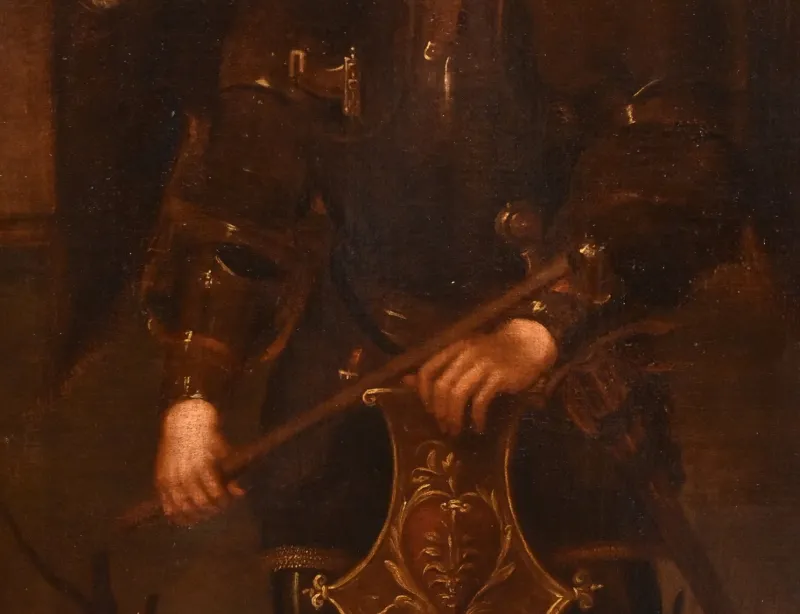
We see two of his quintessential symbols depicted: the sword with which he defeated the rebel Angel, now subdued at his feet, and the scales with which he weighs souls before their Last Judgment.
This is a fascinating painting by a Lombard painter active in the 17th century, inspired by the Polyptych of the Certosa di Pavia, commissioned by the Duke of Milan, Ludovico Sforza, for the altar of the second chapel on the left, dedicated to Saint Michael.
The original work was executed by Pietro Perugino, dated 1499, and was arranged in two registers: the Eternal Father at the top (still in situ), and the three panels with Saint Michael the Archangel (left), the Adoration of the Child (center), and Saint Raphael and Tobias (right) (1) at the bottom.
The history of this work is interesting: due to the suppression of the Carthusian order in 1782, it was purchased by Count Giacomo Melzi d’Eril and ended up in his collection, finally being sold in 1856 to the National Gallery in London, where it remains today.
Only the cymatium with the Eternal Father remained in situ, while the missing panels were replaced with 17th-century canvas copies.
These copies differ somewhat from Perugino’s originals, due to the lack of a landscape setting (the figures are almost immersed in darkness) and the pictorial style, with chiaroscuro passages interpreted in the manner of Leonardo, and the darkening of Saint Michael’s armor.
Our canvas is inspired by these versions, created to replace Perugino’s originals, which critics most likely attribute to the painter Giacomo Antonio Santagostino (1588-1640).
(1) Certosa di Pavia Museum, Pietro Vannucci known as Perugino (ca. 1450/1524)
Please note:
Good condition. The canvas in the photo is illuminated by artificial gallery lights to improve readability when viewing it online, but it actually appears darker.
ADDITIONAL INFORMATION:
The work is presented in a beautiful gold frame and is sold with a certificate of authenticity and guarantee.
The seller assumes all responsibility for this listing.
About This Piece
Saint Michael the Archangel
Oil on canvas
139 x 75 cm – Framed 156 x 91 cm
Ancient painting of Saint Michael the Archangel, immortalized full-length as a youth of ethereal beauty, simultaneously strong and delicate, with large wings and a shield decorated with grotesques, clad in gleaming armor, indicating his role as prince of the celestial armies.
We see two of his quintessential symbols depicted: the sword with which he defeated the rebel Angel, now subdued at his feet, and the scales with which he weighs souls before their Last Judgment.
This is a fascinating painting by a Lombard painter active in the 17th century, inspired by the Polyptych of the Certosa di Pavia, commissioned by the Duke of Milan, Ludovico Sforza, for the altar of the second chapel on the left, dedicated to Saint Michael.
The original work was executed by Pietro Perugino, dated 1499, and was arranged in two registers: the Eternal Father at the top (still in situ), and the three panels with Saint Michael the Archangel (left), the Adoration of the Child (center), and Saint Raphael and Tobias (right) (1) at the bottom.
The history of this work is interesting: due to the suppression of the Carthusian order in 1782, it was purchased by Count Giacomo Melzi d’Eril and ended up in his collection, finally being sold in 1856 to the National Gallery in London, where it remains today.
Only the cymatium with the Eternal Father remained in situ, while the missing panels were replaced with 17th-century canvas copies.
These copies differ somewhat from Perugino’s originals, due to the lack of a landscape setting (the figures are almost immersed in darkness) and the pictorial style, with chiaroscuro passages interpreted in the manner of Leonardo, and the darkening of Saint Michael’s armor.
Our canvas is inspired by these versions, created to replace Perugino’s originals, which critics most likely attribute to the painter Giacomo Antonio Santagostino (1588-1640).
(1) Certosa di Pavia Museum, Pietro Vannucci known as Perugino (ca. 1450/1524)
Please note:
Good condition. The canvas in the photo is illuminated by artificial gallery lights to improve readability when viewing it online, but it actually appears darker.
ADDITIONAL INFORMATION:
The work is presented in a beautiful gold frame and is sold with a certificate of authenticity and guarantee.
Click here for full descriptionClose description
| Period | Before 1890 |
|---|---|
| Year | 1650 |
| Production Period | Before 1890 |
| Country of Manufacture | Italy |
| Identifying Marks | This piece is attributed to the above-mentioned designer/maker. It has no attribution mark |
| Style | Classical, Figurative, Gothic, Italian, Louis XIII, Medieval, Mediterranean, Old Masters, Portraiture, Religious, Renaissance, Baroque |
| Detailed Condition | Good — This vintage/antique item may have some wear such as scratches and other signs of ageing. |
| Restoration and Damage Details | Light wear consistent with age and use, Patina consistent with age and use, Reupholstered |
| Product Code | CYT-2276663 |
| Materials | Oil on Canvas |
| Color | Multicolored |
| Width | 91 cm 35.8 inch |
| Depth | 12 cm 4.7 inch |
| Height | 156 cm 61.4 inch |
Be the first to review “Outlet Pamono Lombard School Artist, Saint Michael the Archangel, 1650, Oil on Canvas”
Related products
Daybeds & Chaises Lounges
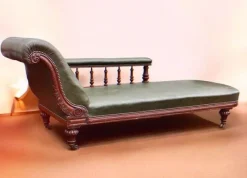
New Pamono Antique Victorian Oak Chaise Longue in Green Leather with Brass Castors



Dining Tables & Sets
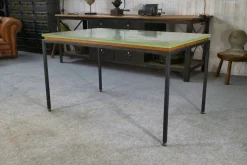
New Pamono Vintage Table in Glass and Black Lacquered Metal, 1960s




Children's Chairs
Cabinets & Wardrobes
Login
Reviews
There are no reviews yet.