
Online Pamono Neoclassical Artist, Circe Sculpture, Early 1800s, Pinus Cembra
$126.89
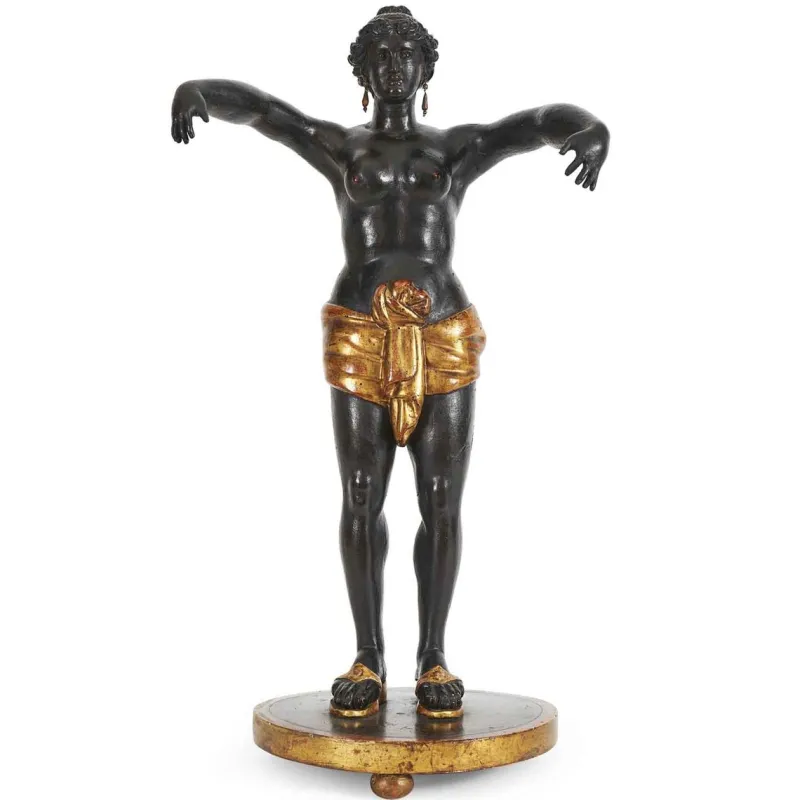
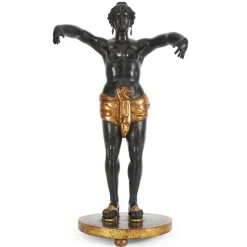
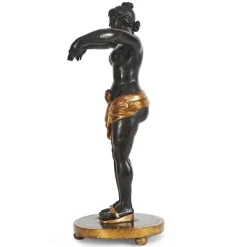
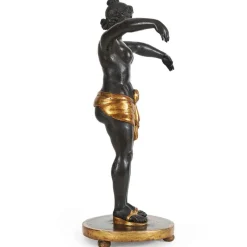
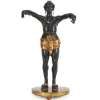
Circe Neoclassical Sculpture, Early 19th Century. This neoclassical figure is a captivating representation of the goddes…
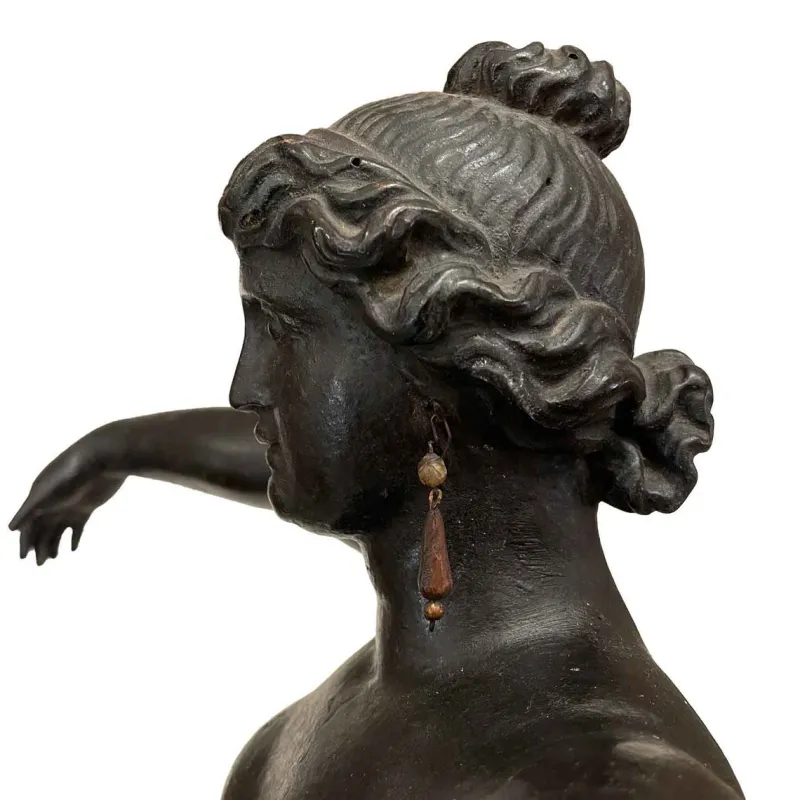
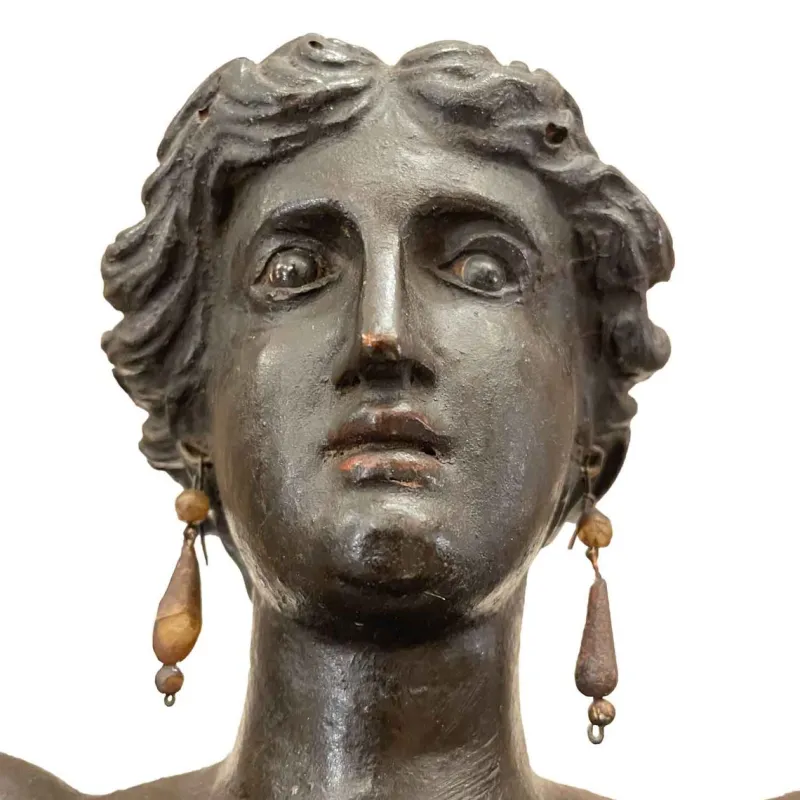
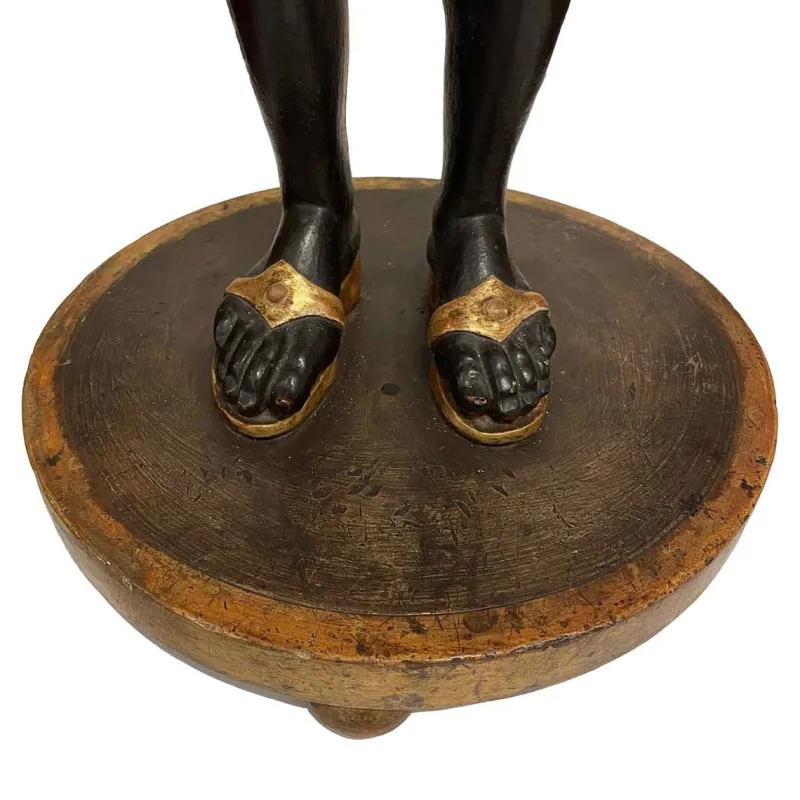
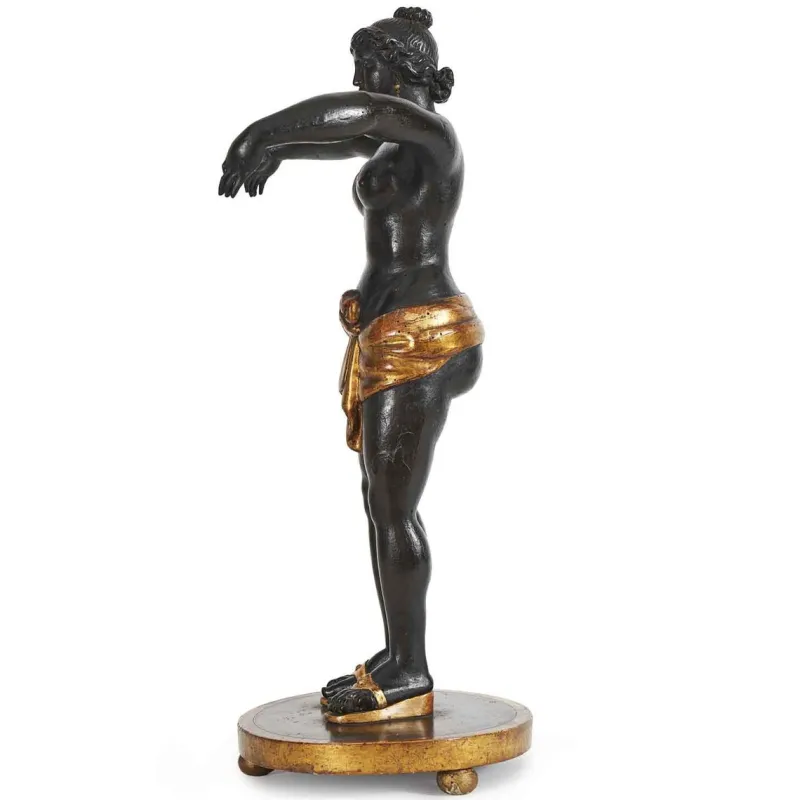
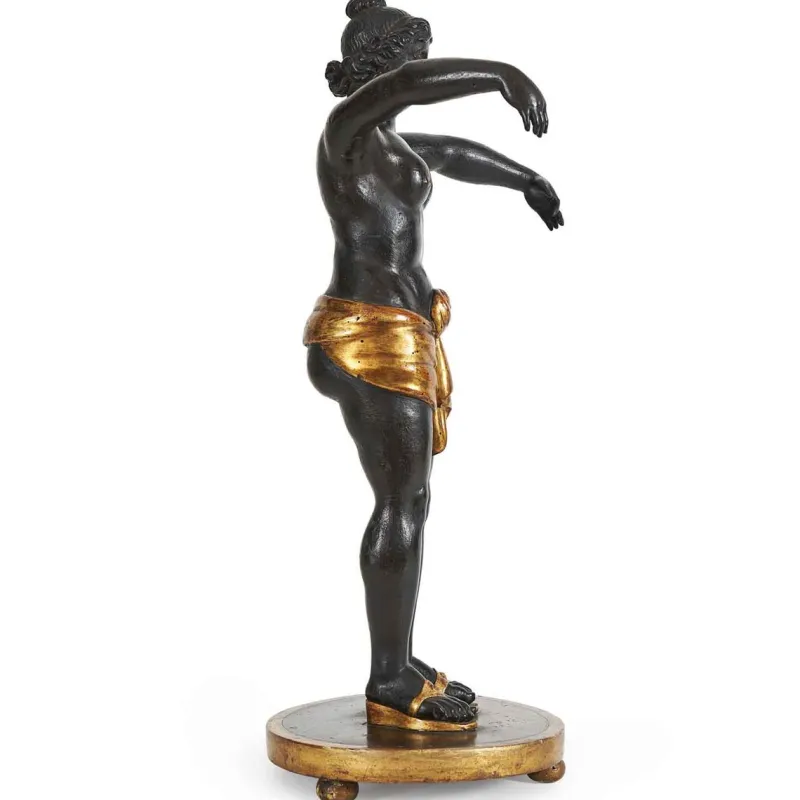
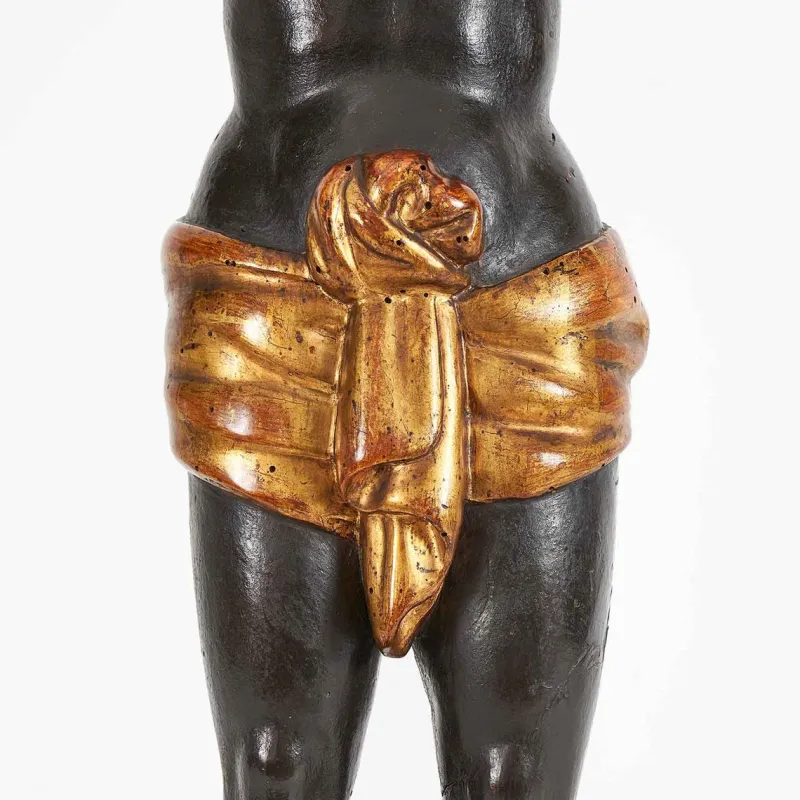
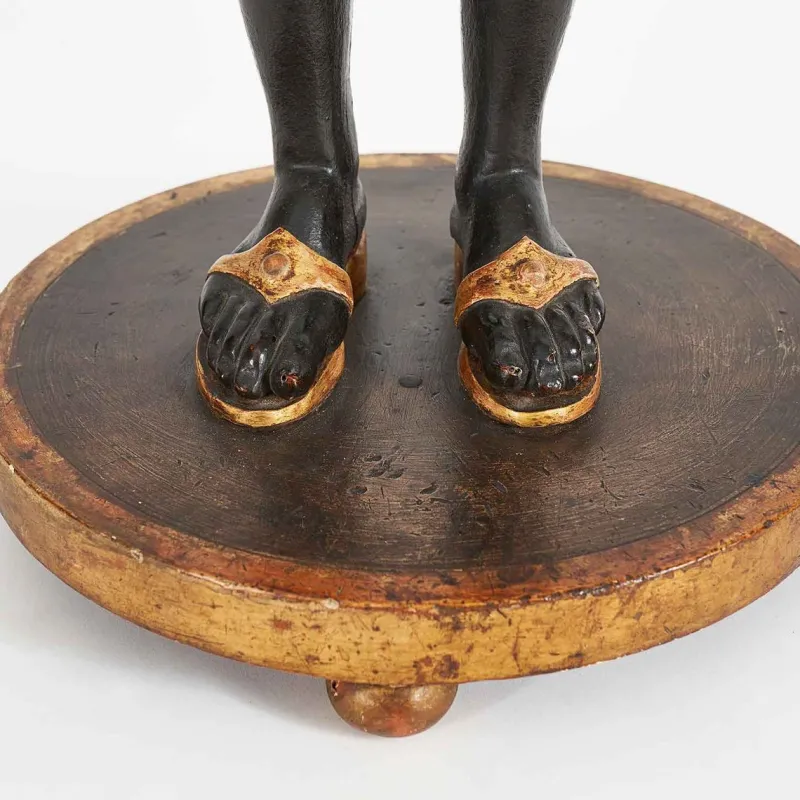
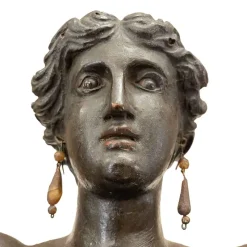
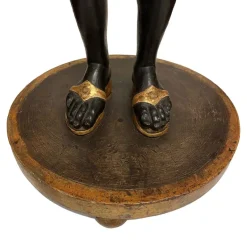
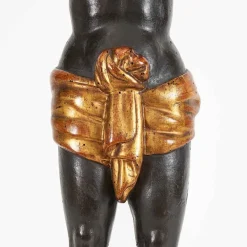
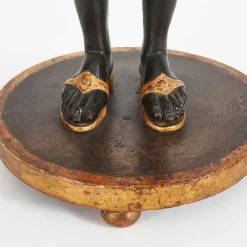
The golden drapery on the goddess’s hips and other details, such as her golden sandals and the central bow that ties the drape at the front, demonstrate the artist’s skill in playing with textures and finishes, creating an elegant and sophisticated contrast. The attention to detail on the face and the use of glass eyes demonstrate the excellent craftsmanship, typical of Italian neoclassical sculpture.
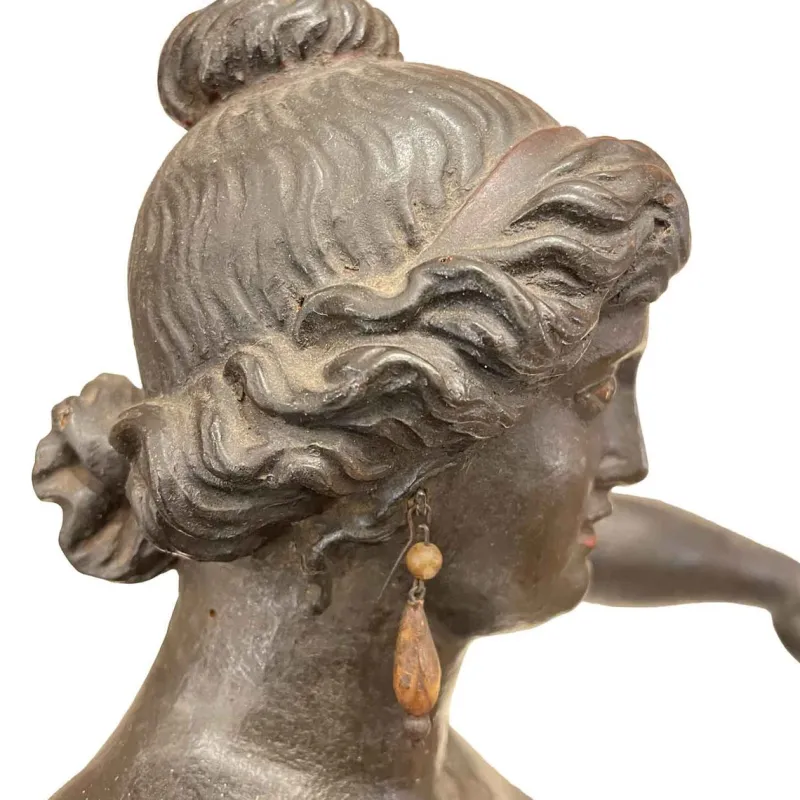
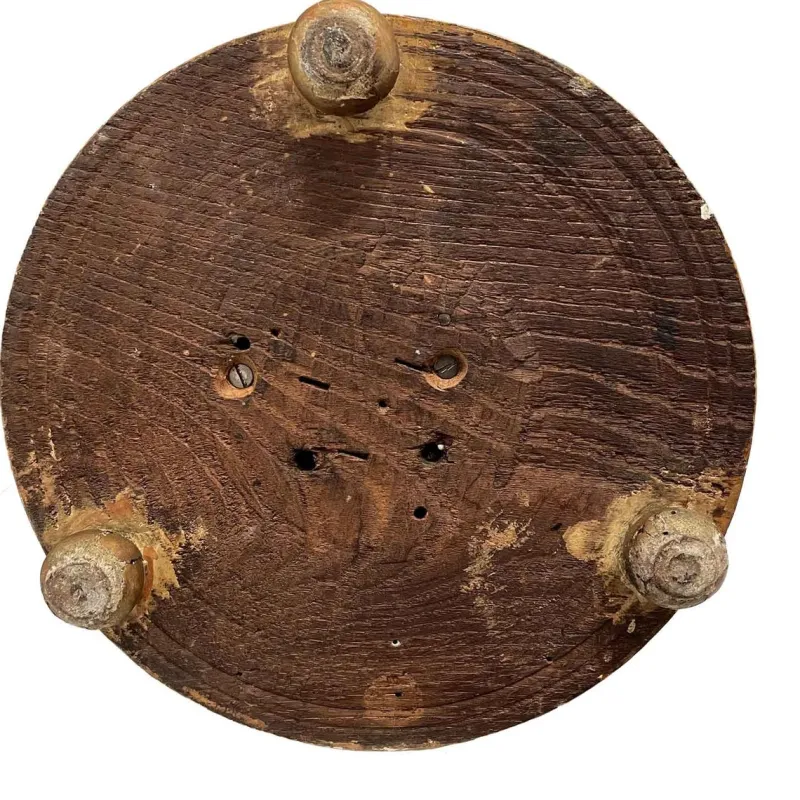
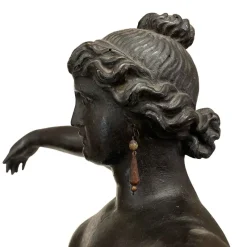
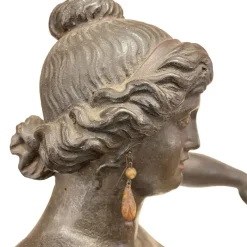
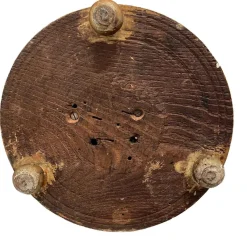
The original, detailed hairstyle, with her hair gathered with a hole at the top suggesting plumage, the ears hanging from the earlobes, and the perfect anatomy of the goddess’s muscular body, all reveal the artist’s desire to embellish the figure of the deity. This 19th-century female sculpture is in good condition; the circular base is likely from a later period and comes from a private collection. This work, typical of the Italian school of the first quarter of the 19th century, represents not only a recent interpretation of classical themes but also a high-quality workmanship worthy of being valued and preserved.
The iconographic setting of the goddess Circe has been represented in various artistic forms over the centuries, from classical antiquity to the modern period; Sir Edgar Bertram Mackennal’s 1893 bronze sculpture is an excellent example of how Circe has been reinterpreted in modern art while retaining traditional iconographic elements. Mackennal, known for his elegant, symbolist sculptures, successfully captures the essence of Circe, emphasizing both her beauty and her enchanting power.
In general, Circe’s depictions have often included elements such as the chalice, symbolizing her magical potions, and animals such as pigs, recalling her transformations. These iconographic motifs reference mythological tales, such as those found in Homer’s Odyssey, in which Circe plays a crucial role. Mackennal’s sculpture, while innovative in its approach, is part of a long tradition of representations that have sought to communicate Circe’s dual aspect: both seductive and threatening.
The seller assumes all responsibility for this listing.
About This Piece
The golden drapery on the goddess’s hips and other details, such as her golden sandals and the central bow that ties the drape at the front, demonstrate the artist’s skill in playing with textures and finishes, creating an elegant and sophisticated contrast. The attention to detail on the face and the use of glass eyes demonstrate the excellent craftsmanship, typical of Italian neoclassical sculpture.
The original, detailed hairstyle, with her hair gathered with a hole at the top suggesting plumage, the ears hanging from the earlobes, and the perfect anatomy of the goddess’s muscular body, all reveal the artist’s desire to embellish the figure of the deity. This 19th-century female sculpture is in good condition; the circular base is likely from a later period and comes from a private collection. This work, typical of the Italian school of the first quarter of the 19th century, represents not only a recent interpretation of classical themes but also a high-quality workmanship worthy of being valued and preserved.
The iconographic setting of the goddess Circe has been represented in various artistic forms over the centuries, from classical antiquity to the modern period; Sir Edgar Bertram Mackennal’s 1893 bronze sculpture is an excellent example of how Circe has been reinterpreted in modern art while retaining traditional iconographic elements. Mackennal, known for his elegant, symbolist sculptures, successfully captures the essence of Circe, emphasizing both her beauty and her enchanting power.
In general, Circe’s depictions have often included elements such as the chalice, symbolizing her magical potions, and animals such as pigs, recalling her transformations. These iconographic motifs reference mythological tales, such as those found in Homer’s Odyssey, in which Circe plays a crucial role. Mackennal’s sculpture, while innovative in its approach, is part of a long tradition of representations that have sought to communicate Circe’s dual aspect: both seductive and threatening.
Click here for full descriptionClose description
| Period | Before 1890 |
|---|---|
| Production Period | Before 1890 |
| Country of Manufacture | Italy |
| Style | Neo-Classical |
| Detailed Condition | Good — This vintage/antique item may have some wear such as scratches and other signs of ageing. |
| Restoration and Damage Details | Light wear consistent with age and use, Patina consistent with age and use, buono stato |
| Product Code | TBU-2347620 |
| Materials | Pinus Cembra |
| Color | Black, gold |
| Width | 37 cm 14.6 inch |
| Depth | 27 cm 10.6 inch |
| Height | 71 cm 28.0 inch |
Be the first to review “Online Pamono Neoclassical Artist, Circe Sculpture, Early 1800s, Pinus Cembra”
Related products
Dressers, Commodes & Chests







Beds & Bedroom Sets






Cabinets & Wardrobes


Login
Reviews
There are no reviews yet.