
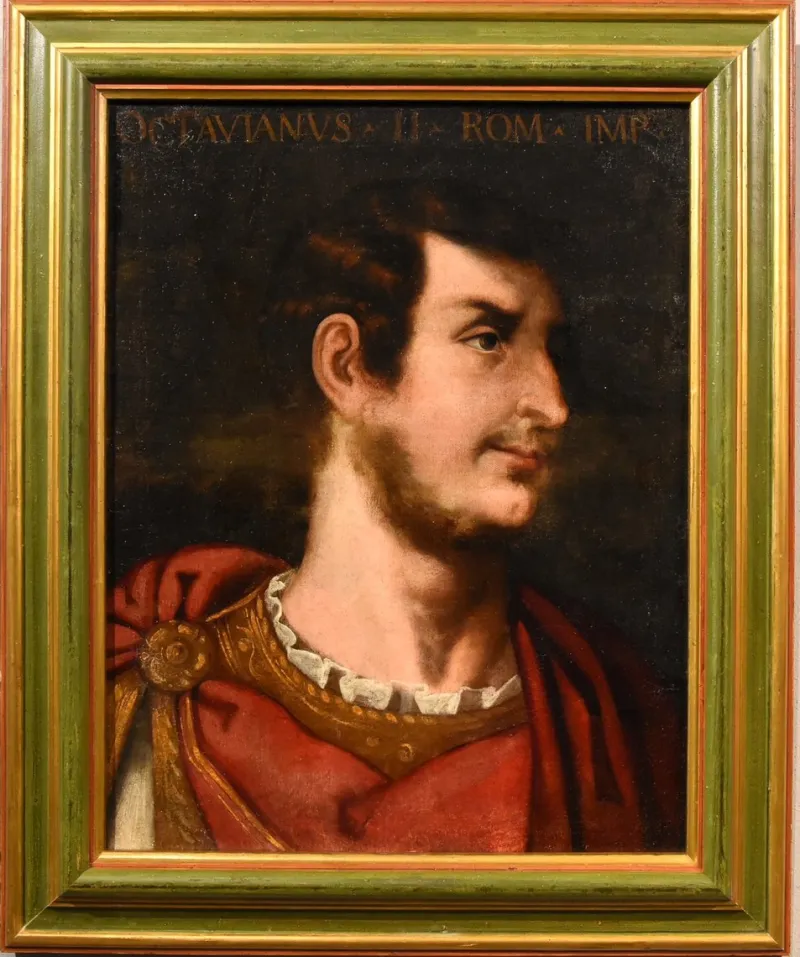
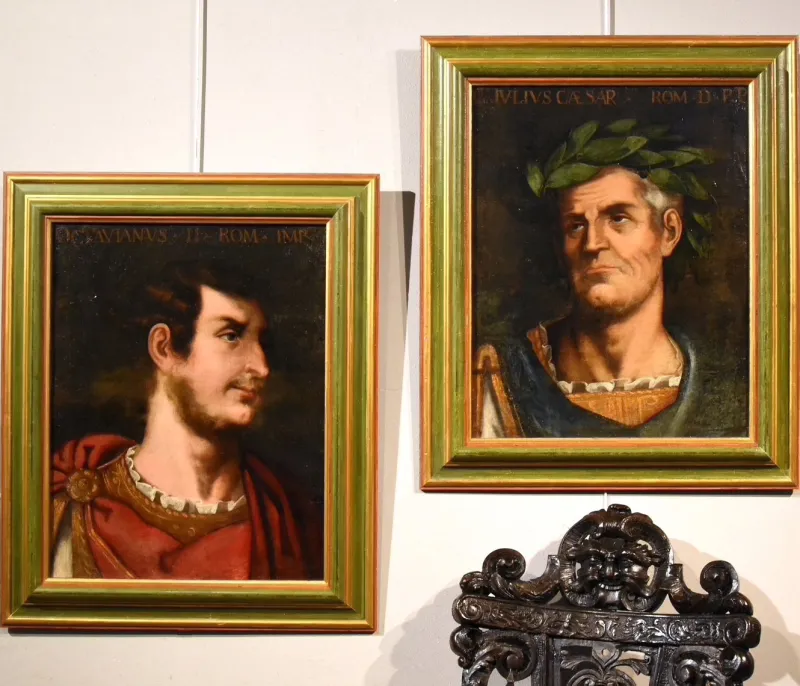
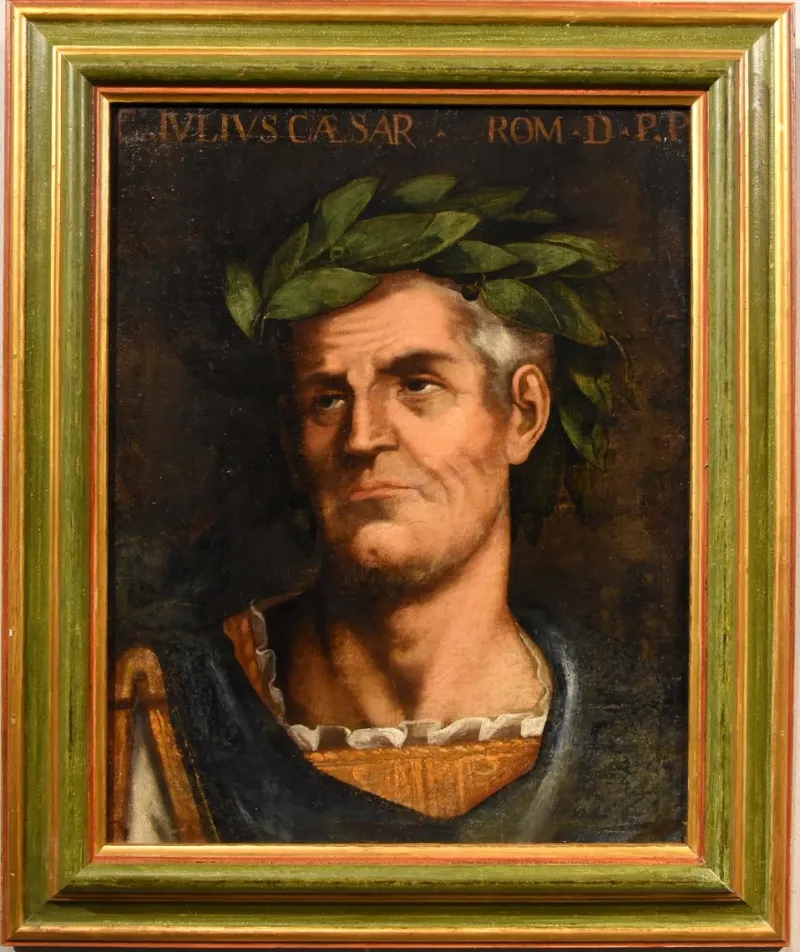
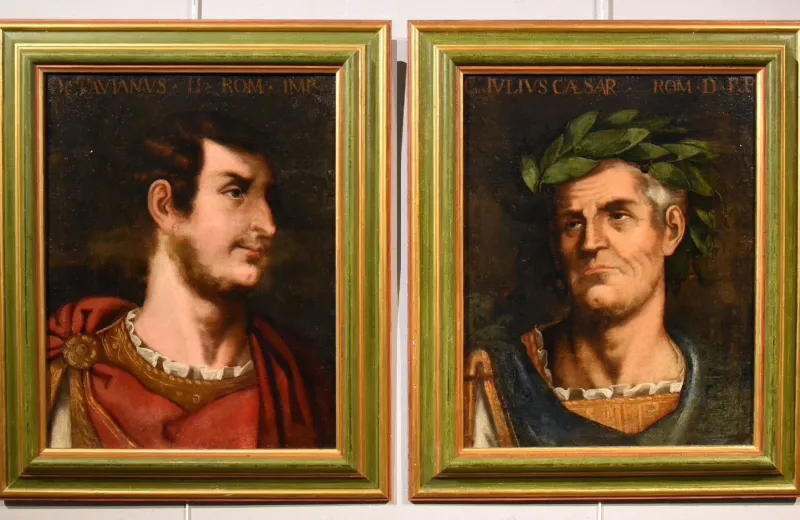
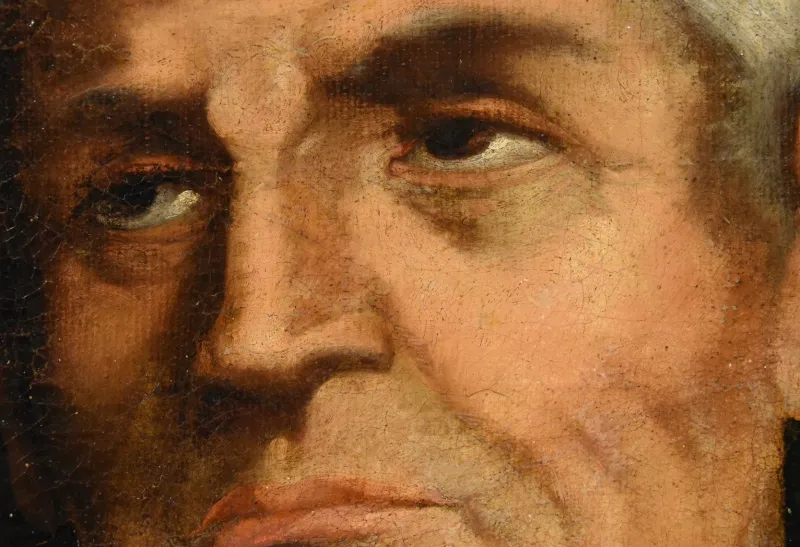
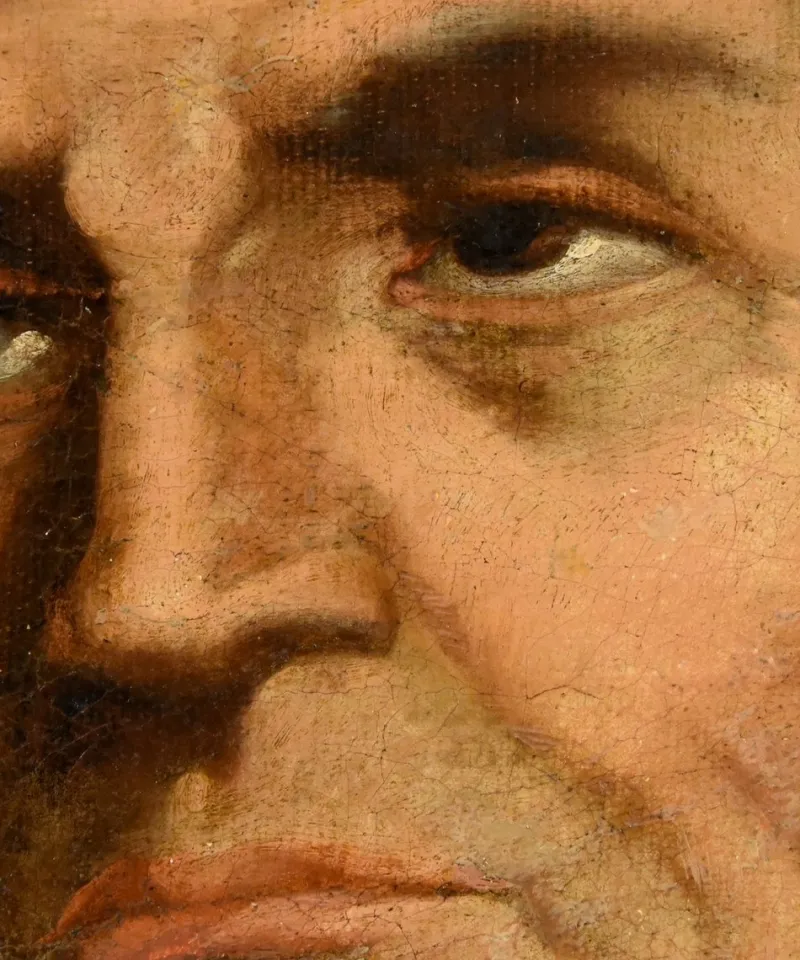
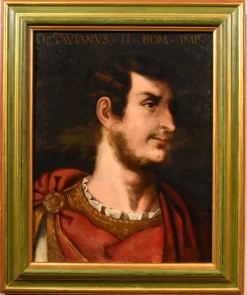
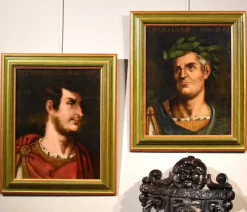
Online Pamono Follower of Tiziano Vecellio, Portraits of Julius Caesar & Octavian, 1700, Oil on Canvases, Framed, Set of 2
$124.89
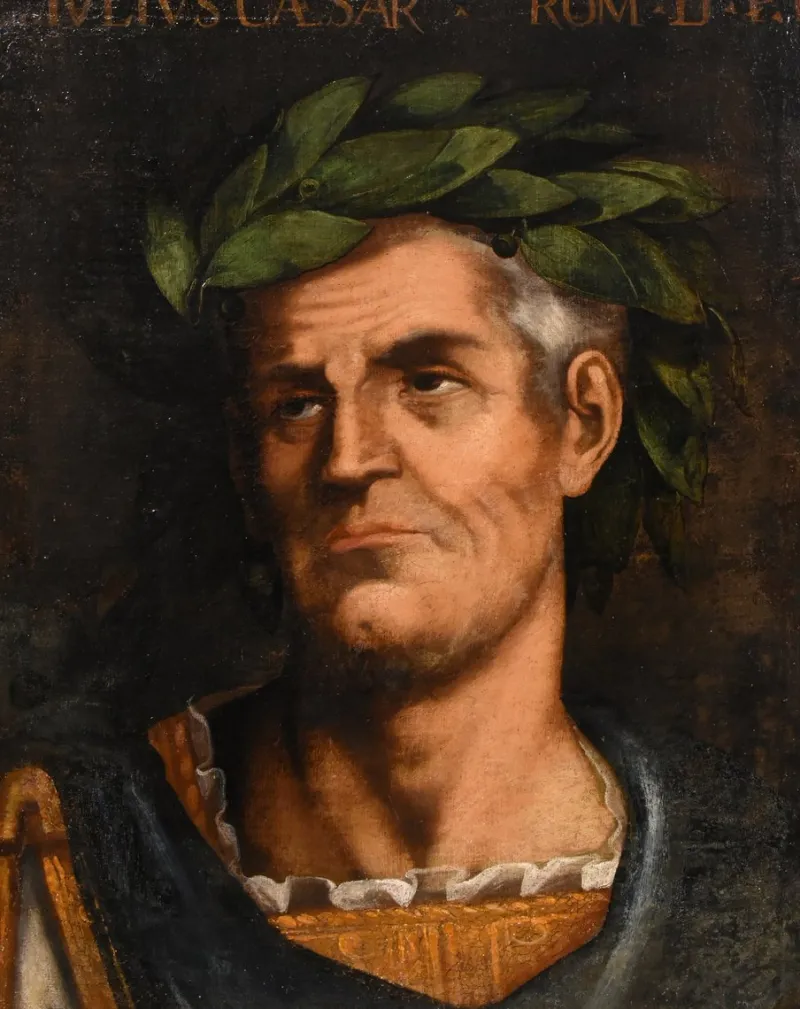
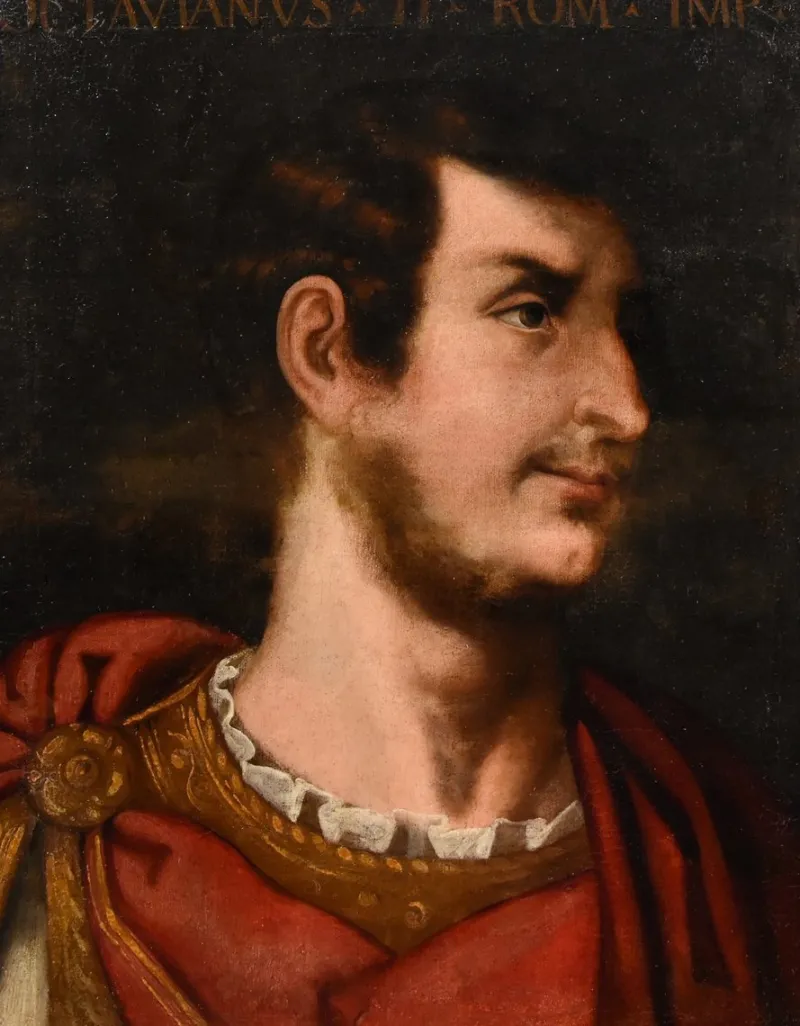
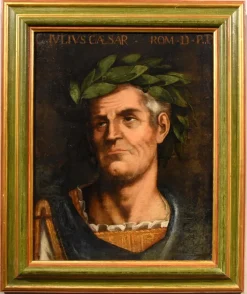
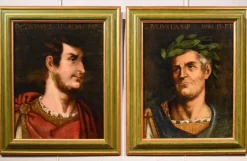
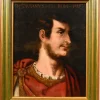
Titian (Pieve di Cadore 1490 – Venice 1576), follower of- Portrait of Emperor Julius Caesar (Rome 100 BC – 44 BC), inscr…
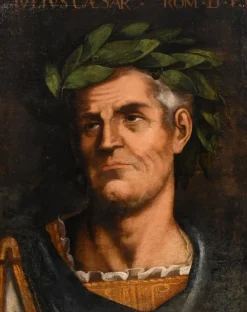
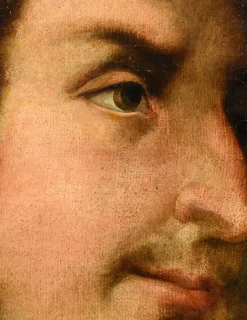
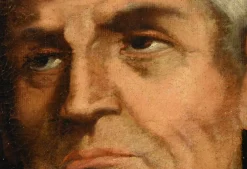
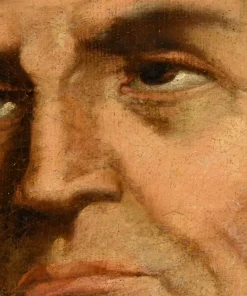
– Portrait of Emperor Julius Caesar (Rome 100 BC – 44 BC), inscribed at the top C. IVLIVS. CAESAR
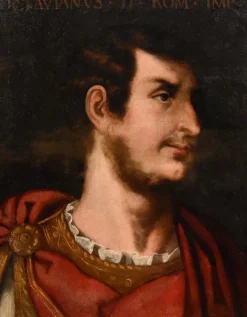
– Portrait of Emperor Octavian Augustus (Rome 63 BC – 14 BC), inscribed at the top OCTAVIANUS II ROM IMP
17th century
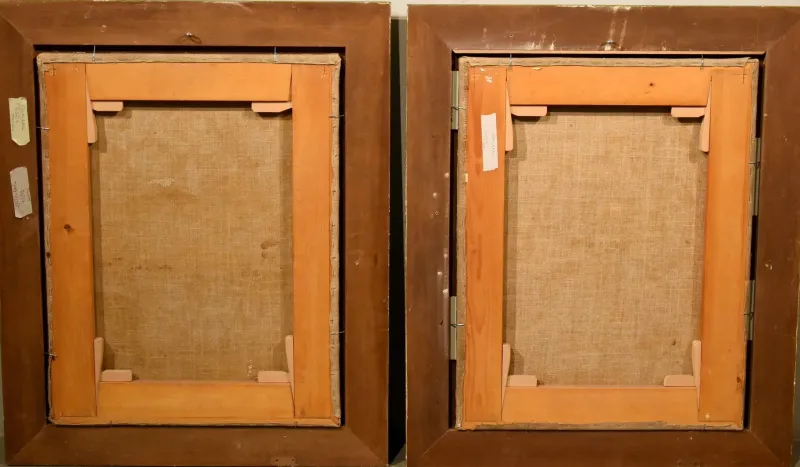
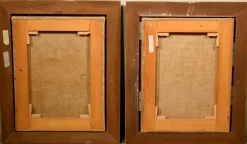
Oil on canvas, 65 x 50 cm, framed 81 x 68 cm.
The Latin writer Suetonius, with his work “De vita Caesarum” (and in particular with his 1543 translation in the vernacular, edited by the Florentine scholar Paolo del Rosso), inspired Titian, who, in 1537, painted portraits of the eleven emperors for Duke Federico II of Gonzaga, decorating the walls of a small room in the Ducal Palace of Mantua, later known as the Cabinet of the Caesars.
These effigies were intended to establish the link between the new era and the splendor of classical antiquity, as well as to celebrate the valor and wisdom of the rulers, who perceived themselves, in their dominions, as valiant new emperors.
Titian’s paintings quickly became enormously popular, and many patrons and nobles of the time, including Ferdinando d’Avalos, Marquis of Pescara and Governor of Milan, and Vespasiano Gonzaga, turned to the workshop of Bernardino Campi of Cremona to commission their own versions of the series.
Since Titian’s originals were purchased by Charles I of England and then donated by him to the Spanish ambassador Alonso de Cárdenas, who took them to Madrid, where they were destroyed in the fire at the Alcazar in 1734, it is therefore mainly thanks to the numerous replicas by Campi and his numerous followers and pupils, and by other artists active between the 16th and 17th centuries, that the original works are known to us today.
Our pair of works, depicting the busts of two of the emperors who shaped the history of the Roman Empire, Gaius Julius Caesar (Rome 100 BC–44 BC) and Octavian Augustus (Rome 63 BC–14 BC), is therefore part of one of these numerous successive series of reproductions, and in particular, they are open to the influences of his most direct followers, primarily the expressive choices of Giovan Battista Trotti, known as Malosso, his favorite disciple, Andrea Mainardi, known as Chiaveghino, and Raffaele Crespi, father of Cerano.
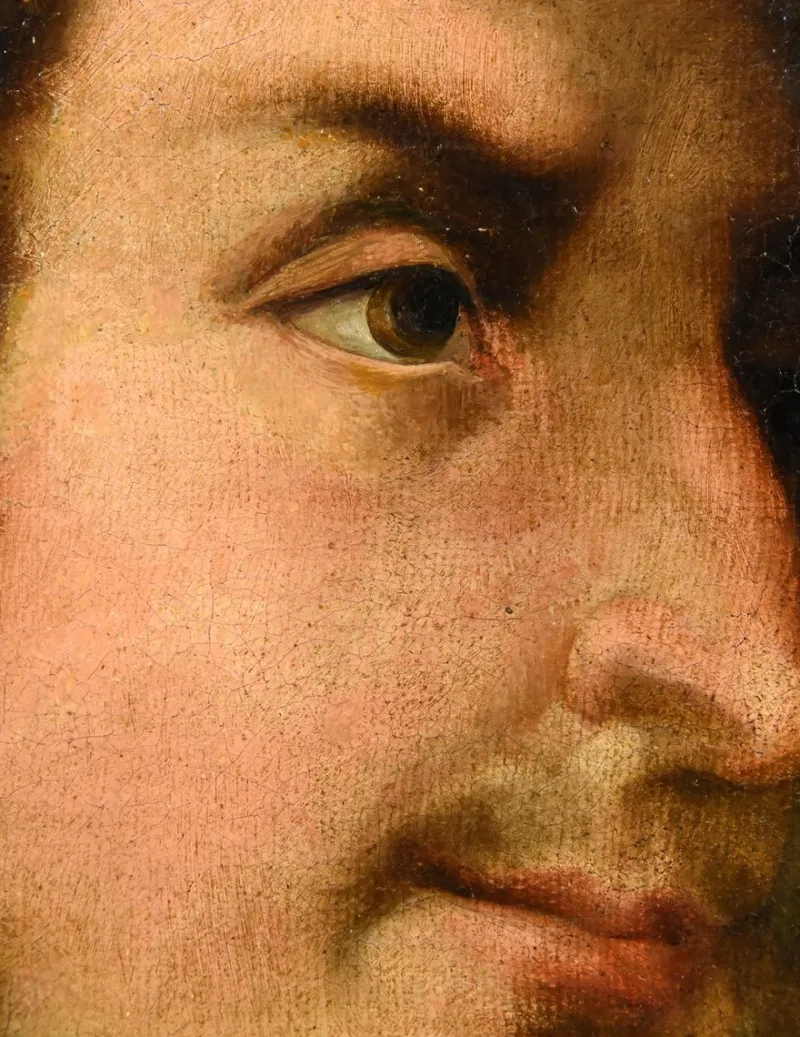
The paintings are in good condition.
Like all our objects, the work comes with a certificate of authenticity.
The seller assumes all responsibility for this listing.
About This Piece
– Portrait of Emperor Julius Caesar (Rome 100 BC – 44 BC), inscribed at the top C. IVLIVS. CAESAR
– Portrait of Emperor Octavian Augustus (Rome 63 BC – 14 BC), inscribed at the top OCTAVIANUS II ROM IMP
17th century
Oil on canvas, 65 x 50 cm, framed 81 x 68 cm.
The Latin writer Suetonius, with his work “De vita Caesarum” (and in particular with his 1543 translation in the vernacular, edited by the Florentine scholar Paolo del Rosso), inspired Titian, who, in 1537, painted portraits of the eleven emperors for Duke Federico II of Gonzaga, decorating the walls of a small room in the Ducal Palace of Mantua, later known as the Cabinet of the Caesars.
These effigies were intended to establish the link between the new era and the splendor of classical antiquity, as well as to celebrate the valor and wisdom of the rulers, who perceived themselves, in their dominions, as valiant new emperors.
Titian’s paintings quickly became enormously popular, and many patrons and nobles of the time, including Ferdinando d’Avalos, Marquis of Pescara and Governor of Milan, and Vespasiano Gonzaga, turned to the workshop of Bernardino Campi of Cremona to commission their own versions of the series.
Since Titian’s originals were purchased by Charles I of England and then donated by him to the Spanish ambassador Alonso de Cárdenas, who took them to Madrid, where they were destroyed in the fire at the Alcazar in 1734, it is therefore mainly thanks to the numerous replicas by Campi and his numerous followers and pupils, and by other artists active between the 16th and 17th centuries, that the original works are known to us today.
Our pair of works, depicting the busts of two of the emperors who shaped the history of the Roman Empire, Gaius Julius Caesar (Rome 100 BC–44 BC) and Octavian Augustus (Rome 63 BC–14 BC), is therefore part of one of these numerous successive series of reproductions, and in particular, they are open to the influences of his most direct followers, primarily the expressive choices of Giovan Battista Trotti, known as Malosso, his favorite disciple, Andrea Mainardi, known as Chiaveghino, and Raffaele Crespi, father of Cerano.
The paintings are in good condition.
Like all our objects, the work comes with a certificate of authenticity.
Click here for full descriptionClose description
| Period | Before 1890 |
|---|---|
| Year | 1700 |
| Production Period | Before 1890 |
| Country of Manufacture | Italy |
| Identifying Marks | This piece is attributed to the above-mentioned designer/maker. It has no attribution mark |
| Style | Classical, Figurative, Grand Tour, Italian, Louis XIII, Mediterranean, Old Masters, Portraiture, Renaissance, Antique, Baroque, Classical, Figurative, Grand Tour, Italian, Louis XIII, Mediterranean, Old Masters, Portraiture, Renaissance, Baroque |
| Detailed Condition | Good — This vintage/antique item may have some wear such as scratches and other signs of ageing. |
| Restoration and Damage Details | Light wear consistent with age and use, Patina consistent with age and use, Reupholstered, Partially restored |
| Product Code | CYT-2326730 |
| Materials | Oil on Canvas |
| Color | Multicolored |
| Width | 68 cm 26.8 inch |
| Depth | 12 cm 4.7 inch |
| Height | 81 cm 31.9 inch |
Be the first to review “Online Pamono Follower of Tiziano Vecellio, Portraits of Julius Caesar & Octavian, 1700, Oil on Canvases, Framed, Set of 2”
Related products
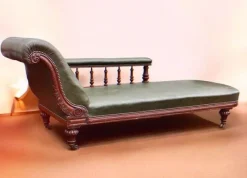
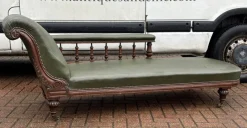
Daybeds & Chaises Lounges
New Pamono Antique Victorian Oak Chaise Longue in Green Leather with Brass Castors


Cabinets & Wardrobes
Dressers, Commodes & Chests
Login
Reviews
There are no reviews yet.