
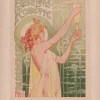
Hot Pamono Privat Livemont, Absinthe Robette from Les Maîtres de L’Affiche, 1898, Original Lithograph
$138.89
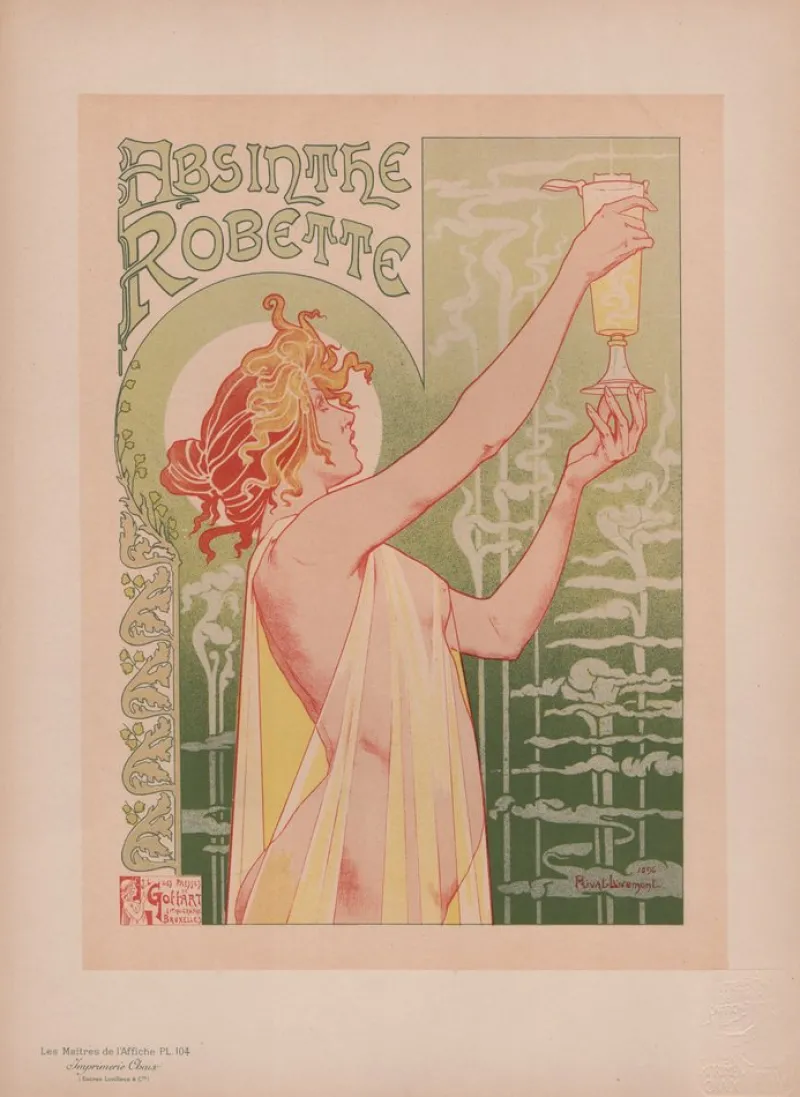
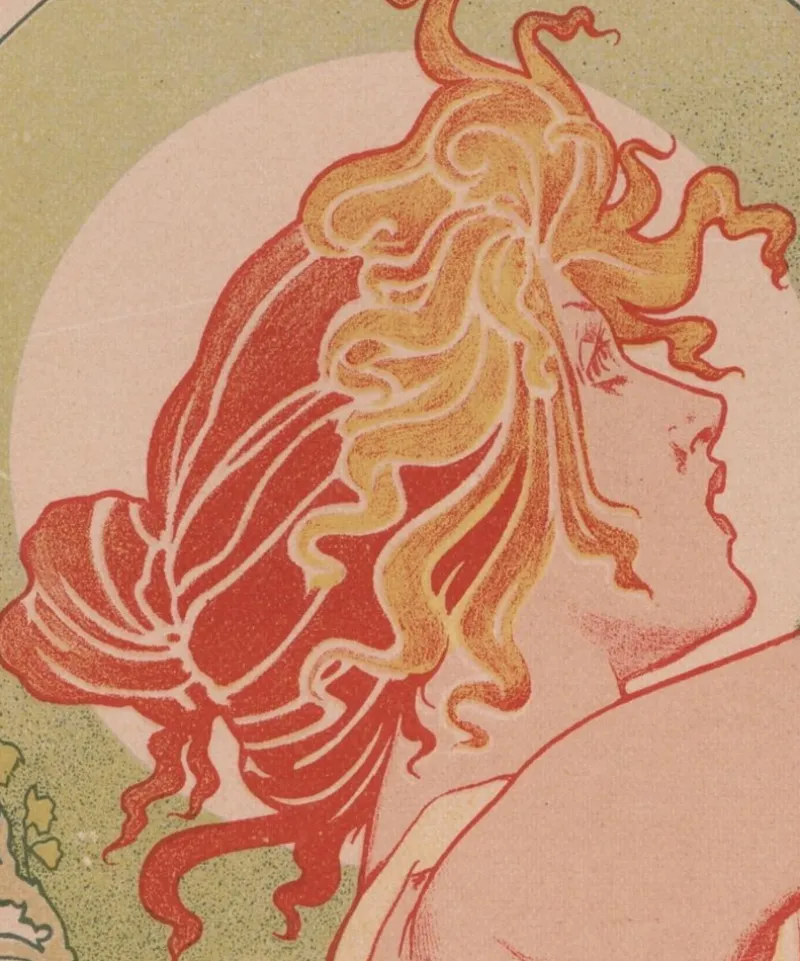
Privat Livemont (1861-1936)Absinthe RobetteYear: 1898Lithograph on wove paperPublisher: ChaixSigned in the plate, lower …
Absinthe Robette
Year: 1898
Lithograph on wove paper
Publisher: Chaix
Signed in the plate, lower right
from the famous collection “Les Maîtres de l’Affiche”
Issue # 26, Plate #104, January 1898
One of the RAREST and most attractive plates of the entire collection
Bottom left:
Les Maîtres de l’Affiche PL. 104
Imprimerie Chaix
(Encres Lorilleux & Cie.)
Bottom right, blind stamp of publisher / edition
Excellent Condition
Literature:
“The Complete Masters of the Poster”, edited by Stanley Appelbaum, Dover, New York, 1990, p. 104
___
About the collection “Les Maîtres de l’Affiche”
Les Maîtres de l’Affiche (The Masters of the Poster) is one of the most prestigious and influential art publications in history Its 256 color plates have preserved for each succeeding generation a wide-ranging selection of outstanding posters from the turn of the century, when that popular art form had reached its first peak.
The earliest printed posters were chiefly typographic, with relatively few illustrated examples. But in the second half of the nineteenth century, when all types of commercial products, including printed matter, were being aesthetically upgraded, largely thanks to various arts-and-crafts movements, serious artists such as Manet began to see new possibilities in the poster medium. It was especially Jules Chéret (1836-1932) whose unique combination of artistic, technical and entrepreneurial talents was to pave the way for a true poster industry. After Chéret opened his own print shop in Paris in 1866, his work continued to inspire numerous emulators in Europe and America. from 1881 on, his shop operated as a branch of the large Chaix firm (Imprimerie Chaix)
By the 1890s the streets of every great metropolis were enlivened by large, colourful posters.
This Chaix publication, Les Maîtres de l’Affiche, was issued as separate numbered sheets measuring 40 x 29 cm. Every month for 60 months, from December 1895 through November 1900, subscribers received a wrapper containing four consecutively numbered poster. On 16 occasions the monthly wrapper also contained a bonus plate, a specially created art lithograph. Jules Chéret, artistic director of Chaix and father of the modern poster, emerged with the lion’s share of the plates, one Chéret being included in each monthly issue of four, and seven of the 16 unnumbered bonus plates.
Of the 97 artists represented in Les Maîtres de l’Affiche, some were preeminent painters and printmakers at various stages of their careers: Toulouse-Lautrec, Denis, Bonnard, Vallotton, Puvis de Chavannes. Others were famous illustrators and cartoonists of the period, still well known to art collectors and bibliophiles. Forain, Caran d’Ache, Ibels, Willette, Boutet de Monvel, Léandre. But there were also all those whose names say “poster,” the conquering pioneers of the new medium. Chéret himself, Mucha, Steinlen, the Beggarstaffs, Grasset, Penfield, Parrish, Bradley, Hardy The list could go on and on.
___
About the Artist
Privat Antoine Théodore Livemont (1861–1936) was a Belgian Symbolist painter and Art Nouveau graphic artist.
He was born in Schaerbeek, Brussels. from the age of 13 he studied drawing at the academy of Saint-Josse-ten-Noode under Louis Hendrickx. He graduated at the top of his class in 1883 and was awarded a government bursary to spend time in Paris, where he remained 1883–1889, working and studying in the studios of Lemaire (for the interior decoration of the Hôtel de Ville), and of Lavastre and Duvignaud (painting stage sets for the Opéra Garnier and the Comédie Française). He exhibited in the Paris Salon in 1886 and 1887.
On 23 July 1889 he married Madeleine Brown, and shortly after marriage returned to Schaarbeek to work as a painter and interior designer, establishing his own studio in 1890. During this period he also produced a number of portraits. from 1893 to 1902 he painted a number of grand ceilings in theatres, commercial premises, and Ostend casino, most of which have subsequently been lost. He was regarded as a Symbolist, but became better known for his posters in Art Nouveau style. Two of his posters, for Absinthe Robette and the Casino de Cabourg, were published in Les Maîtres de l’Affiche.
Important:
. The listing is for the original lithograph.
. The cover of the issue by Jules Chéret is shown for reference.
The seller assumes all responsibility for this listing.
About This Piece
Absinthe Robette
Year: 1898
Lithograph on wove paper
Publisher: Chaix
Signed in the plate, lower right
from the famous collection “Les Maîtres de l’Affiche”
Issue # 26, Plate #104, January 1898
One of the RAREST and most attractive plates of the entire collection
Bottom left:
Les Maîtres de l’Affiche PL. 104
Imprimerie Chaix
(Encres Lorilleux & Cie.)
Bottom right, blind stamp of publisher / edition
Excellent Condition
Literature:
“The Complete Masters of the Poster”, edited by Stanley Appelbaum, Dover, New York, 1990, p. 104
___
About the collection “Les Maîtres de l’Affiche”
Les Maîtres de l’Affiche (The Masters of the Poster) is one of the most prestigious and influential art publications in history Its 256 color plates have preserved for each succeeding generation a wide-ranging selection of outstanding posters from the turn of the century, when that popular art form had reached its first peak.
The earliest printed posters were chiefly typographic, with relatively few illustrated examples. But in the second half of the nineteenth century, when all types of commercial products, including printed matter, were being aesthetically upgraded, largely thanks to various arts-and-crafts movements, serious artists such as Manet began to see new possibilities in the poster medium. It was especially Jules Chéret (1836-1932) whose unique combination of artistic, technical and entrepreneurial talents was to pave the way for a true poster industry. After Chéret opened his own print shop in Paris in 1866, his work continued to inspire numerous emulators in Europe and America. from 1881 on, his shop operated as a branch of the large Chaix firm (Imprimerie Chaix)
By the 1890s the streets of every great metropolis were enlivened by large, colourful posters.
This Chaix publication, Les Maîtres de l’Affiche, was issued as separate numbered sheets measuring 40 x 29 cm. Every month for 60 months, from December 1895 through November 1900, subscribers received a wrapper containing four consecutively numbered poster. On 16 occasions the monthly wrapper also contained a bonus plate, a specially created art lithograph. Jules Chéret, artistic director of Chaix and father of the modern poster, emerged with the lion’s share of the plates, one Chéret being included in each monthly issue of four, and seven of the 16 unnumbered bonus plates.
Of the 97 artists represented in Les Maîtres de l’Affiche, some were preeminent painters and printmakers at various stages of their careers: Toulouse-Lautrec, Denis, Bonnard, Vallotton, Puvis de Chavannes. Others were famous illustrators and cartoonists of the period, still well known to art collectors and bibliophiles. Forain, Caran d’Ache, Ibels, Willette, Boutet de Monvel, Léandre. But there were also all those whose names say “poster,” the conquering pioneers of the new medium. Chéret himself, Mucha, Steinlen, the Beggarstaffs, Grasset, Penfield, Parrish, Bradley, Hardy The list could go on and on.
___
About the Artist
Privat Antoine Théodore Livemont (1861–1936) was a Belgian Symbolist painter and Art Nouveau graphic artist.
He was born in Schaerbeek, Brussels. from the age of 13 he studied drawing at the academy of Saint-Josse-ten-Noode under Louis Hendrickx. He graduated at the top of his class in 1883 and was awarded a government bursary to spend time in Paris, where he remained 1883–1889, working and studying in the studios of Lemaire (for the interior decoration of the Hôtel de Ville), and of Lavastre and Duvignaud (painting stage sets for the Opéra Garnier and the Comédie Française). He exhibited in the Paris Salon in 1886 and 1887.
On 23 July 1889 he married Madeleine Brown, and shortly after marriage returned to Schaarbeek to work as a painter and interior designer, establishing his own studio in 1890. During this period he also produced a number of portraits. from 1893 to 1902 he painted a number of grand ceilings in theatres, commercial premises, and Ostend casino, most of which have subsequently been lost. He was regarded as a Symbolist, but became better known for his posters in Art Nouveau style. Two of his posters, for Absinthe Robette and the Casino de Cabourg, were published in Les Maîtres de l’Affiche.
Important:
. The listing is for the original lithograph.
. The cover of the issue by Jules Chéret is shown for reference.
Click here for full descriptionClose description
| Period | Before 1890 |
|---|---|
| Year | 1898 |
| Production Period | 1890 to 1919 |
| Country of Manufacture | France |
| Identifying Marks | This piece has an attribution mark |
| Style | Art Nouveau |
| Detailed Condition | Excellent — This vintage/antique piece is in near original condition. It may show minimal traces of use and/or have slight restorations. |
| Product Code | YWW-2286675 |
| Restoration and Damage Details | Near Mint Condition, consistent with age |
| Materials | Lithograph |
| Color | Multicolored |
| Width | 29 cm 11.4 inch |
| Depth | 1 cm 0.0 inch |
| Height | 40 cm 15.7 inch |
Be the first to review “Hot Pamono Privat Livemont, Absinthe Robette from Les Maîtres de L’Affiche, 1898, Original Lithograph”
Related products
Daybeds & Chaises Lounges
New Pamono Antique Victorian Oak Chaise Longue in Green Leather with Brass Castors



Dining Tables & Sets
New Pamono Vintage Table in Glass and Black Lacquered Metal, 1960s
Children's Chairs
Cabinets & Wardrobes
Login
Reviews
There are no reviews yet.