
Best Pamono Flemish Artist, Landscape with Tower of Babel, 17th-18th Century, Oil on Canvas, Framed
$124.99
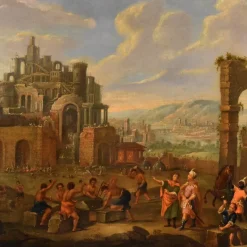
Flemish Painter, 17th-18th CenturyBuilding of the Tower of BabelOil on canvas51 x 64 cm – Framed 66 x 78 cmIf there is a…
Building of the Tower of Babel
Oil on canvas
51 x 64 cm – Framed 66 x 78 cm
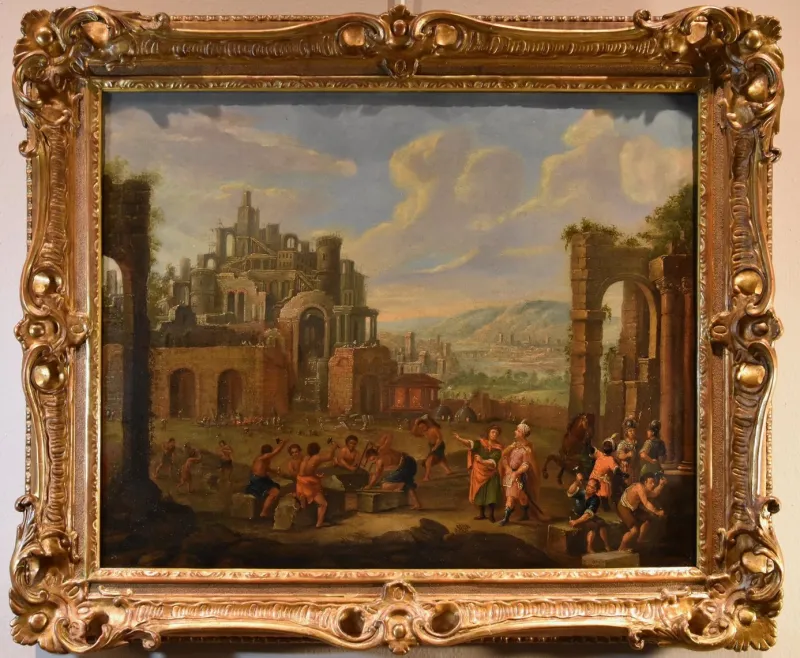
If there is a subject in art that has been revisited repeatedly throughout the ages, with an ever-new and original vision closely tied to the artist’s individual sensibility, the Tower of Babel perfectly embodies these qualities. And our work, created by a Flemish painter active between the 17th and 18th centuries, is a rare and valuable example.
An ancient subject, a myth and a timeless metaphor, in art has always had the power to teleport the observer to another world, inspiring curiosity and fascination.
We cannot fail to mention the celebrated Tower of Babel by Bruegel the Elder, which represents the perfect example of this feeling, and in general the many other works that the best Flemish painters have created to honor this theme, displaying incredible pictorial and inventive qualities.
Although a product of the author’s imagination, let us remember that the Tower of Babel is one of the most fascinating and enigmatic stories in the Bible, cited in the book of Genesis (11:1-9[1]), which tells how men decided to build a city and a tower whose top would reach Heaven.
But God, seeing the excessive ambition and unity of men, who dominated the earth in peaceful union and with a single language, decided to create confusion and prevented the completion of the structure, confusing their languages so that they could no longer understand each other and leading to the dispersion of the peoples.
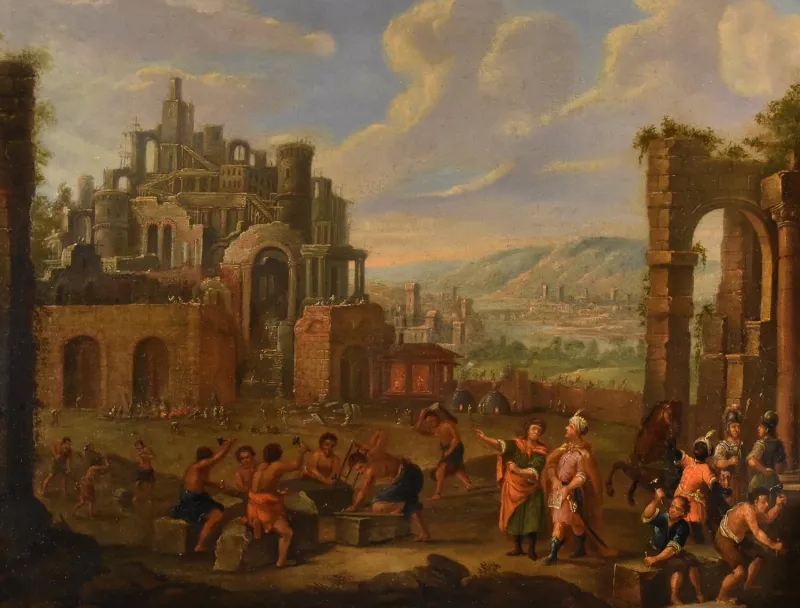
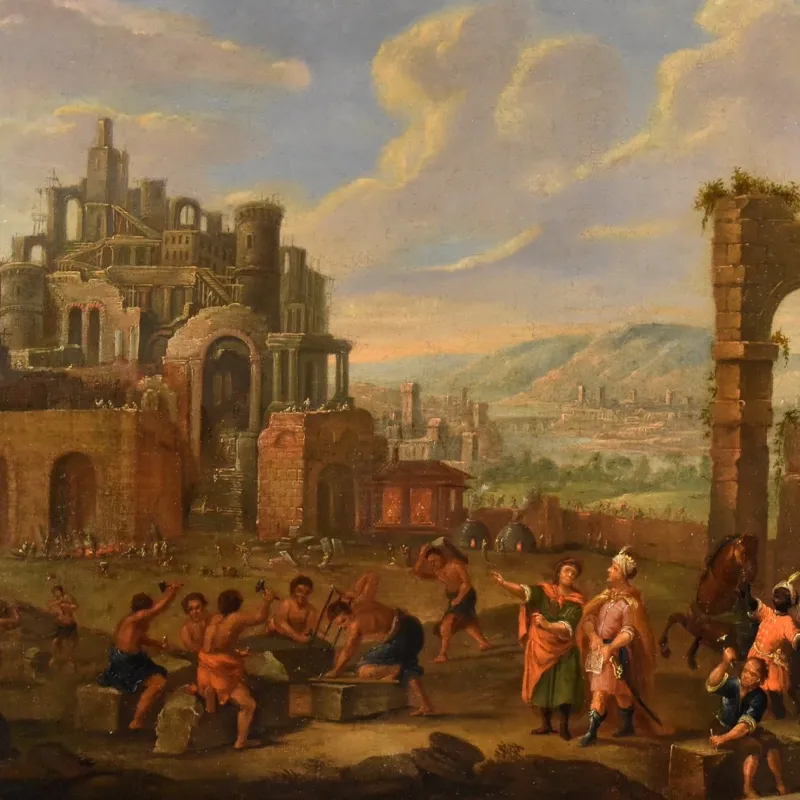
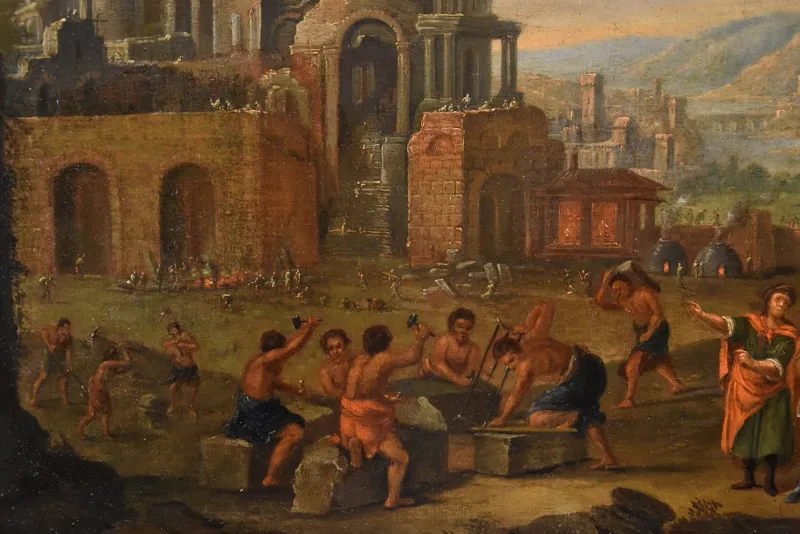
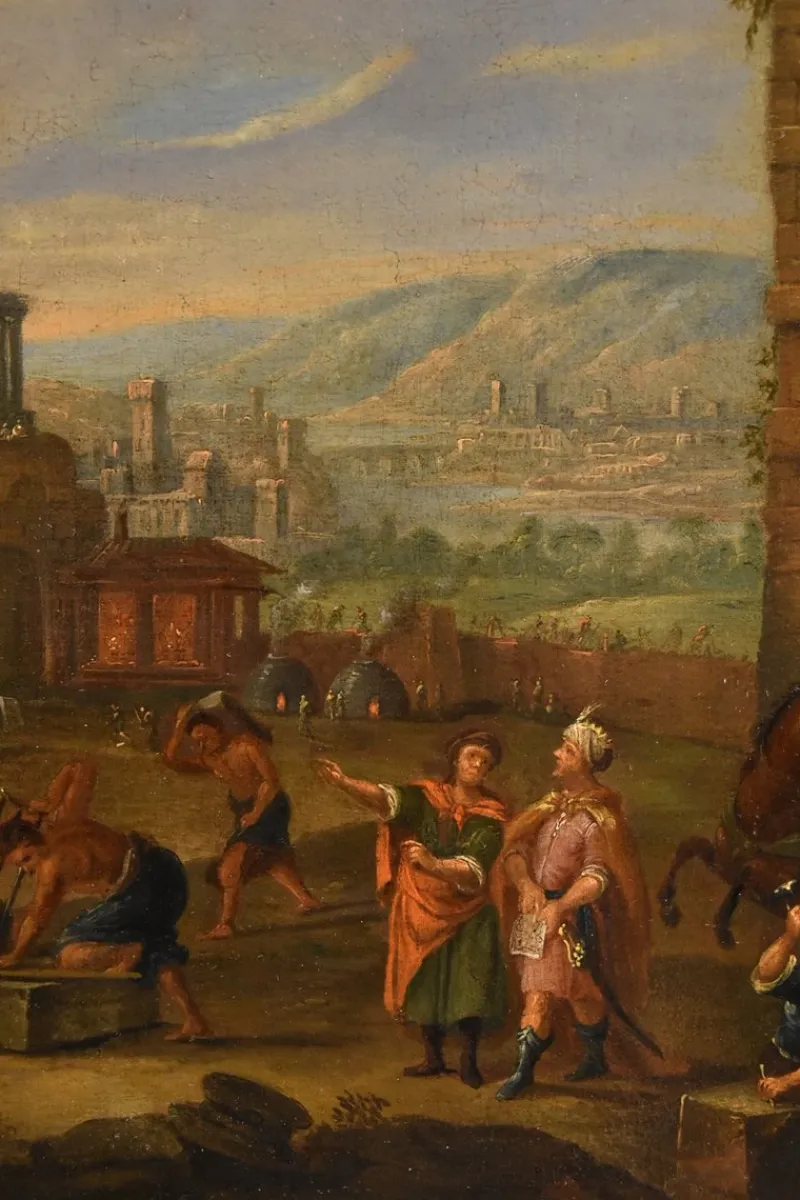
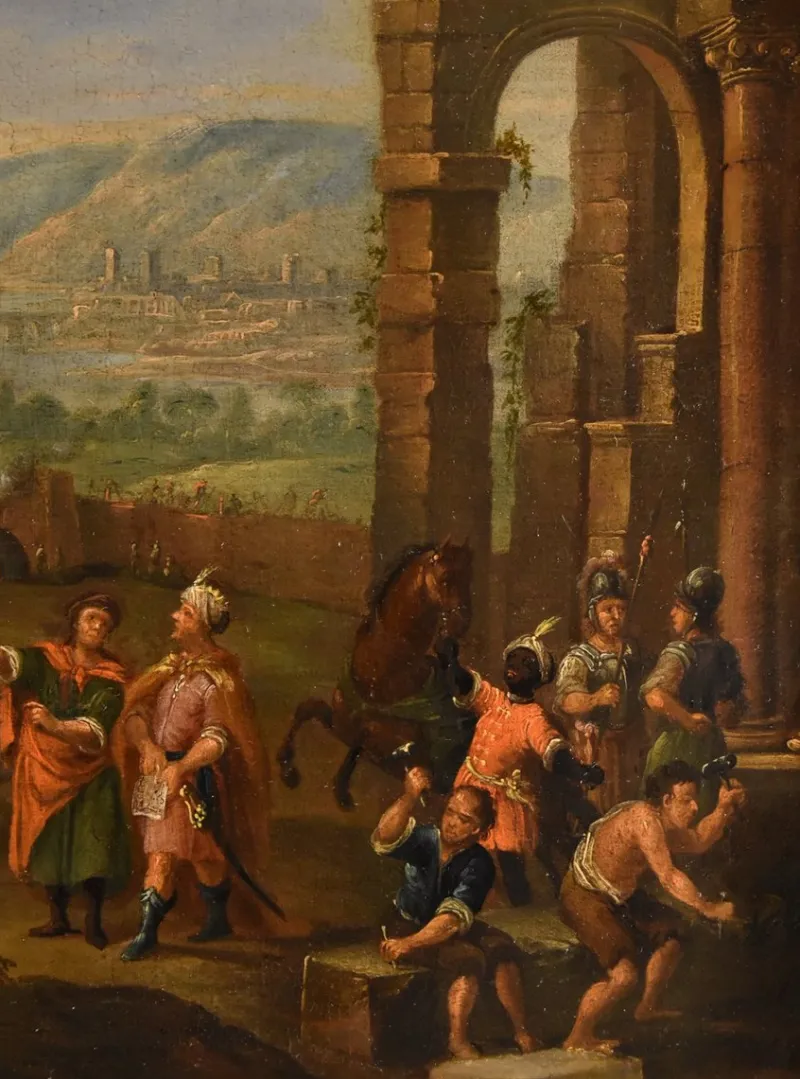
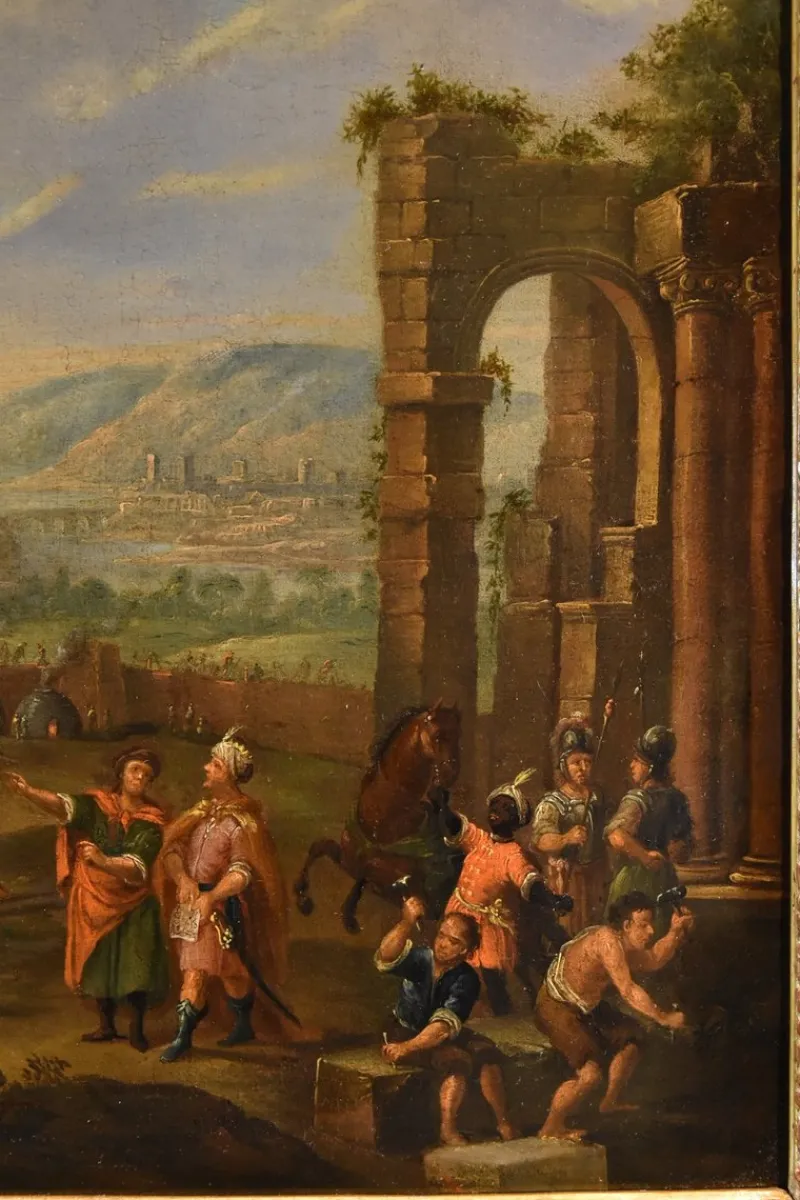
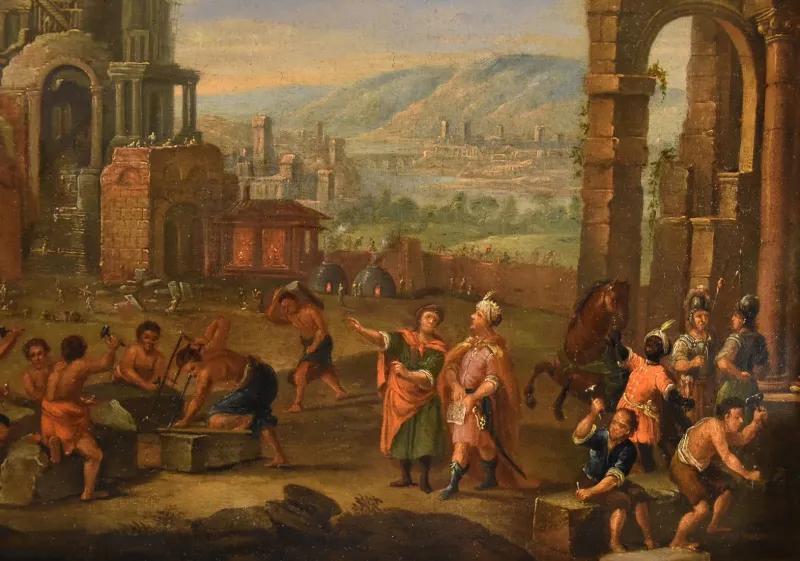
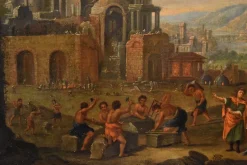
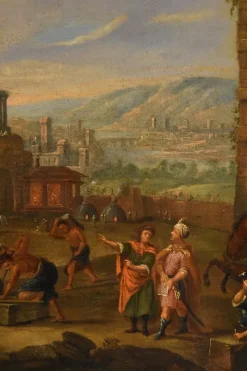
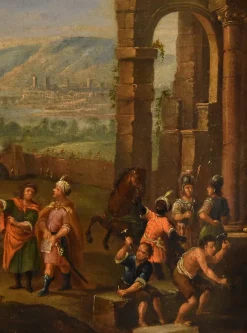
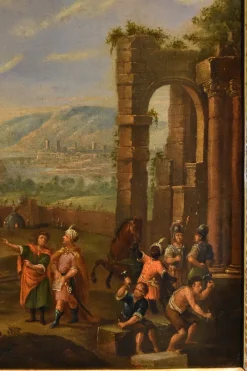
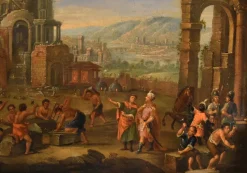
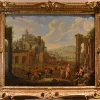
In the lower left, we see the Babylonian king Nebuchadnezzar II, a symbol of pride, followed by a group of courtiers and soldiers, depicted as the architect shows him his work, while the workers marvel.
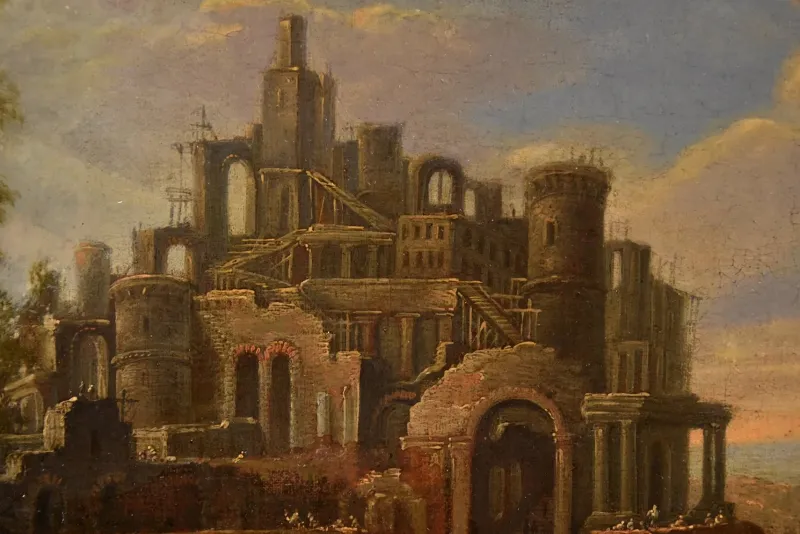
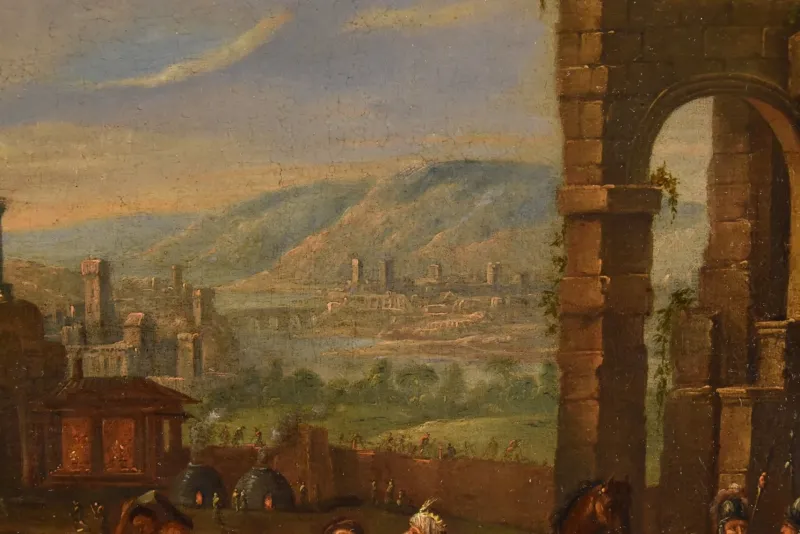
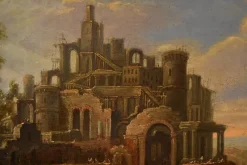
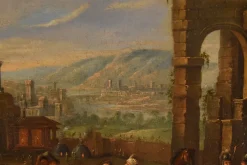
In the background, the protagonist of the canvas, the imposing construction along the banks of the Euphrates River stands out. It is a complex structure incorporating multiple eclectically overlapping architectural styles, drawn from the Italian Renaissance tradition with the addition of decidedly more medieval and Northern European elements.
Looking at the details, we can lose ourselves in the fervent activity of the builders, with the small figures bustling up and down the ramps, completing the majestic work as quickly as possible.
ADDITIONAL INFORMATION:
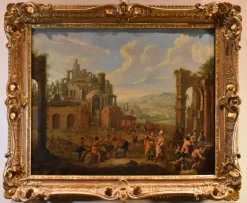
The work is presented in a beautiful gilded frame and is sold with a certificate of authenticity and guarantee.
The seller assumes all responsibility for this listing.
About This Piece
Building of the Tower of Babel
Oil on canvas
51 x 64 cm – Framed 66 x 78 cm
If there is a subject in art that has been revisited repeatedly throughout the ages, with an ever-new and original vision closely tied to the artist’s individual sensibility, the Tower of Babel perfectly embodies these qualities. And our work, created by a Flemish painter active between the 17th and 18th centuries, is a rare and valuable example.
An ancient subject, a myth and a timeless metaphor, in art has always had the power to teleport the observer to another world, inspiring curiosity and fascination.
We cannot fail to mention the celebrated Tower of Babel by Bruegel the Elder, which represents the perfect example of this feeling, and in general the many other works that the best Flemish painters have created to honor this theme, displaying incredible pictorial and inventive qualities.
Although a product of the author’s imagination, let us remember that the Tower of Babel is one of the most fascinating and enigmatic stories in the Bible, cited in the book of Genesis (11:1-9[1]), which tells how men decided to build a city and a tower whose top would reach Heaven.
But God, seeing the excessive ambition and unity of men, who dominated the earth in peaceful union and with a single language, decided to create confusion and prevented the completion of the structure, confusing their languages so that they could no longer understand each other and leading to the dispersion of the peoples.
In the lower left, we see the Babylonian king Nebuchadnezzar II, a symbol of pride, followed by a group of courtiers and soldiers, depicted as the architect shows him his work, while the workers marvel.
In the background, the protagonist of the canvas, the imposing construction along the banks of the Euphrates River stands out. It is a complex structure incorporating multiple eclectically overlapping architectural styles, drawn from the Italian Renaissance tradition with the addition of decidedly more medieval and Northern European elements.
Looking at the details, we can lose ourselves in the fervent activity of the builders, with the small figures bustling up and down the ramps, completing the majestic work as quickly as possible.
ADDITIONAL INFORMATION:
The work is presented in a beautiful gilded frame and is sold with a certificate of authenticity and guarantee.
Click here for full descriptionClose description
| Period | Before 1890 |
|---|---|
| Year | 1700 |
| Production Period | Before 1890 |
| Country of Manufacture | Belgium |
| Identifying Marks | This piece is attributed to the above-mentioned designer/maker. It has no attribution mark |
| Style | Belgian, Classical, Figurative, Old Masters, Religious, Renaissance, Baroque |
| Detailed Condition | Good — This vintage/antique item may have some wear such as scratches and other signs of ageing. |
| Restoration and Damage Details | Light wear consistent with age and use, Patina consistent with age and use, Reupholstered, Partially restored |
| Product Code | CYT-2274785 |
| Materials | Oil on Canvas |
| Color | Multicolored |
| Width | 78 cm 30.7 inch |
| Depth | 12 cm 4.7 inch |
| Height | 66 cm 26.0 inch |
Be the first to review “Best Pamono Flemish Artist, Landscape with Tower of Babel, 17th-18th Century, Oil on Canvas, Framed”
Related products



Dressers, Commodes & Chests
Daybeds & Chaises Lounges


Children's Chairs
Cabinets & Wardrobes
Daybeds & Chaises Lounges
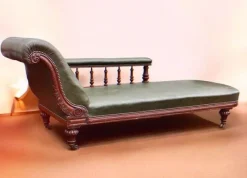
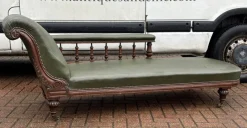
New Pamono Antique Victorian Oak Chaise Longue in Green Leather with Brass Castors
Login
Reviews
There are no reviews yet.